Think twice about extended warranties | Expert opinion
The plans are enormously profitable for the companies that sell them but usually terrible deals for consumers, according to research from Consumers’ Checkbook.
Buy a phone, TV, computer, appliance, grill, or dozens of other products and you’ll likely be urged to shell out for a “protection plan” (also called an “extended warranty”). These plans are enormously profitable for the companies that sell them but usually terrible deals for consumers, according to research from Consumers’ Checkbook.
To sell these policies, retailers prey on our “loss-aversion” tendencies. Most consumers worry more about having a product fail than they do about the cost to replace it or pay for repairs. For some reason, losing $100 feels far more painful than spending $100. Stores offer a way to alleviate that anxiety by selling mini-insurance policies.
Big profits for companies, little value for consumers
Many analysts estimate that less than 20 cents of every dollar spent on extended warranties gets paid out in claims. Unfortunately, companies that sell these plans usually don’t disclose how much money they make from them.
Among large retailers, only Lowe’s provides insight. In its 2024 annual report, it disclosed $1.27 billion in deferred revenue from protection-plan sales, with $561 million of that revenue converted as “recognized as sales.” Compare those earnings against the mere $210 million it paid in claims, and that means Lowe’s paid out only about 16.6% of what it took in to fix or replace items for customers who bought protection plans. Lowe’s total profit from extended warranties? More than 60%.
It’s expensive insurance
While you should buy insurance to protect against risks that could be financially catastrophic, you shouldn’t bother covering the risk of paying for repairs or replacing most items that you buy.
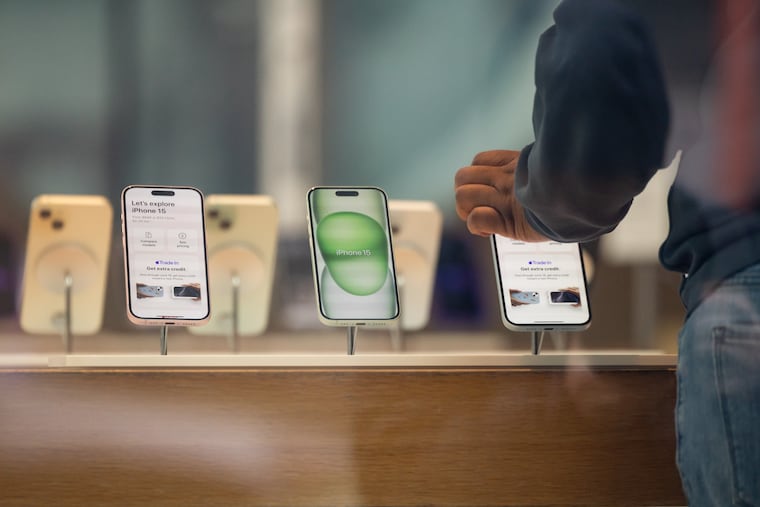
For most consumers, what AppleCare+, the company’s optional, extended warranty, offers is overpriced. A base-model iPhone 17 costs $799 and comes with a one-year limited manufacturer’s warranty covering repairs. Add AppleCare+ for $11.99/month or $119.99/year, and you’ll get an extended warranty against breakdowns, plus coverage for accidental damage, theft, or a lost phone.
The problem? Even after those premiums, you’ll still have to pay extra if you run into trouble. Cracked screen? AppleCare+ has a $29 deductible to fix it; you’ll pay a $99 deductible if your clumsiness or a product defect necessitates a different type of repair. If you lose your phone or it’s stolen, the deductible is $149 per occurrence, and you’re limited to two losses per year.
So, if you’ve insured your $799 phone with AppleCare+ and then your phone is damaged beyond an easily repaired cracked screen, you’ll spend $219 (annual premium plus deductible) or $243 (monthly premium plus deductible) in just one year. Phone lost or stolen? You’ll pay even more —$269 or $293 in just one year — for both the premium and the deductible.
Even if you need a repair, its costs are often comparable to the price of the protection plan. Most retailers charge $100 for three-year extended warranties for major appliances. The odds of a breakdown in the first three years are low, and the average repair cost for appliances is less than $200 a visit. Why purchase a pricy insurance policy to cover an affordable repair?
Credit cards and Costco often provide similar protections for free
Many credit cards automatically provide free extended warranties when you use them to pay for products with manufacturer’s warranties. If you shop Costco to snag a TV, computer, appliance, or another manufacturer’s warranty-backed product, you automatically get a free one- or two-year extended warranty.
Still want a warranty extension? Wait to buy it
If you can’t get a free warranty extension, you can usually add coverage up to 60 days after buying the product. Some stores allow you to buy coverage until just before the manufacturer’s warranty expires. Take time to think it over — and to see whether the product you bought is prone to problems.
If you’re set on an extended warranty, you don’t have to buy the store’s plan. Shop for the best warranty deal.
Check what you get
We found most plans offer decent coverage. But before you buy, check for exclusions and what happens if something can’t be fixed. Some plans promise to replace a product if it can’t be repaired or requires more than four repairs, but the replacement can be a refurbished or rebuilt unit. Most plans require an original store receipt to file a claim.
How long does it last?
Many stores advertise the total length of time you’ll have coverage, including the manufacturer’s warranty. If the product warranty lasts two years, and the store is selling a one-year extension, it might sell it as “three years of coverage.” That means you could pay $100 or more to extend warranty coverage for just an extra year.
Is there a deductible?
As we’ve mentioned, if you buy AppleCare+ and need a repair or replacement, you’ll still have to pay a deductible for fixes or a new device. Do the math and you’ll often find your total potential out-of-pocket cost for “free” repairs makes the cost of coverage less sensible.
Which repair companies can you use?
Many retailers’ warranties mandate repairs be performed by the seller’s own shop or a designated facility. That’s frequently bad news. For example, Best Buy’s repair services get some of Checkbook’s lowest ratings for computer repair. Ditto “authorized” repair centers for major appliance brands. Having repairs done by these services might be a hassle — and could still result in a malfunctioning product.
Delaware Valley Consumers’ Checkbook magazine and Checkbook.org is a nonprofit organization with a mission to help consumers get the best service and lowest prices. It is supported by consumers and takes no money from the service providers it evaluates. Until July 5, readers can access Checkbook’s ratings and advice free at Checkbook.org/Inquirer/warranties.