Which Philadelphia-area grocery stores offer the best prices and quality?
Delaware Valley Consumers’ Checkbook compared prices at grocery chains in the area to find which ones got the best marks for quality from shoppers.
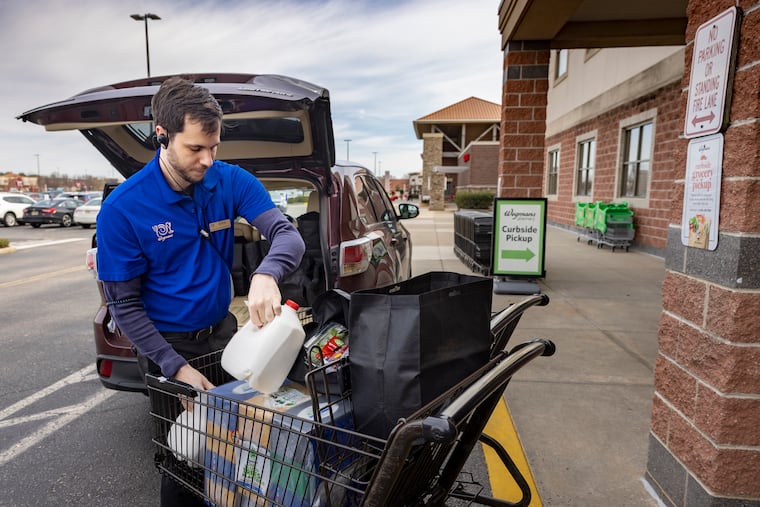
Over the last five years, American grocery costs have soared.
In 2022, prices for food prepared at home jumped by a historic 11.8% from the year before, according to the Bureau of Labor Statistics’ Consumer Price Index survey. While prices didn’t drop in 2025, the rate of inflation for groceries has for the most part slowed. In July, costs for groceries were 2.2% higher than the year before.
The nonprofit Consumers’ Checkbook’s latest evaluations of Delaware Valley grocery stores found most shoppers can save by choosing low-cost stores. Checkbook researchers shopped stores using a 150-item list to compare prices.
To evaluate stores on quality of products and service, we surveyed our members. Here’s what we found.
Wegmans is still a winner
Wegmans now has 11 stores in the Delaware Valley area. Since opening its first area location in 2003, the Rochester, N.Y.-based chain has consistently earned high ratings from its customers for quality. In our latest survey, 85% of its customers judged it “superior” on each of our survey questions on produce, meat, and overall quality.
Although Wegmans’ prices aren’t among the lowest in the region, it remains competitive. Its prices were about 2% lower than average prices at Giant and ShopRite, 4% lower than Redner’s, about 12% lower than Acme and McCaffrey’s, and 25% lower than Whole Foods.
McCaffrey’s gets raves but isn’t low-cost
The locally owned small chain ranked among the area’s best grocery options for quality, with 87% of its surveyed customers judging it “superior” overall, 90% rating it “superior” for produce, and 88% rating it tops for meat.
But McCaffrey’s prices were about 12% higher than the all-store average.
Aldi and Lidl offer the biggest savings
Germany-based discounters Aldi and Lidl continue to expand their U.S. footprints. These chains focus on low costs, and our survey found them quite inexpensive: For our shopping list, Aldi’s prices were 35% lower than the all-store average, and Lidl’s were 26% lower. Aldi’s per-unit prices were even lower than wholesale clubs BJ’s, Costco, and Sam’s Club.
These savings are partly explained by Aldi’s and Lidl’s smaller-format stores, which have much lower overhead costs than conventional supermarkets. Shoppers at quirky Aldi and Lidl don’t expect wide choices of brands or sizes. Instead, they’re offered comparable house-brand products in exchange for big savings.
Other price standouts: Amazon Fresh, Food Lion, Grocery Outlet, and Walmart
Amazon Fresh’s prices were about 16% lower than the all-store average, Walmart’s were 10% lower, and Food Lion’s 7% lower.
Grocery Outlet, which offers a somewhat odd assortment of steeply discounted surplus national-brand products, offered prices that were about 12% lower than average.
Amazon Fresh opened its first Delaware Valley area location in 2022, and the region now has five. These small-format stores focus on low costs and convenience. The company’s app keeps track of what you remove from shelves; when finished, you simply exit without scanning items.
For a family that spends $300 per week at the supermarket, a 16% price difference totals savings of $2,496 per year; a 10% price difference totals $1,560 a year.
Trader Joe’s remains popular
Among survey respondents, 83% rated the funky-and-fun chain “superior” for “overall quality.”
Although not a price leader in the area, TJ’s prices were about 3% lower than the all-store average and about 14% lower than Acme.
Whole Foods remains an expensive choice
Whole Foods built a loyal following by offering high-quality produce, meat, prepared foods, and generic staples. It continues to receive high marks in our consumer surveys, especially for produce and meat quality.
But our price survey found that Whole Foods remains among the most expensive stores we shopped: Its overall prices were about 32% higher than the average prices at all stores we surveyed, or about 33% higher than top-rated Wegmans, 18% higher than McCaffrey’s, and 57% higher than Amazon Fresh, its corporate sibling.
Most other large chains receive dreadful ratings from their customers for quality
When it came to quality, Target scored lowest; Acme, Food Lion, the Fresh Grocer, Walmart, and Weis also received abysmal scores.
Target was rated “superior” overall by only 18% of its surveyed customers; the other chains mentioned above were each rated “superior” overall by fewer than 40%.
Although Redner’s and ShopRite did not receive stellar ratings for quality, they did get considerably higher scores than many other conventional supermarkets. Among Redner’s customers, 54% rated the store “superior” overall; ShopRite’s score was 52%.
Within the largest chains, there is relatively little store-to-store price variation
Prices at the Acme, Giant, and ShopRite locations we surveyed were about the same from store to store.
MOM’s Organic Market received raves
MOM’s, which sells only organic products, was the highest scoring chain for produce quality and overall quality.
We’ve found that its prices are competitive with other local stores when we look only at organics.
Warehouse clubs will save you money — if you shop there often
The three warehouse chains all offer most shoppers significant savings. Sam’s Club, for example, beat Acme’s prices by 35%. And compared to Acme, the savings were about 33% at Costco and 32% at BJ’s.
In addition to having low prices, Costco received high customer ratings for meat quality and overall quality. (BJ’s and Sam’s Club’s ratings were considerably lower than Costco’s.)
While the warehouse clubs offered significant savings compared to prices offered at grocery stores, that might not justify paying their annual membership fees if you don’t visit often.
For example, BJ’s prices were only about 14% lower than Walmart’s; you’d have to spend $429 at BJ’s on products you could buy at Walmart before breaking even on BJ’s $60 annual fee.
Delaware Valley Consumers’ Checkbook magazine and Checkbook.org is a nonprofit organization with a mission to help consumers get the best service and lowest prices. It is supported by consumers and takes no money from the service providers it evaluates. Until Feb. 5, Inquirer readers can access Checkbook’s ratings of local grocery stores and delivery services free at Checkbook.org/Inquirer/Groceries.