How these Philly-area consumers are spending $150 on all their holiday gifts
U.S. consumers are expected to spend on average more than $600 a person on holiday gifts this year. Some are resisting consumerist pressures.
Kacii Hamer has no financial stress this holiday season.
In past years, “holidays were always ‘give, give, give,’ and that’s what I always felt like I had to do,” said Hamer, a 33-year-old pre-K teacher and wedding photographer. Back then, “I couldn’t imagine thrifting gifts or DIYing gifts. You have that fear of ‘Oh my god, are these people going to judge me?’ or ‘Is this good enough?’”
This year, however, Hamer is celebrating “Thriftmas,” a social-media trend where participants buy many of their holiday gifts secondhand.
Between a family Pollyanna, a gift for her boyfriend, and a present for her goddaughter, she plans to spend no more than $150 total. For her goddaughter, she is sanding and repainting a $14 rocking horse that she got at the 2nd Ave. Thrift store in South Philadelphia.
The thrift-focused holiday season will mark a fitting end to what Hamer calls her first “hardcore” low-buy year, one during which she cut out most nonessential spending.
Hamer, who splits her time between the Philadelphia region and Scranton, was one of several low- and no-buyers whom The Inquirer talked with in April.
» READ MORE: These Philly-area residents are doing No-Buy 2025. Here’s how much they’ve saved.
The frugal challenge took off this year amid broader economic pressures, including continued inflation. Philly-area participants said they were trying to save money, pay off debt, reduce waste, and, in some cases, stop patronizing large retailers that don’t align with their values.
Now as the holidays approach, some low- and no-buyers are making exceptions for gifts, or using some of their recent savings to fund their festivities.
Others, however, are standing firm in their low-spending habits. They’re setting budgets, trimming their gift-recipient lists, or shopping secondhand.
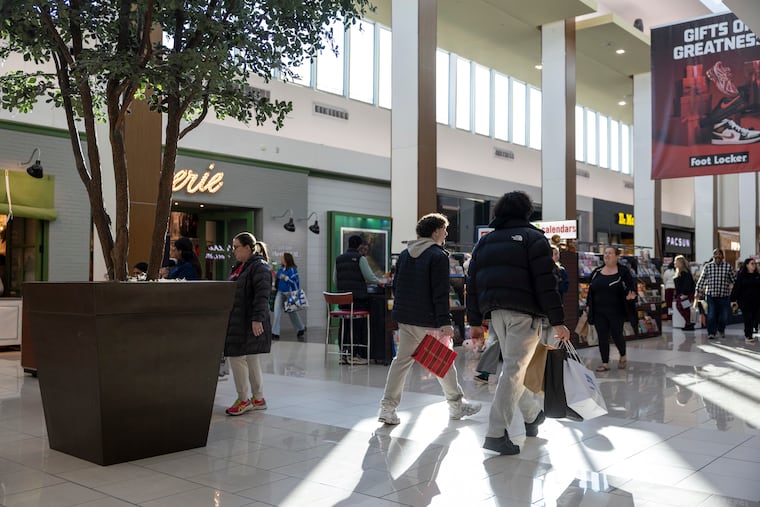
This time of year, some local low-buyers said, it requires extra strength to resist consumerist pressures and go against the norm. Each U.S. adult is expected to spend about $628 on average on holiday gifts this year, according to the National Retail Federation, which anticipates overall holiday spending will surpass $1 trillion for the first time ever.
At the same time, others say economic uncertainty has made for easier conversations about gifting.
“I’m not under pressure to spend, and I think this year it’s actually easier to [cut back on gifts] than in years past,” said Mylena Sutton, 48, of Voorhees. “A lot of my friends are sensitive to what’s happening in the economy … you don’t have to explain.”
Parents buying less for Christmas
Some Philly-area parents have found that Santa can be thrifty, too.
Heather Fertig, 38, of Fishtown, said about 80% of her toddler’s Christmas gifts will be secondhand. They’ll include a marble run, which she bought this week from a local thrift store, and a wooden train table, for which she remains on the hunt.
Thanks to secondhand stores, Facebook marketplace, and neighborhood parent groups, Fertig, a stay-at-home mom, said she and her husband will likely spend about $150 in all.
» READ MORE: These Philly-area residents bring in hundreds of dollars a month selling stuff online. Here’s how.
Her motivation is as much environmental as it is financial.
After having her son, she realized, “Wow, there is so much waste,” Fertig said. “I kind of felt, previous to that, that there was a stigma around getting things secondhand.”
But “it was never there,” she added. “It was this made-up thing that everything had to be brand-new to you.”
For young children, whose interests change so quickly, it makes even more sense to buy items secondhand, Fertig said. On Christmas morning, her 2-year-old doesn’t know the difference.
“He’s just as happy as if I bought it straight from Walmart,” she said.
In Montgomery County, Jenna Harris-Mosley said she takes a combo approach to gift-giving for her 5-year-old daughter, whose birthday is on New Year’s Eve.
The 41-year-old bought some smaller, new gifts, including Shrek snow globes and Squishmallow stuffed toys, throughout the year to spread out spending.
She plans to get other items secondhand, including one or two American Girl dolls for $20-$30 each. And she will set aside some money for experiences, such as an upcoming day trip to New York City for tea at the American Girl store — with the new-to-her doll, of course.
Harris-Mosley said she took an especially intentional approach to spending this year after getting laid off from her job in tech sales in October. It has helped that she had already bought many of her daughter’s Christmas and birthday gifts when she found deals earlier in the year, she said.
“I have things hidden in every corner of my house,” she said. And as for grown-ups “I don’t stress myself about holiday gifts,” figuring most adults in her life have the things they need — and can buy things they don’t.
In Port Richmond, Rachel Dwyer is making homemade felt ornaments for the adults on her list, and getting two books for each child. The 34-year-old nanny has learned that too many toys and trinkets can be overwhelming for kids and parents.
“It’s just a lot of clutter,” she said, “and a lot of junk.”
How to spend less on holiday gifts
Seasoned low-buyers say it’s hard to cut back on spending. But once you get over the initial hurdle, they say, it’s freeing.
“Push through the fear,” Hamer said. “It feels nice going into the holidays with such a positive attitude.”
In South Jersey, Sutton has never been a big holiday gift-giver, saying she prefers to buy loved ones presents intentionally throughout the year.
If others feel overwhelmed by their holiday gifts-to-buy list, she recommends they ask themselves: “Do you do these things because they have value for you? Or do you do these things because they are expected?”
“Be brazen about it,” said Sutton, a consultant and leadership coach. That might mean telling people: “If you only get me a gift because you expect an exchange, don’t buy me one.”
“People who have stayed away from thrifting should get back into it,” said Jen Benner, 34, of Conshohocken. “The thrift stores are jam-packed with very good stuff.”
If you aren’t sure about buying secondhand, “start small. Start with a child’s gift or a truck or a train or something little,” Fertig said. “Work your way up to bigger items.”
Benner, a real estate agent, keeps a running list on her phone of gift ideas that her loved ones mention throughout the year. This can save time and anxiety around the holidays, and reduce the urge to overspend.
Remember, too, that the most meaningful gifts can be among the least expensive, Dwyer said. She recommends personalized, handmade gifts or framed photos, as well as gifts of time or skills, such as a babysitting session, a home-cooked meal, or a family-photo session.

- In the 1970s, she was a trans icon and Philly's nightlife queen. Now, she's ready to talk.
- How to have a Perfect Philly Day, according to Gritty
- My neighbor’s rowhome Christmas lights shine directly into my bedroom. What should I do?
- Eggs belong at breakfast, not on Patullo’s house | Weekly Report Card
- The best things we ate this week
- Citywide Quest: Do you know where in Philly these winter-themed photos were taken?
- Holiday shopping, coastal trails, and craft beer in Lewes & the Delaware Beaches | Field Trip
- In Port Richmond, this new homeowner found a way to buy her house without sacrificing all her savings | How I Bought This House
- Seeing the Ben Franklin Bridge reflected by steel spheres