This holiday season, don’t fall for phony sale prices
An increasing number of retailers have offered sale prices that actually aren’t any different from their normal pricing, Delaware Valley Consumers’ Checkbook found.
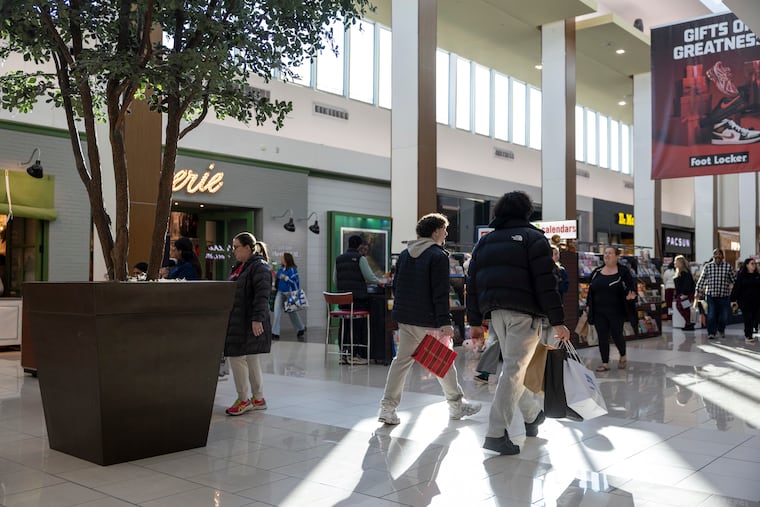
“Regular price: $299; our price: $199.” “This weekend only: Save 40%!” Black Friday! Americans have become accustomed to — and addicted to — sales.
But according to a new investigation by the nonprofit consumer group Consumers’ Checkbook, most stores’ sale prices are bogus discounts, with retailers offering the same “sale prices” more than half the time. Nearly all retailers use fake sales to mislead their customers, the investigation found. And this practice keeps getting worse.
Beginning in February 2025, once a week for 24 weeks, Consumers’ Checkbook’s researchers tracked the prices offered by 25 national chains for 25-plus items at each store. Researchers selected on-sale products representative of each company’s primary offerings (i.e. tools and appliances at Home Depot, clothing and housewares at Kohl’s, big-ticket electronics at Best Buy).
This research expands on similar projects in 2015, 2018, and 2022, when each time we spent 40 or more weeks tracking major retailers’ prices. Over those 10 years, fake sales have become far more prevalent.
During Consumers’ Checkbook’s 2018 project, six retailers — JCPenney, Kmart, Kohl’s, Macy’s, Neiman Marcus, and Sears — offered at least half of the tracked items at fake discounts more than half the time. Now, far more of the stores — 21 out of 25 — advertised sale prices more than half the time.
By constantly offering items at sale prices — and rarely if ever offering them at regular prices — retailers are engaging in deceptive advertising to boost their profits. Seeing the promise of 50% or 60% off a regular price doesn’t mean anything if the retailer rarely if ever charges the higher price. The only way to make sure you’re getting the best deal is to shop around.
Consumers’ Checkbook found nearly every store in the study was guilty of using misleading sales. Bass Pro Shops, Bed Bath & Beyond, Dick’s, Foot Locker, Gap, JCPenney, Michaels, Nordstrom, Old Navy, and Wayfair were the biggest fake-sale offenders. Most of the items tracked at those stores were always or almost always on sale.
Only Apple, Costco, and Dell consistently offered legitimate discounts. Walmart was a borderline case: Ten of the 24 items researchers tracked for it were on sale at least 50% of the time; overall, the items tracked at Walmart were on sale 48% of the time.
Banana Republic and Lululemon were outliers. Each offers discounts on only a small number of items each week, but most items researchers tracked were marked as “Final Sale” for the 24 weeks of the investigation.
The other 19 retailers labeled their items “on sale” about 76% of the time, on average, meaning that far more often than not, they promoted prices as discounts that weren’t special.
How to make sure you get a good deal
Don’t assume that a sale price is a good price.
When you see an item on sale, know that the store probably offers that price — or an even lower one — much of the time. Ignore any perception of savings and focus on the amount you’ll pay.
Shop around.
The only way to know if you’re getting a good deal is to compare prices offered by other retailers. Checkbook regularly finds big store-to-store price differences for the same items; it’s not uncommon for stores to charge twice as much as their competitors for the same product.
We also found that over several months, some retailers’ prices for specific items can climb or fall by as much as 100%. A quick internet search will usually help you determine if a store is offering a low or high price. Shopping bots like Pricegrabber.com and Yahoo! shopping can also be helpful. And CamelCamelCamel tracks prices for merchandise sold by Amazon over the last several months.
If you find a lower price online, ask for a price match.
Many stores will match lower prices offered by their competitors, even online sellers.
Take your time.
Even if an item you’re thinking about buying really is being offered at an extraordinarily low price, some stores will agree to hold their lower price for you beyond the end of the sale date. Just ask.
Don’t fall for tricks.
All the bogus sales and discounts are designed to make you feel good about the prices you pay and convince you to buy now and buy more. Even if you get a genuinely great deal, don’t let those savings push you to spend more on other stuff.
Call or email stores to get competitive bids.
A bad-for-consumers policy enforced by manufacturers for many big-ticket products (appliances, electronics, etc.) is the use of “minimum advertised prices,” or MAP. Designed to boost profits and squelch competition for large retailers that have a lot of clout with manufacturers, these policies require retailers to advertise product prices at or above preset minimums. Because of MAP, you won’t get the best prices on most major brands of appliances from online searches or sales circulars.
But MAP policies don’t apply to prices quoted to customers in person, over the phone, via email, or offered to loyalty-club members. Stores — particularly independent ones — often quote appliance prices below MAP if they know that’s what it takes to close a deal.
Delaware Valley Consumers’ Checkbook magazine and Checkbook.org is a nonprofit organization with a mission to help consumers get the best service and lowest prices. It is supported by consumers and takes no money from the service providers it evaluates.