Need electrical work done? You’ll want to go pro
For most people, electrical projects are not a good time to DIY.
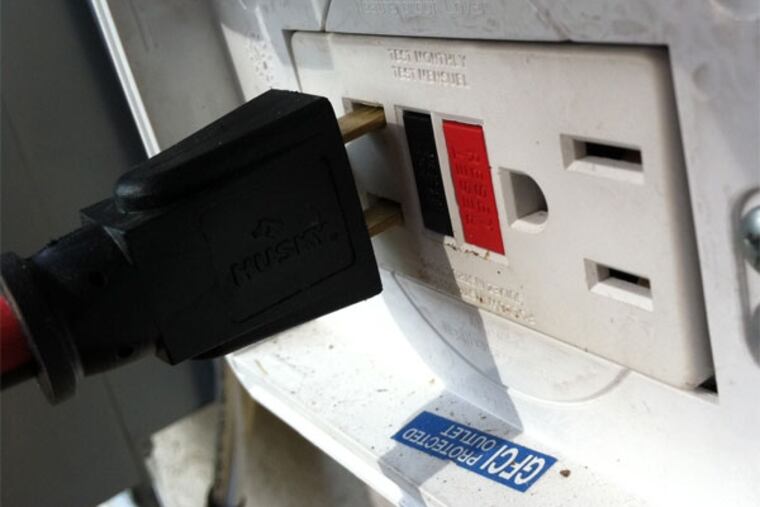
Fixing electrical problems — or installing new outlets, chandeliers, and the like — requires know-how and safe practices. If you do the work poorly, in addition to risking electrical shock, you can create fire or health hazards.
That’s why, for most people, hiring a professional is a smart decision for jobs involving electricity.
You don’t have to pay more for good service from an electrician. Companies that received a top quality rating in Checkbook’s surveys of local consumers were more likely to charge low prices than companies with lower ratings. The key is to obtain several bids.
For simple jobs, you can secure quotes by phone or email. For more complex ones, an estimator will usually visit your home. Time invested getting at least two or three bids usually pays off, especially for large jobs.
Checkbook is offering free access to its ratings of area electricians to Inquirer readers until Nov. 5, at Checkbook.org/Inquirer/electricians.
Prices for the same jobs vary significantly among local electricians. Checkbook’s shoppers found:
To replace a ceiling light fixture with a customer-supplied new ceiling fan with light attachment, prices ranged from $175 to $420.
Prices for replacing six wall outlet receptacles and one light switch with new outlets and wall plates ranged from $150 to $485.
To replace a wired doorbell and floodlight with customer-supplied camera doorbell and floodlight set, prices ranged from $100 to $500.
To replace an outdoor outlet with a watertight GFCI outlet, installed inside a new weatherproof box, prices ranged from $140 to $300.
Whenever possible, get a fixed-price bid for home improvement jobs. For small installation and many repair jobs, you might have to pay on a time-and-materials basis.
When comparing hourly labor rates and minimum charges, check:
Does the company impose a minimum charge for service calls? If so, how much? How much time does it cover? Is travel time charged against this minimum? While most companies charge all customers the same minimum service fee regardless of where they live, it’s a point worth checking.
How does the company divide its billing time (for example, quarter hours or half hours)?
How much does the company charge per time unit?
How does the company handle fractions of time units? (For example, does it round to the nearest half hour — either up or down — or always round up?)
How many electricians does the rate cover?
Does the company ever charge for a service call based on a flat rate rather than actual hours?
Check insurance and licensing
Before hiring an electrician, ask them to provide proof of licensure and make sure they have up-to-date policies for liability and workers’ compensation coverage.
By choosing a licensed contractor, you can use the threat of license cancellation as one form of leverage to resolve a dispute.
Avoid common problems
If possible, get a written fixed-price quote before work begins, rather than an estimate based on material costs plus an hourly rate. A fixed price will protect you against a surprisingly high bill. Make sure the proposal specifies:
Makes and model numbers of all supplied fixtures.
Where new wiring will run.
Who cuts holes in the wall, patches the holes, and repaints over the patches. If this type of work isn’t covered in the proposal, it won’t get done.
If permits are required, note that the company will secure them.
When work is to begin and how long it will take.
Negotiate for the best possible warranty — at minimum one year.
For large jobs, try to withhold as much payment as possible until all work is completed. This gives you leverage to prod the company to redo the job correctly if you are dissatisfied. Such a payment arrangement also cushions the blow if the company abandons your job.
If possible, pay by credit card. If you are dissatisfied, you can dispute the charge.
Delaware Valley Consumers’ Checkbook magazine and Checkbook.org is a nonprofit organization with a mission to help consumers get the best service and lowest prices. It is supported by consumers and takes no money from the service providers it evaluates.