As Penn works to reduce move-out trash, Philly treasure hunters still find gems in students’ garbage
University officials say a new off-campus donation service has cut down on neighborhood complaints. But on trash day this week, some large garbage piles remained, as did lots of free finds.
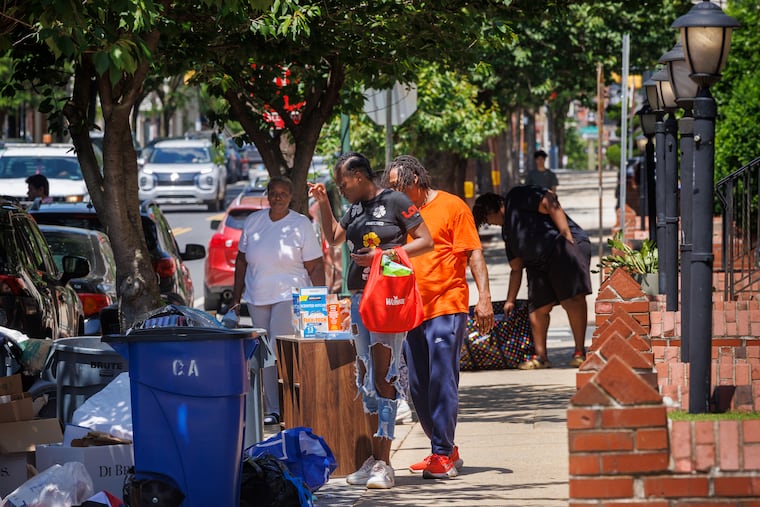
Ronald King and his family stuffed four mattresses, a desk, and a chair into a U-Haul on Tuesday.
The next day, they returned in their car to pick up smaller items — unopened tissue boxes, over-the-counter medications like Tylenol, and Command hooks for hanging wall decor at their new home in Germantown.
The family wasn’t spending hundreds of dollars at a big-box store.
They were getting the goods for free out of overflowing garbage cans and stuffed trash bags near the University of Pennsylvania’s West Philly campus.
The family’s haul was made possible by students who had just cleaned out their houses at the end of the semester. As graduates prepare to move elsewhere, and others relocate for the summer, they often throw out valuable items, which can become gifts to those struggling to keep up with the increased cost of living.
This annual ritual occurs at every college. But it has become well-known around Philadelphia’s Ivy League school, where locals sometimes refer to the time period as Penn Christmas.
University donation campaigns have led to smaller and fewer trash heaps, according to Penn officials, who say students give away about 66,000 pounds of furniture, appliances, clothes, and other items each spring.
After an off-campus donation-pick-up program launched last year, they said they received “minimal” neighborhood complaints, far fewer than in the past.
As of Thursday, they said data from this year was not yet available.
On Wednesday, garbage day in University City, some blocks appeared clean. But others were teeming with discarded items — including a wide assortment of lightly used goods for King and his family to peruse.
“There’s a lot of nice stuff out there,” King, 43, said as he browsed curbside cans and cardboard boxes. “You can always find beds. Nice beds. Ikea beds.”
As King’s group pounded the pavement in record heat, someone yelled out that they had spotted a flat-screen TV on another block. His son held up a knight costume, still in its packaging from Spirit Halloween, where similar costumes sell for $60. Nearby, King’s mother, Adria Polite, revved up a Dustbuster handheld vacuum, which can cost $30 or more.
“Still works,” said Polite, 59, adding with a laugh: “One man’s trash, another’s treasure.”
Cleaning up move-out messes
While students’ end-of-year purge can be a blessing for some, it has garnered complaints over the years from neighbors of Penn and other schools, as they navigate massive piles of trash.
Environmentalists and community advocates have also voiced concerns about the volume of move-out waste, and noted that discarded items — like expensive electronics and clothing with the tags still on — can bring the income inequality between students and full-time residents into stark relief.
The median family income of a Penn student, for example, was more than $195,000 in 2017, according to a New York Times analysis of anonymous tax records. That’s about four times the median household income in West Philly, according to U.S. Census data.
On 41st Street, Lafayette D. El swept up plastic bottles, scrawled-on notebook pages, and takeout containers scattered across the sidewalk near ripped-open bags.
El, an 87-year-old retired roofer who lives nearby, said rental companies ask him to take the trash to the curb at several properties after student tenants leave for the summer.
El said he did so Tuesday night. By the morning, the contents of tidy cans and bags had been strewn all over, he said, presumably by folks on the hunt for gems amid the junk.
Midday Wednesday, as the temperature soared above 90, the former Army paratrooper bent over his broom. He wore a straw hat, suspenders, and a black T-shirt that read “Snow Day Supporter” and bore the image of a snowflake. El said he’d been out in the heat since dawn, and had cleaned garbage outside 10 homes.
To El, move-out litter is “getting worse, because people have less money,” he said. Folks desperate for free finds are quick to tear through the trash, he said, leaving a mess in their wake.
Perhaps, he said, students should be encouraged to put their year-end waste in clear bags, so passersby can see when there is nothing of great value inside.
What Penn is doing to reduce move-out waste
Penn officials say they’ve listened to neighbors’ feedback.
On campus, PennMoves has operated donation drop-off sites since 2008. In recent years, they’ve worked with city and University City District leaders to add more trash pickup days in May, and started the off-campus curbside donation service last year.
“The off-campus move-out program makes it easier for students to be respectful neighbors, give back to the city they’ve called home, and reduce environmental impact by donating items that might otherwise end up in landfills,” Nina Morris, director of Penn Sustainability, said in a statement.
The off-campus program is a collaboration with Rego, a West Philly-based AI waste-auditing company, and local nonprofits.
The service will continue to be refined, Morris said, as they get more community feedback and pickup stats.
“With another year of data from this move-out, we’ll have a better sense of what students are donating and where we can help further cut down on waste,” Morris said.

University officials said students have donated the following to local nonprofits, such as Philabundance and Goodwill:
- 52,000 pounds of clothing, furniture, appliances, books, home goods, nonperishable foods, and other items are donated on average at on-campus donation sites every year.
- 14,000 pounds of clothing, furniture, and small-kitchen appliances were donated through off-campus pickups last spring. Off-campus students donated 670 items during 150 pickups in the program's inaugural year.
Source: Penn Residential Services; Penn Sustainability
