The unraveling of a $2,000 scheme to frame a man for murder

As Jonte Slater sat in a jail cell, charged with murder, he plotted to free himself — and frame another man for the crime.
Days after his 2008 arrest, Slater told relatives to track down a witness to the shooting and pay her to say that Tyree Musier — not he — fired the bullets that killed Nathaniel Crawford on a West Philadelphia street.
“They can get a check if they come down there and say it ain’t me,” Slater told the mother of his child in a recorded phone call from jail.
“A thousand dollars apiece, for whoever the witnesses is,” he told her in a separate call. “Each one of them.”
The plan worked.
The 14-year-old girl who saw the shooting testified that Musier killed Crawford. Slater was freed. And Musier was arrested, convicted, and sentenced to life in prison.
The witness now says she was paid about $2,000 to lie.
But nearly two decades later, Musier, 39, remains behind bars for a crime that he and a dozen witnesses say he didn’t commit.
Among them is Slater’s father, who says Slater is the real killer.
“I know my son did it,” Billy Slater testified earlier this year. The 65-year-old said he is determined to help free Musier.
Slater, meanwhile, was shot and killed about a year after he was released from jail in a crime that remains unsolved.
This week, the district attorney’s office asked a judge to overturn his conviction, citing the damning jail calls that trial prosecutors never revealed to Musier’s defense team. Assistant District Attorney David Napiorski stopped short of saying Musier was innocent, but said the outcome of his trial “is unreliable and that justice requires he receive a new one.”
On Friday, Common Pleas Court Judge Jennifer Schultz is expected to hear arguments from prosecutors and Musier’s attorney, Dan Silverman, and begin weighing whether Musier’s conviction should be overturned.
To Musier’s mother, the jail calls and new witness testimony confirm what she said has been an open secret for years on the streets of North and West Philadelphia: Slater was the killer.
“I know my son is innocent,” Annette Musier said. “It’s crazy how many people sat around and let him take the fall for it.”
A review of the case showed the imperfect layers that can lead to a criminal conviction. It revealed critical evidence that was buried in the bottom of a file box and never turned over to defense lawyers. It showed a case underpinned by a key witness who recanted her testimony at trial — leaving attorneys and jurors alike to wonder at what point she was lying: then or now?
And it underscored a “no snitch” culture that led Musier to maintain his innocence but remain silent about the identity of the real killer, even while facing the possibility of life in prison.
“I feel like he thought that he could trust the system,” Musier’s sister Tania said of her younger brother.
Now, she said, he realizes that was a mistake.
The saga began on June 22, 2008, when Musier went to Applebee’s with Slater, Slater’s younger brother, and a 14-year-old friend. Afterward, Slater stopped by his mother’s apartment at University City Townhomes, at 39th and Market Streets.
Nate “Pac Man” Crawford, 26, who sold drugs in the public housing complex, was outside with others from the neighborhood, witnesses said.
Around 1 a.m., authorities said, Slater parked and a man in a lime green shirt got out of the car. The man argued with Crawford, witnesses said, then shot him multiple times. He died within minutes.
The gunman ran back to Slater’s car and sped off. Police officers nearby heard the shots and, seeing the fleeing Chevy Impala, pulled it over. Inside the console was a lime green shirt.
Meanwhile, investigators at the scene had located two teens who witnessed the shooting.
Latasha Austin, 14, lived next door to Slater’s mother in the townhomes and knew him from the neighborhood. He went by “Pop” or “Pop a Colla,” and was known for getting into trouble, selling drugs, and carrying guns, she said.
Austin saw Slater get out of the car and kill Crawford, she said earlier this year, but she feared Slater would hurt her or her family if she identified him as the gunman. He knew where she lived.
So in the moments after the shooting, when police drove her to Slater’s car and asked her to identify the shooter, she said, she pointed to Musier. And as officers held the gunman’s extra-large green shirt up to the burly Musier, she and another teen witness agreed it was his.
Slater and Musier were arrested — Slater as the getaway driver, and Musier as the one who pulled the trigger.
In the days after Musier’s arrest, his family was mystified. He was never one to fight, let alone shoot someone, Annette Musier said of her son in a recent interview. Almost immediately, she said, people from the neighborhood started coming to the house, saying the word on the street was Slater killed Crawford.
The way dozens of friends and neighbors appeared on her doorstep with food and condolences, she said, “you’d think Tyree got killed.”
Meanwhile, Slater was plotting a way out, telling his family in calls from jail that he needed a witness to “come to court and say it’s not me.”
“Y’all want a check? Y’all can get a check,” he said of whoever would help, according to court records describing transcriptions of his calls.
Slater told the mother of his child, Jerrica Rogers, how police held his green shirt up to Musier as they sought to identify the shooter the night of the murder.
“That’s when they put that green shirt on Ty. My green polo shirt. They was like, ‘We got him. This the guy right here,’” Slater said.
He told his sister that the 14-year-old witness needed to say Musier was the shooter.
Austin did just that. At the preliminary hearing, she testified that she saw Musier, dressed in a green shirt, shoot and kill Crawford. Slater, she said, wasn’t involved.
Municipal Court Judge James DeLeon dismissed the murder charge against Slater, and ruled that the case against Musier should proceed.
Hours later, before Slater was released from jail, he called Rogers to celebrate the news. Musier, he reckoned, needed a good lawyer.
“He better not break,” Rogers said in a recorded phone call.
“Who?” Slater asked.
“Ty,” she said of Musier.
“He can’t break because neither one of us did nothing,” he said. “… Nobody did nothing that night.”
Musier’s family tried to persuade him to tell the truth about Slater, but they said he feared being labeled a snitch.
“I was angry at him for a while, because I felt like, even at the beginning, he didn’t feel like he should snitch,” said Tania Musier, his sister. “Like, that is our culture. You don’t snitch. You know, you let things play out. But this is your life on the line.”
Her brother didn’t budge.
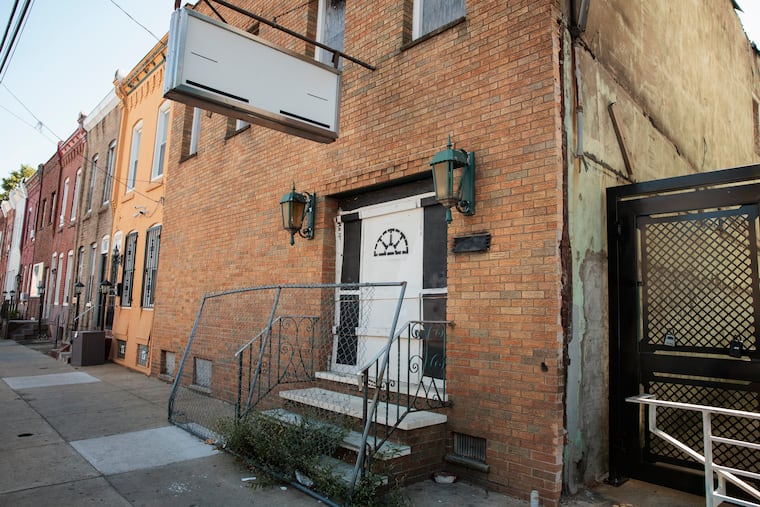
Then, on Nov. 5, 2009, Slater was shot and killed. Police found his body inside an abandoned rowhouse on the 1200 block of North Hollywood Street in Brewerytown. His killer was never identified.
After that, Tania Musier said, even if her brother did decide to say Slater was the shooter, who would believe him?
As the case progressed, Assistant District Attorney Jennifer Bretschneider, who was assigned to the case, visited Austin at the juvenile jail where the teen was being held for an unrelated crime. The prosecutor said Austin told her she lied in her earlier testimony — Slater was the shooter, not Musier.
Bretschneider said she left the conversation concerned that Musier “might be innocent.”
Shortly after speaking with Austin, Bretschneider got a new job, and on her way out, she wrote a memo outlining her concerns so the new prosecutor on the case would be aware of her worry.
“This case needs a lot of attention,” she wrote.
At Musier’s April 2012 trial, Austin, then 18, was summoned to court to testify against her will. She told the jury she lied in her initial statement to police and, later, at the preliminary hearing.
“I was overwhelmed, scared,” she said. “I was nervous and 14 at the time.”
Assistant District Attorney Richard Sax questioned her intentions, and suggested she recanted her earlier testimony out of fear of being labeled a rat, court records show. He suggested that she changed her story only after she knew Slater was dead and was trying to help Musier escape blame.
Austin said she didn’t know Musier and didn’t know Slater was dead when she spoke with Bretschneider.
The jury believed Sax. Musier was convicted of first-degree murder and sentenced to life in prison without the possibility of parole.
Jurors never heard the recordings of Slater’s calls from jail talking about the crime and seeking to frame Musier. The recordings were never turned over to Musier’s defense lawyer, as required by law, the district attorney’s office said in a recent filing. Prosecutors assigned to look into Musier’s latest appeal found the tapes of the calls earlier this year in the bottom of an old case file.
The district attorney’s office said there is no indication the tapes were deliberately withheld, but acknowledged that the material should have been provided to the defense and that had the jury heard that evidence, the outcome of the case might have been different.
Sax said in a recent interview that he had no recollection of the tapes, and that whatever was on them, he “wasn’t privy to.”
In general, he said, he rarely had the time to listen to a defendant’s jail calls, which can take hundreds of hours to go through, and because Slater was dead and no longer part of the case, such a review likely would not have been a priority.
“That’s not to pass the buck or anything,” he said. “In a perfect world, we listen to everything.”
Still, he said, he remembered the Musier case as “one of the stronger cases” he had ever handled.
Police stopped the car as it fled the scene, and officers said they recovered the gun used to kill Crawford after it was thrown from the window on the passenger side of the vehicle, where Musier was sitting. Witnesses identified Musier. And trace amounts of Musier’s DNA, he said, were found on the collar of the shooter’s green shirt. (Musier’s lawyer says that happened when police held the shirt up to his neck at the scene. Prosecutors acknowledged that Slater’s DNA was found in the armpits, but believed that the men shared the shirt and that it was closer to Musier’s size.)
The fact that Austin and another young witness recanted their testimony didn’t trouble him, he said.
“It happened way more often than it didn’t happen, that witnesses would go south and change their testimony,” he said. “… That was the reality.”
Musier appealed his conviction for years without success. In 2023, he filed a petition in federal court contending that his constitutional rights were violated when prosecutors withheld evidence at his trial.
The district attorney’s office began reviewing the case in response and found the memo from Bretschneider outlining her worry that Musier might not be the killer. The document had not been turned over to Musier’s defense lawyers as required, court records show.
Silverman was appointed to represent Musier and tracked down a dozen witnesses. One by one, they told him about Slater’s involvement in the crime and agreed to testify about what they knew.
Among them was Rogers, the mother of Slater’s now-teenage child, who told a judge in April that Slater had confessed to killing Crawford — and paying Austin.
“He told me that he shot the guy,” she said.
Austin, too, testified and said that she was paid to lie. And her cousin, Marquise Astillero, recalled that Austin told him that as well.
Hafees Alston, who was in Slater’s car that night and was 14 years old at the time, wrote in a sworn statement that he saw Slater shoot Crawford. Musier, he said, was asleep in the front passenger seat when Slater got out and fired his gun.
“What’d you do?” he recalled Musier asking Slater after he returned to the car, gun in hand.
Slater’s father also testified and said Rogers told him years ago that his son had told her he killed Crawford. He said he had worked to bring that troubling truth to light ever since.
Billy Slater said in an interview that he was motivated by his Christian faith and isn’t worried about being criticized for speaking out against his own son.
“It don’t matter what anybody thinks or feels because it’s the right thing to do,” he said. “The truth is the light. The truth will set you free, and in this case, the truth will set Tyree free, God willing.”
Billy Slater said he has worked to clear Musier’s name for more than 15 years. Before Musier’s trial in 2012, he said, he visited Musier’s family, as well as two police stations to tell officers what he knew. He said he tried to tell prosecutors as well.
Annette Musier, meanwhile, is praying that she will soon hug her son outside the walls of a prison. She has not seen him in nine years, she said, because she suffers from severe back pain and near blindness, and cannot make the six-hour drive to the state prison where he is housed.
For the first time in years, she said, she has a reason to believe.
“I got faith. I believe in God,” she said. “I was mad at God for a long time, but God, please just bring him home.”