Key fob cloning spurs new kind of auto theft across the Philadelphia region, authorities warn
Authorities are warning car-owners that vehicles developed in the last decade that use keyless technology are susceptible to theft.
Law enforcement officials are warning of a new type of high-tech auto theft that turns a common device — key fobs used in push-to-start vehicles — into a tool for stealing cars.
The Philadelphia region has played host to an increasingly common form of car theft in which criminals copy or redirect the signal emitted by these devices to unlock and start parked vehicles. In some cases, thieves even target key fobs inside locked homes, stealthily capturing their signals from outside and leaving car owners unaware.
It’s the latest trend in auto theft in a region that saw a wave of carjackings and catalytic converter thefts during the pandemic, while anxiety stirred among Hyundai and Kia owners as viral online videos taught would-be criminals how to hot-wire the vehicles and drive off in minutes.
While those trends have waned, police say, authorities are warning car owners that vehicles developed in the last decade that use keyless technology are susceptible to key fob cloning theft.
Some auto industry experts estimate that about 90% of new vehicles are equipped with keyless technology, allowing drivers to use key fobs for hands-free unlocking, auto-start, and other features.
Police departments nationwide have reported a rise in key fob cloning thefts in recent years, and in the Philadelphia region, several incidents have rattled suburban communities like Abington, Royersford, and Conshohocken in the last year.
“It used to be a complex thing to do, so there were very few organizations doing it,” said Steven Wheeler, executive director of the Pennsylvania Auto Theft Prevention Authority. “It needs equipment, and the ability to be rather close to the radio signals. Just like anything else with technology, that’s evolved.”
Authorities say there are two methods for cloning key fob signals.
In one, thieves break into a car by smashing the window or accessing the roof, then plug an onboard diagnostic tool commonly used by mechanics into a port beneath the steering wheel. The device allows access to the vehicle’s unique PIN and passcode, which can then be copied onto a blank key fob in about three minutes.
In another method, dubbed a “relay attack,” thieves target a key fob’s signal by holding an antenna-like device outside a victim’s home and relaying that frequency to someone waiting near the car. That signal unlocks the vehicle and can start its engine, tricking the car into believing the key fob is there.
In May, one such theft captured a South Jersey community’s attention, and led to the arrest of a suspect this month.
In what Washington Township police called a “brazen” broad-daylight crime, several thieves smashed the rear window of a Sewell resident’s purple Dodge Charger Hellcat and used an onboard diagnostic tool to clone her key and steal the vehicle, which police said was worth more than $100,000.
And in September, law enforcement officials broke up a Camden-based, multistate car theft ring and arrested 13 people — including three who were involved in the 2023 killing of Philadelphia Police Officer Richard Mendez at Philadelphia International Airport. They were charged with racketeering and other federal crimes in connection with a sprawling scheme of auto thefts.
The operation resulted in 40 stolen vehicles across Pennsylvania, New Jersey, and New York, valued at more than $1 million, prosecutors said, and some members of the group are accused of using diagnostic tools to clone key fobs.
Philadelphia thefts
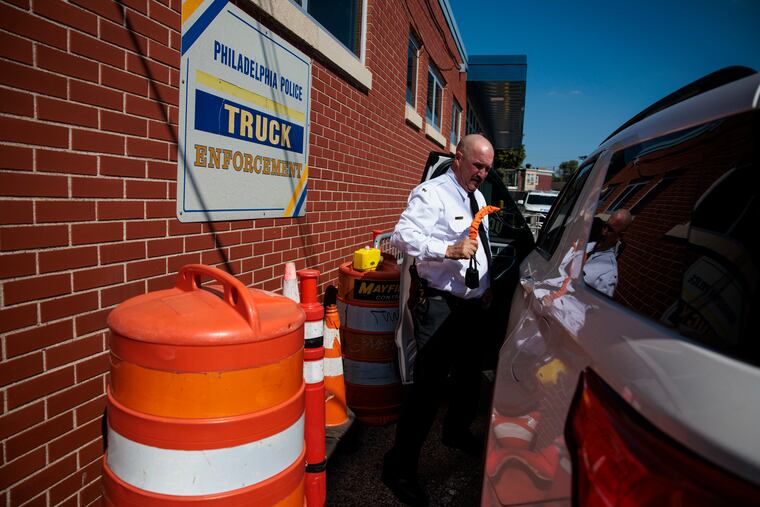
Philadelphia police say they have noticed an uptick in auto thefts bearing characteristics of key fob cloning, though the department does not keep data on the specific tactic because investigators can determine the method of theft only if the stolen vehicle is recovered.
Lt. Brian Geer, head of the Philadelphia Police Department’s major crimes unit, estimates that, excluding Kia and Hyundai thefts, about 60% of auto thefts can be attributed to key fob cloning — even as other methods of auto-related theft continue to fall.
Catalytic converter thefts have fallen to around 100 in 2025, compared with more than 5,600 in 2022, according to Geer, whose unit is tasked with combating auto theft in the city.
And the city saw more than 1,300 carjackings that year; this year, that number has fallen to about 300, Geer said, due in part to joint enforcement from agents with the Bureau of Alcohol, Tobacco, Firearms and Explosives and the FBI.
By contrast, the relative ease of accessing the tools required for key fob cloning has helped the crime proliferate, Geer said.
The onboard diagnostics device used to program keys costs between $400 and $600 at major online retailers, and there are no limitations on who can purchase them.
“Out of box, you can steal 700 makes and models of vehicles made in North America in the past 10 years,” Geer said.
And unlike the “Kia boys” trend in 2022, in which thieves in their teens or early 20s stole vehicles for social media clout or the thrill of joyriding, Geer said, key fob theft can prove lucrative for those looking to strip cars for parts like rims and tires, or resell them outright on Facebook and other secondhand marketplaces after creating a new vehicle identification number.
Philadelphia police plan to launch a public awareness campaign about key fob cloning next month. In the meantime, authorities are urging car owners to consider purchasing anti-theft tools like steering wheel locks as well as tools specific to key fob cloning, such as an “OBD lock” that prevents access to the diagnostics port.
To prevent relay attacks, Geer suggested car owners store their key fobs in Faraday pouches and boxes, which are constructed with material that blocks wireless signals.
Suburban police and state lawmakers react
Key fob cloning thefts have not been limited to Philadelphia.
Police in Conshohocken issued warnings to residents about key-fob cloning in August after a spate of robberies there in the summer. And in Abington, Deputy Police Chief Ed Quinn has been handing out Faraday pouches as part of an information campaign warning township residents about tech-savvy car thieves.
So far, two arrests have been made in the township: a juvenile who was caught in the act by officers and charged with attempted theft after trying to use a cloning device to steal a car, and a serial car thief who was arrested by Pennsylvania State Police as part of a larger investigation, according to Quinn.
The issue has also gotten the attention of the Pennsylvania state legislature.
State Sen. Tracy Pennycuick, whose district includes parts of Berks and Montgomery Counties, introduced a bill that seeks to make possessing the signal-cloning devices that allow key fobs to be copied a first-degree misdemeanor punishable by up to five years in state prison.
The bill makes exceptions for used-car dealers, fleet managers, and anyone using the devices for legitimate business purposes. It passed the Senate in a near-unanimous vote and is awaiting action in the House.
“Thieves can take a really nice car off a street corner with this thing in 10 seconds, and drive four states away to sell it before the owner wakes up,” Pennycuick said in a recent interview. “This is not the usual method of car theft that we’re used to dealing with.”