The rape and murder of a little girl inside a Bristol church went unsolved for decades. Until now.
In 1962, Carol Ann Dougherty was killed inside a church in Bristol. Last week, a grand jury ruled that her killer was William Schrader, long a suspect in the decades-old crime.
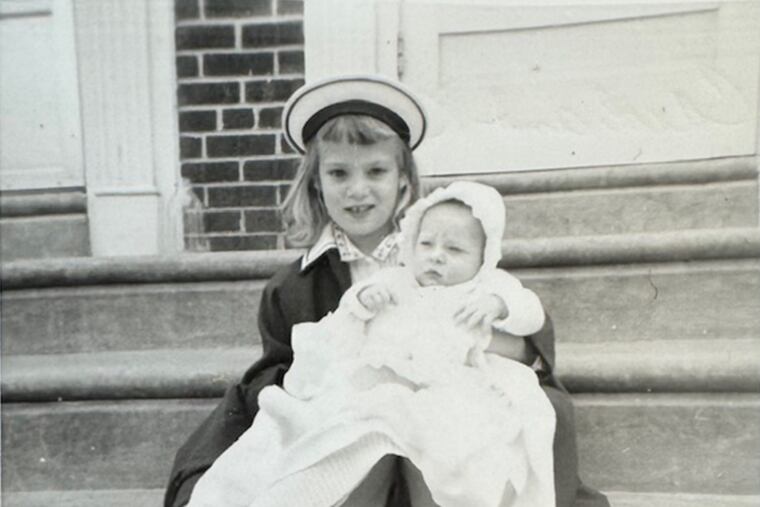
Nearly 63 years to the day that Carol Ann Dougherty was raped and murdered inside the Bristol church that was a fixture in her community and her family’s life, Bucks County officials publicly identified her killer.
William Schrader, “an absolute predator” with a documented history of sexually abusing children, killed Carol Ann inside the choir loft of St. Mark’s Catholic Church on Oct. 22, 1962, District Attorney Jen Schorn said at a news conference Wednesday.
Schrader, who was long considered a suspect in the cold case, died in 2002 at age 62 after serving time in a Louisiana prison for manslaughter and arson.
But through a combination of forensic evidence, decades-old eyewitness accounts, and a confession Schrader made to his stepson, a county grand jury last week ruled that Schrader was Carol Ann’s killer.
Schorn, flanked by Pennsylvania State Police investigators and Bristol police officers, said she was honored to be able to bring closure to the girl’s family after decades of uncertainty and grief.
“This group collectively spent 20 years of their lives pursuing the truth and justice for Carol Ann and her family,” Schorn said. “The work to keep this case alive was nothing short of remarkable.”
The last day of Carol Ann’s life started off like any other, according to court documents. The fifth grader, an avid reader, jumped on her blue-and-white Londoner racing bike bound for the Bristol Free Library, where she planned to return two books.
Along the way, she stopped for a Coke and penny candy, and went to pray inside St. Mark’s, a place that Schorn said was sacred to her family.
As the hours ticked on with no sign of Carol Ann, her parents began to worry. While searching for the child, her mother, Dorothy, saw the Londoner bike parked outside the church and told her husband to investigate.
Inside, Frank Dougherty found his daughter’s battered, lifeless body in the church’s choir loft.
Six decades later, Carol Ann’s younger sister Kay Talanca still remembers the “inhuman noises” her father made when he returned to the car and told her and her mother not to go inside the church.
On Wednesday, Talanca wept as she described how grateful she was to hear the news that her sister’s slaying was finally solved.
“Our family lived without answers,” she said, “and the uncertainty surrounding Carol’s death became a part of who we were, a shadow that touched every day of our lives.”
Schorn said efforts to find Carol Ann’s killer were hindered by the “perfect storm” of obstacles. Investigators initially focused on two other suspects, one of whom falsely confessed.
The other, a Catholic priest who worked at St. Mary’s, lied about his whereabouts on the night of the killing, authorities said, because he was having an affair with a married woman.
But Schrader, who lived not far from the church, fit the profile of a man who preys on children, prosecutors said.
Schrader, of Luzerne County, spent his childhood in reform school after sexually assaulting girls in his youth. He later joined the Army, was dishonorably discharged, and was incarcerated for a time in Eastern State Penitentiary after being convicted of attempted murder.
Afterward, he settled in Bristol, where his brother and sister-in-law lived at the time. After Carol Ann’s killing, he moved south and eventually settled in Louisiana, where, Schorn said, he raped his wife’s disabled daughters and, later, two girls the family took in as foster children.
In the death of Carol Ann, Schorn said pubic hair found on her hand and on her thighs became key evidence in the case, and Schrader was the only suspect who was not excluded as being the source.
But that alone was not enough to convict him, she said.
More than 20 years after the crime, one of Schrader’s friends in Bristol told police he had seen Schrader outside the church on the night Carol Ann was killed.
And years later, in Louisiana, authorities said, Schrader told his stepson that he had killed a girl in Pennsylvania decades earlier. He raped the child, he said, and took her life out of fear that she would tell police.
Investigators learned of that statement last year while gathering evidence on Schrader, and used it to build their case against Schrader, the prosecutor said.
She said their efforts were aided by news reports, and she thanked JD Mullane of the Bucks County Courier Times, who has written about the death of Carol Ann since the 1990s, and Mike Missanelli, who produced a podcast about the case last year.
Carol Ann’s sister, Talanca, embraced both men after Wednesday’s news conference.
“Their persistence and commitment to uncovering the truth played a vital role of keeping hope alive for all these years,” she said.
“Today as Carol’s only surviving immediate family member, I stand before you with profound sorrow, for all that was taken away from my family, and gratitude for the extraordinary efforts of those who never gave up.”