Three Philly cops who defenders say ‘straight up lied’ cause 134 drug cases to be dismissed, hundreds more expected
Nearly a thousand cases could be thrown out after prosecutors said the officers repeatedly gave false statements in court and can't be trusted.

More than 130 drug cases were dismissed Friday — and hundreds more are expected to collapse in the coming months — after prosecutors said three Philadelphia narcotics officers repeatedly gave false testimony in court.
Common Pleas Court Judge Lillian Ransom vacated 134 cases during the first in a series of hearings that could see nearly a thousand criminal prosecutions collapse because the testimony of three officers on the Narcotics Strike Force has been deemed unreliable.
Philadelphia Police Officers Ricardo Rosa, Eugene Roher, and Jeffrey Holden were found to have repeatedly given false testimony against people suspected of selling drugs after lawyers with the Defender Association of Philadelphia recovered video footage that contradicted their statements, the district attorney’s office said.
The defenders said the officers regularly watched surveillance cameras to monitor suspects in drug investigations in real time, then didn’t disclose it to prosecutors or defense attorneys in court, officials said. The video footage later showed they also testified to things that never happened or that they could not have seen from where they were positioned, according to court filings.
» READ MORE: Philly narcotics cops secretly used surveillance cameras. Video proved some of their testimony false.
Prosecutors later conceded that they could no longer vouch for the officers’ credibility and are expected to dismiss scores of cases built on their testimony.
After a review of cases and convictions involving the officers’ testimony, lawyers for the defender association and prosecutors identified more than 900 cases and expect to ask the judge to dismiss them over the next year. It was not immediately clear how many people, if any, served time in jail, or are still in custody, as a result of the prosecutions that are now in question.
Holden, reached by phone Friday, said he was shocked to learn that his cases and testimony were under scrutiny, and said he had not been told of the move to end the cases at Friday’s hearing. He declined to comment further.
Rosa and Roher did not immediately respond to requests for comment. The officers remain assigned to their narcotics squads.
The district attorney’s office said it provided the police department’s internal affairs unit with details of the officers’ false statements in multiple cases last March.
Police Commissioner Kevin Bethel, in a statement, said the department takes “potential credibility issues with our officers extremely seriously.”
An internal affairs investigation into the matter was launched last March and remains ongoing, he said.
The department requested and reviewed cases flagged by prosecutors, he said, but “thus far we have not identified any evidence that would raise concerns of misconduct or criminal behavior on the part of those officers.”
He added: “We will, as always, take appropriate action if and when evidence supports such action, but we will not preemptively sideline officers absent some verified findings.”
Bethel said he learned of the plans to dismiss the cases on Thursday, and has asked prosecutors to provide additional information to assist with their review. He also said the police department has been working with the district attorney to develop a clearer protocol on how officers can use surveillance cameras during investigations.
District Attorney Larry Krasner on Friday declined to say whether his office was investigating the officers’ conduct, but noted that “the statute of limitations for police officers in their capacity is much longer than the statue of limit for other offenses.”
“I have dealt extensively with Commissioner Bethel. I know he and the mayor are committed to rooting corruption, lying, stealing, and cheating out of the police department,” he said.
‘They’re lying’
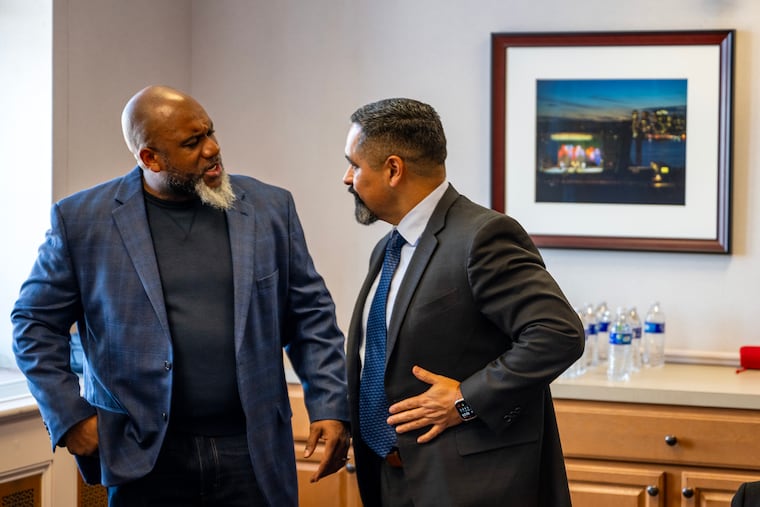
Assistant District Attorney David Napiorski, who reviewed the cases for the office, stopped short of accusing the officers of lying, but said “there’s enough of a pattern of inconsistencies across testimony that we can’t rely on them as critical witnesses in court.”
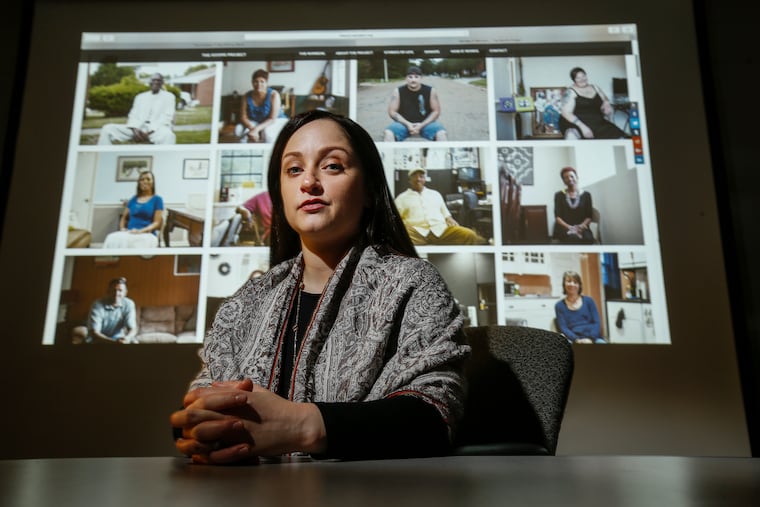
But Paula Sen and Michael Mellon of the Defenders’ Police Accountability Unit disagreed.
“It’s a fancy way of saying they’re lying,” said Sen, who has worked with Mellon to uncover the officers’ credibility issues since 2019.
The unfolding scrutiny is the latest in a series of large-scale conviction reversals in Philadelphia tied to misconduct in the narcotics unit. Over the past three decades, judges have thrown out thousands of drug cases after officers were found to have fabricated evidence, lied on the stand, or stolen money from dealers.
Bradley Bridge, a longtime public defender, was often the driving force behind those reviews and estimates he’s worked to overturn about 2,500 drug convictions since 1995.
In 2015, Bridge filed a petition to vacate more than 1,400 drug convictions tied to six ex-narcotics cops after they were charged with robbing and beating drug dealers, then altering police paperwork to cover their tracks. The officers were later acquitted by a jury and got their jobs back through arbitration, but more than 950 cases were thrown out after officials agreed they couldn’t trust their testimony.
Bridge, who returned from retirement to handle the cases tied to Rosa, Roher, and Holden, said, “Tragically, nothing is unique about this. It’s exactly the same problems that keep arising since 1995, including the lack of supervision and oversight of police officers on the street.”
Sen and Mellon said they first noticed a pattern of false testimony in 2019 after they reviewed surveillance footage that contradicted statements Rosa gave about drug cases. As time passed, they said, they continued to monitor his narcotics squad, and found inconsistencies with Holden and Roher’s testimony, too.
They said the officers used the city’s surveillance camera systems to monitor suspected drug activity in real time, but didn’t disclose it as part of their investigation — a violation of due process because the evidence wasn’t shared with defense attorneys.
In court, the officers denied using the cameras, Mellon said, and often said they witnessed hand-to-hand drug transactions that video later showed either never happened or that they could never have seen because the suspect was out of sight.
“They just straight up lied and invented acts of criminality,” Sen said.
‘Who are they gonna believe?’
In one case, Roher said he was seated in an unmarked police car when he saw Darrin Moss sell drugs to two people near Somerset and Helen Streets in Kensington in April 2022. He said he could see Moss inside the fenced lot retrieve drugs, then hand them to a buyer and accept money in return.
Prosecutors later said in court filings that video footage captured by a surveillance camera on the end of the block showed that one drug deal never happened, and the other supposed deal was behind a building and would have been impossible to see.
The charges against Moss were withdrawn.
When prosecutors learned of the discrepancies, they asked Roher to meet and discuss the case, but he failed to appear in court twice without explanation, they said in a court filing.
Prosecutors said this became a pattern — once the officers seemed to learn their testimony was under scrutiny, they stopped showing up to court.
Court filings identify at least nine cases in which the three officers allegedly gave false testimony. Napiorski, of the district attorney’s office, said prosecutors reviewed a few dozen videos from other cases that suggested a systemic pattern of false information in court.
Sen, of the defenders association, said it was troubling that the officers remained assigned to the narcotics squad and have been able to continue making arrests.
“How is the public supposed to have trust in a department that continues to employ people who have so clearly proved themselves to be liars, that has resulted in thousands of people being arrested and jailed?” she asked.
Most of the cases dismissed Friday were drug crimes that led to a sentence of probation, prosecutors said. Seven included a gun charge.
The drug charge against Ramoye Berry was among them.
Berry, 29, from North Philadelphia, said that in April 2023, he was standing on the 1300 block of West Boston Street talking to some friends when a group of officers tackled him and accused him of selling drugs.
When they searched his car, he said, they found a small amount of weed, but he wasn’t selling it. He was charged with possession with intent to sell drugs.
Berry couldn’t recall which officer testified against him in court, but he said he remembered telling his lawyer that the officer wasn’t telling the truth.
He said he pleaded guilty to drug possession and accepted a year of probation because he didn’t think he could prove his innocence, and the court dates were challenging to keep up with. It kept him from being able to get a job, he said.
When he learned on Friday that the officer had a history of giving false information and that his conviction would be vacated, he said he felt vindicated — but frustrated by the time and jobs he lost to the case.
“This is what I was saying from the beginning,” he said, shaking his head. “But who are they gonna believe? The cops, or me?”