Bucks County man found guilty of beheading his father, displaying his corpse on YouTube shows little remorse as judge delivers life sentence
Justin Mohn was sentenced to life in prison for his crimes. In court, he showed little remorse and apologized to his family only after prodding from his attorney.

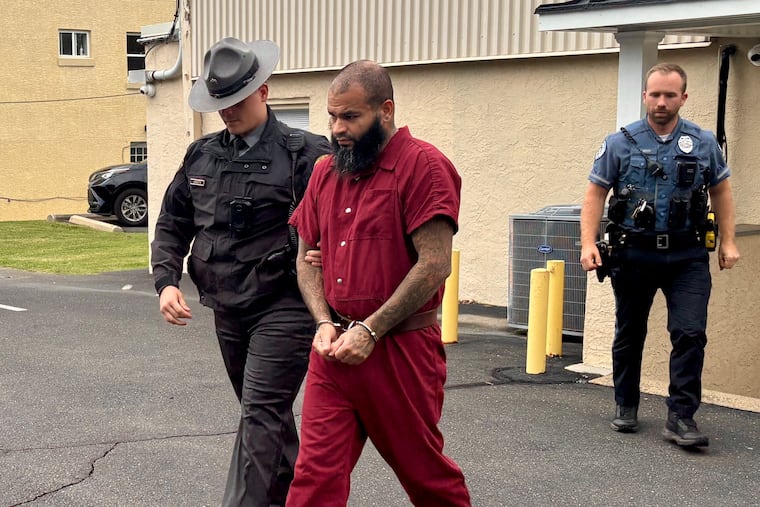
Justin Mohn, the Levittown man who made national headlines last year for displaying his father’s severed head in a YouTube video, was convicted of murder, terrorism, and related crimes Friday by a Bucks County judge and sentenced to life in prison.
In handing down the verdict, Judge Stephen Corr admonished Mohn, 33, for “throwing away” a lifetime of love and support from his parents to commit what he called an unimaginable crime.
Mohn took the stand earlier this week and admitted he shot his father, Michael, in the head and then used a kitchen knife and machete to decapitate him, saying he does not regret doing so. He didn’t initially plan to murder his father, he said, only to subdue him during a citizen’s arrest for what he described as treason against his country.
However, he said he had to resort to deadly force when his father attempted to grab the 9mm Sig Sauer handgun he was using and threatened to kill him.
Prosecutors, led by First Assistant District Attorney Edward Louka, called that explanation a sham, and said voluminous evidence proved Mohn had planned the murder months, if not years, in advance.
Documents pulled from a USB drive Mohn had, as well as Google searches, showed that he planned to form an armed militia to help commit violence against the federal government, and target federal judges and politicians he felt had wronged him for being white, straight, male, and Christian.
“The defendant is a danger to the community, with no signs of remorse for what he has done, and I don’t think that will change,” the prosecutor said.
Mohn, in his final address to the judge before sentencing, thanked him and his attorneys. He then immediately veered into the rambling political rhetoric featured in his viral YouTube video.
He vowed to file an appeal of Corr’s decision and offered to be part of a prisoner exchange with American soldiers incarcerated in Russia.
“I think this case presents a picture of America,” Mohn said, adding that he believes God will not be happy with the judges who have ruled against him and ruined his life.
Almost as an afterthought, Mohn offered an apology to his family — but only after prompting from his attorney, Steven Jones.
“I don’t feel guilty for what I did, but I am sorry my family went through what they did because of the federal government’s actions and my reaction to it,” he said.
Corr, the judge, said Mohn’s crimes were an “indictment on the mental health system in this country.”
“Just because our laws say you are competent to stand trial, doesn’t mean you don’t suffer from some kind of mental infirmity,” he said, drawing a stark contrast between Mohn’s calm, polite treatment of courthouse staff and the gruesome violence he inflicted on the man who had raised him.
Mohn’s mother, brother, and sister took turns telling Corr that Mohn was cruel and callous and a danger to the community, and they urged the judge to sentence him to life in prison.
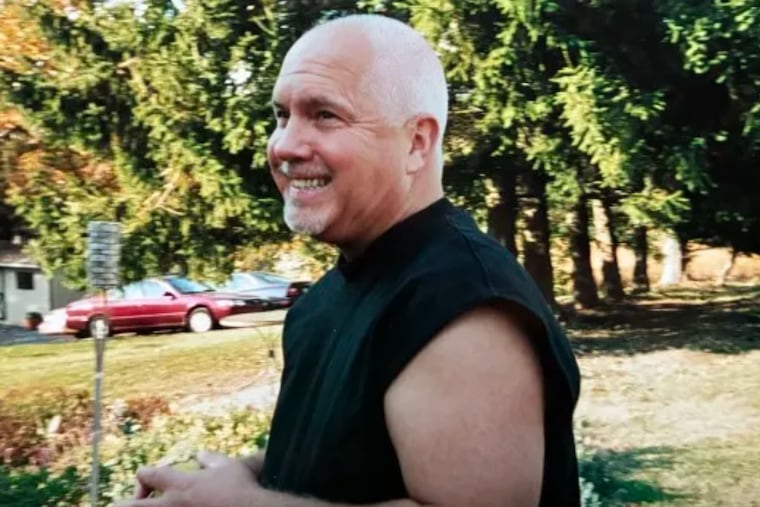
His sister, Stephanie Smith, chastised her brother for ruining what should have been his parents’ “golden years,” a chance to enjoy retirement and travel after decades of working and raising their family.
Denice Mohn wept as Deputy District Attorney Ashley Towhey read her victim-impact statement about the loss of her husband, who was killed a year before their 40th wedding anniversary.
He was, she said, her “safety net,” a kind, caring, and ambitious man with a lifetime of achievement as an engineer with the Army Corps of Engineers. An award he received from the agency in 2019 was renamed in his honor after his death.
“I am tortured at knowing what Justin was capable of doing to his father, who had unconditional love for him,” she wrote. “I hope Justin is never given another opportunity in his life to hurt anyone else or to distribute his hateful ideologies.”
Mohn’s older brother, Zachary, said he modeled himself after his father, and had watched in frustration, for years, as his brother floundered through life and blamed all of his failures on others.
It infuriated him that his brother took for granted the support of his parents, who allowed him to move back home when he struggled to maintain a job.
“For him to target my father despite of all that compassion showed he did not care what he did to the world or to others,” he said. “Any show of remorse would be an appeal to emotions he doesn’t feel, beyond them being used as a lever for his manipulation.”