Dozens of surveillance videos and cell phone data led Philadelphia police to Kada Scott’s accused killer
Prosecutors laid out evidence Monday that they say link her killing to Keon King, who is charged with murder, abuse of a corpse, and related crimes.
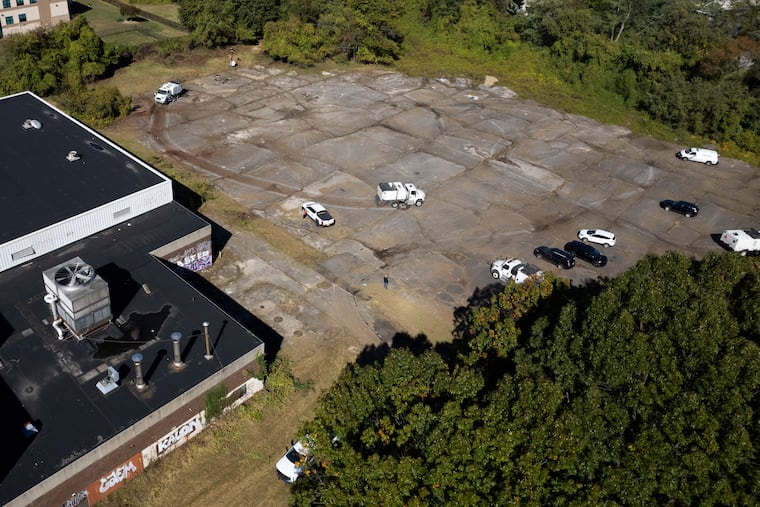
Two weeks after Kada Scott vanished, Philadelphia Police Detective Joseph Cremen stood over a patch of disturbed ground in a wooded stretch near an abandoned school in East Germantown.
He pushed aside a layer of loose twigs and pressed a six-foot branch into the soil. It sank only a few inches before stopping short.
That, Cremen testified Monday, was when he realized he’d found a shallow grave.
The Oct. 18 discovery ended a two-week search for Scott, 23, who disappeared on Oct. 4 after leaving the Chestnut Hill senior living center where she worked. An autopsy later determined that she had been shot in the head.
Cremen testified that the location of the grave was not discovered at random, but emerged from weeks of reviewing surveillance footage, digital data, and tips that helped authorities trace a path from the Awbury Arboretum to the wooded area where Scott was buried — and that linked her killing to Keon King, who is charged with murder, abuse of a corpse, and related crimes.
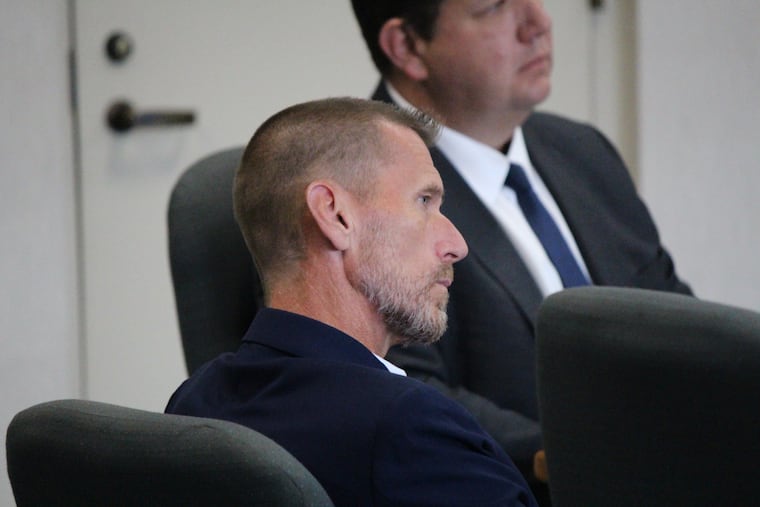
During a preliminary hearing Monday that stretched nearly five hours, prosecutors methodically laid out that evidence, replaying video after video on a courtroom TV as detectives testified about how they tracked Scott’s final movements and King’s efforts, they say, to conceal her death.
At the conclusion of the hearing, Common Pleas Court Judge Karen Simmons ruled that prosecutors had presented sufficient evidence for the case to proceed and ordered it held for court.
An attorney for Scott’s parents, Brian Fritz, called the ruling a “first step” in getting justice for their daughter.
“Kada Scott’s family is grieving,” he said. “In fact, their grief is unimaginable. But, so is their commitment for accountability and justice for Kada.”
Detectives testified that surveillance cameras at the Awbury Arboretum recorded a silver hatchback vehicle pulling into a parking lot less than an hour before Scott’s Apple Watch transmitted its final location at 1:14 a.m. on Oct. 5. Footage from the same cameras appeared to show two men removing an object from the car and walking in the direction investigators later followed to Scott’s burial site.
An anonymous tip helped lead investigators into the woods nearby the Ada H.H. Lewis Middle School in East Germantown.
Additional street cameras, prosecutors said, captured the same hatchback parked in a driveway behind homes on the 2300 block of 74th Avenue. Moments later, video showed a sudden flash of light and flames as the car was set on fire, destroying what authorities believe may have been physical evidence inside.
Investigators did not rely on any single camera, prosecutors emphasized. Instead, detectives testified that they reconstructed the timeline by stitching together footage from dozens of surveillance systems across the city. That effort, they said, led them to King, 21.
Street cameras recorded a 1999 gold Toyota Camry registered to King traveling in the vicinity of the arboretum around the same times activity was captured there, they said. Police also tracked the movements of one of Scott’s Apple devices after she left work, comparing its location data with license plate readers and surveillance video, detective Robert Daly testified.
“Everywhere this device went, Mr. King’s car went,” Daly said.
Cell phone records presented at the hearing showed that King and Scott had exchanged text messages in the hours before her disappearance, Daly testified.
The last message Scott sent asked King to call her when he arrived at the senior living center. The final incoming call on her phone, at 10:12 p.m. on Oct. 4, was from King, according to police.
Before Simmons ruled, King’s defense attorney, Robert Gamburg, argued that the prosecution’s case relied too heavily on circumstantial evidence and failed to place his client directly at the scene of the killing.
The surveillance footage, he said, did not clearly identify any faces and could not establish who was inside and around the vehicles.
He also pointed to testimony from a senior living center employee who said she saw Scott leave work that night and noticed a dark-colored Jeep parked outside the facility, not a silver hatchback.
“There is absolutely nothing connecting this young man to what happened to Ms. Scott,” Gamburg said, urging the judge to dismiss the case.
“At this level, with this quantum of evidence, for this type of case, it should be discharged today,” he said.
Assistant District Attorney Ashley Toczylowski countered that investigators had assembled a detailed and corroborated account of Scott’s final hours, one that showed not only King’s proximity to her disappearance, she said, but also steps taken afterward to destroy evidence.
“This isn’t coincidence,” she told the court. “It’s corroboration.”