Philly landlord whose intimidation campaign against tenant left two people dead is sentenced to 9 to 18 years in prison
Stephen Wilkins had sought to illegally evict Patricia Hall and her children from his Germantown property. Hall, 45, was shot and killed in September 2023.
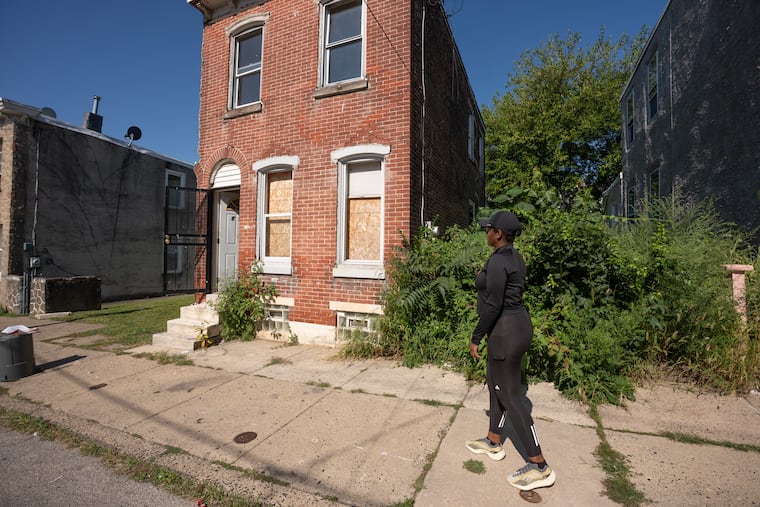
The rowhouse on East Pastorius Street no longer looked like a home.
Its doors and windows had been stripped, leaving the two-bedroom Germantown rowhouse open to the elements — and leaving Patricia Hall, the tenant and mother of four, alone inside and clutching her gun, afraid that if she left, her landlord would finally get his way and throw out everything she owned.
That night, a man slipped through the open back door, armed with a gun of his own.
Hall encountered Felipe Eskew, dressed in a mask, as she lay on her couch. They shot and killed each other.
The intimidation campaign that ended two lives began months earlier, after Hall’s landlord, Stephen Wilkins, grew determined to force Hall and her family out of the crumbling property after they fell behind on rent.
On Tuesday, Wilkins, 55, was sentenced to nine to 18 years in prison for setting in motion the events that led to the deadly confrontation.
Hall, 45, and her now 28-year-old daughter, Crystal, had been renting the two-bedroom at 127 E. Pastorius St. for about three years when, in early 2023, they fell behind on rent. They paid Wilkins what they could, but the shortfall was adding up.
At the same time, the family said, the house was falling apart — kitchen and bathroom sinks wouldn’t drain, the stairs were crumbling, the ceiling was cracking — and Wilkins was refusing to make repairs.
Tension between the Halls and Wilkins started building. Crystal Hall said Wilkins tried to illegally force them out by shutting off the electricity and water, ripping out the electric meter and circuit breakers, and throwing a brick through their window.
After his emergency eviction filing was denied by the courts and the family still refused to leave, he went a step further and on the afternoon of Sept. 15, he removed every door and window from the home — leaving Patricia Hall and her kids inside a shell-like structure.
Hall couldn’t afford to lose the few things that she had, her daughter said, so she sent her young children to stay with a relative, and Hall remained in the house — her gun at her side, just in case.
Late that night, prosecutors said, Askew — Wilkins’ best friend — crept inside the open back door of the home, wearing gloves and black mask, and armed with a gun.
Assistant District Attorney Cydney Pope said she believes Wilkins sent Askew — who was eager to move into the Pastorius Street rowhouse himself — to the home to scare Hall into leaving, not necessarily to kill her.
Instead, when he encountered Hall and her gun, the two shot and killed each other.
Wilkins was charged with murder and related crimes two months later after Homicide Detective Joseph Cremen uncovered Wilkins’ trail of terror against the Hall family — a harassment campaign that culminated to the removal of the windows, and the break-in-turned killing
Wilkins was the last person Askew called just before Pope said he crept into Hall’s home and killed her.
But Pope said the evidence connecting Wilkins directly to Askew’s plans that night was limited. The two men, who had been friends for three decades, were careful never to text directly about their plans to force Hall out, she said.
Concerned that a jury could acquit him of the crimes, the prosecutor said, she offered to drop the murder charge in exchange for a guilty plea to involuntary manslaughter and solicitation to commit burglary. He agreed in September.
Inside the courtroom Tuesday, Crystal Hall said Wilkins’ scheme had upended her life and those of her three young siblings, now 9, 12, and 15. She has suffered emotional breakdowns in the aftermath, she said, and now takes medication for her mental health. Her youngest brother, she said, is angry and confused. Her 15-year-old sister barely speaks.
“We were all we had,” she said of her mother. “We can never get past the life that was taken.”
She asked that Wilkins received the maximum sentence of 12½ to 24 years.
But Wilkins’ family and his attorneys, Fortunato Perri Jr. and Brian McMonagle, asked the judge for mercy for “a man who became desperate” and never meant any harm to Hall.
Teliah Wilkins said she’d seen how her husband had reflected on his actions over the 25 months he has spent in jail so far, and that he was “consumed with regret.”
“Stephen’s conduct wasn’t born of malice,” she said, “... but a series of profound misjudgments.”
But when Wilkins addressed the judge, he denied having ever sent Askew to the home.
“I never meant harm for anybody,” he said. “... I never even wanted him to go there.”
Bronson, the judge, questioned why, then, Askew was at the house that night, and why Wilkins, if he was not involved with Askew’s actions, pleaded guilty.
Wilkins said he didn’t know why Askew was there, only that “he wanted the house.” He took a plea so as not to risk spending the rest of his life in prison, he said.
As the judge stared in confusion, Wilkins began to stammer and apologize.
“Is that it?” Bronson asked.
The judge, while handing down his sentence, said he did believe Wilkins did not mean for Hall to die, but that given the circumstances of the crime, the landlord was lucky not to be facing second-degree murder and life in prison.
He ordered him to spend nine to 18 years behind bars.
Crystal Hall, in the gallery, began to sob. She whispered thanks to God. Then she walked out of court, and prepared to spend another holiday season without her mother.