Suspect in two N.J. cold-case killings from 1990s identified through DNA analysis, prosecutors say
Investigators say Francis T. Schooley likely killed Marebeth Welsh, 24, in 1993 and took the life of 16-year-old Jennifer Persia the following year.
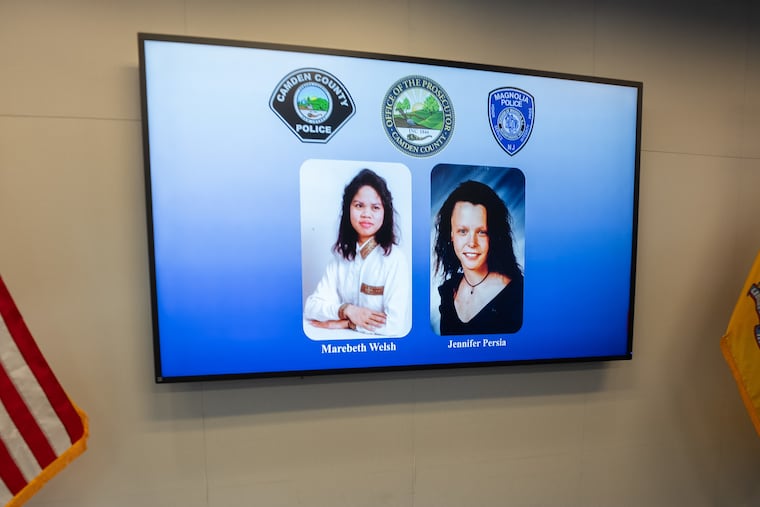
Two South Jersey killings that had vexed investigators for decades have been linked to a single suspect, Camden County prosecutors said Thursday, after DNA analysis showed that a now-dead Mantua Township man likely committed both crimes.
Marebeth Welsh, 24, of Woodlynne, was found dead on a Camden sidewalk in November 1993, strangled and with blood dripping from her nose. She had been sexually assaulted. A native of the Philippines, she was a mother of two and worked at a popular restaurant.
Six months later, Jennifer Persia, 16, was discovered dead on the living room floor of her Magnolia home, beaten, bound at the neck, and stabbed more than 20 times. She was a sophomore at Sterling High School, a saxophone player, and a member of the varsity track team.
Now, prosecutors say, DNA analysis has linked both crimes to Francis T. Schooley, a Mantua Township man who died by suicide at age 39 in 2000.
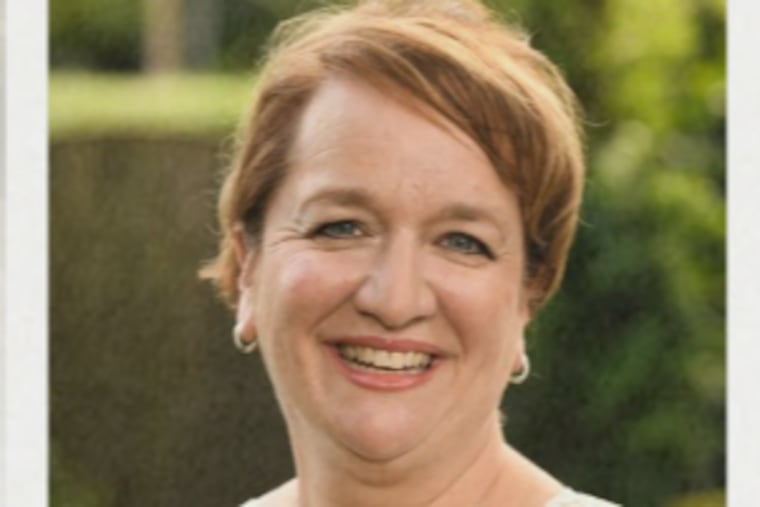
Camden County Prosecutor Grace A. MacAulay credited diligent detective work and advances in scientific technology with solving the homicides and bringing closure to the victims’ families.
“Words almost can’t describe what it means to the families,” MacAulay said at a news conference Thursday. “It settles that feeling deep inside. It gives them a semblance of peace.”
Identifying Schooley as a suspect, she said, was the result of years of investigative work and renewed focus on the cases that came with the opening of a cold-case homicide unit in her office in 2024.
DNA evidence from both crime scenes was critical, she said.
Investigators recovered blood at the scene of Persia’s killing as well as sperm samples from Welsh’s clothing. They sent the blood sample to a genetic testing laboratory in 2021 hoping for a match, but it did not yield results.
Then, in 2025, additional DNA analysis was done on the sperm samples that had been uploaded to the FBI’s national network of DNA databases. It matched the blood sample from the scene of Persia’s killing, prosecutors said.
The testing lab linked that DNA profile to Schooley, and investigators interviewed his relatives earlier this year.
They learned that Schooley had done construction work for Persia’s stepfather at an auto shop he co-owned.
Investigators swabbed Schooley’s family members for DNA and tested those samples against the unknown DNA profile. The data that returned cemented their confidence that Schooley was the source.
Investigators reached out to Welsh’s family members as well, and they said they recalled seeing her with Schooley.
Relatives of Persia and Welsh attended the news conference but did not speak. Among them were Persia’s sister, father, and nieces. Welsh’s daughter, Melody, who was 1 year old when her mother was killed, attended with her young child, Welsh’s granddaughter.
A lead investigator, Dennis Convery, said he had worked on Persia’s case for a decade. For some time, he said, Persia’s family “did not have much hope” that a suspect would be found.
Still, he said, “My determination wasn’t going to let me stop.”
Convery said identifying Schooley was a comfort to him. He gave credit to the detectives who had worked on the cases decades before him, but had since retired.
“Their reports were very detailed — that helped us look at who we needed to revisit, who we needed to talk to again,” he said. “If they had the technology we had today, there is no doubt these cases would have been closed then.”