The theft of hundreds of remains from Mount Moriah Cemetery raises a question no one can seem to answer: How did this happen?
Local and state officials met last week to discuss what happened — and what needs to be done in the future — to prevent future crime.

Past a marble monument for a Civil War hero, down a grass path where toppled headstones disappear into ivy and weeds and faded miniature American flags droop, lies the underground vault of James Campbell, who died in 1913 and whose remains may have been among the dozens stolen in one of the largest grave desecration cases ever uncovered in Pennsylvania.
Jonathan Christian Gerlach, who was charged with more than 500 offenses earlier this month and is being held in jail in lieu of $1 million bail, is accused of methodically breaking into burial vaults and mausoleums at Mount Moriah Cemetery, prying open caskets and removing human remains from Campbell’s burial ground and at least 25 other sites across the sprawling Philadelphia and Yeadon Borough cemetery.
Inside Campbell’s vault, where his family members were also entombed 12 feet beneath the cemetery’s surface as early as 1872, investigators said they found three broken caskets, crumbled marble, and a discarded pry bar. Six sets of human remains, they said, were missing.
Authorities allege that Gerlach moved through the cemetery repeatedly, at all hours, accessing sealed burial sites and removing dozens of remains over several weeks without being detected. Large sections of the cemetery, overgrown and rarely monitored, offered long stretches of isolation — conditions investigators say Gerlach may have exploited. And as law enforcement continues to sort through the evidence, local officials and cemetery advocates are pressing for changes to prevent this from happening again.
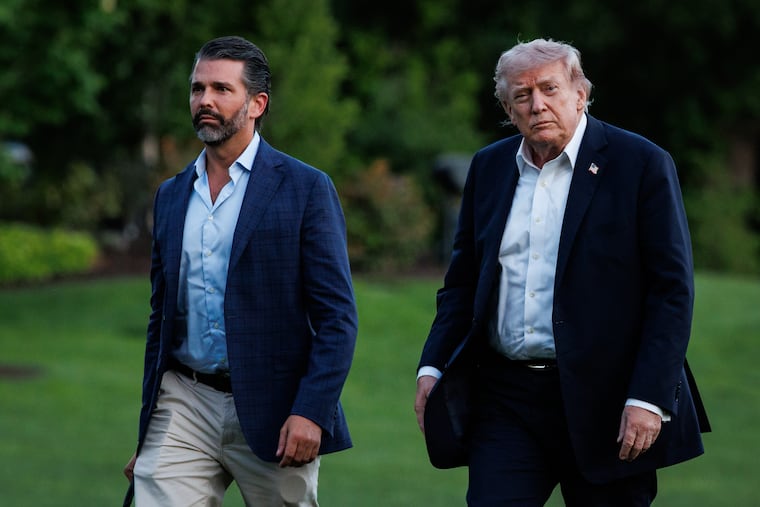
“We were too slow to move,” said Yeadon Mayor Rohan Hepkins. “Nobody thought such a dastardly act — such an inhumane and incomprehensible act — was possible.”
Hepkins last week joined state and local officials to discuss what can be done to protect the burial grounds, where an estimated 180,000 people are buried.
He and others expressed cautious resolve that the cemetery could be secured well enough to prevent another violation of this scale.
“I wish I could tell loved ones that I’m not critically concerned, but I am,” said State Sen. Anthony Williams, who represents the district where Mount Moriah Cemetery is located and was one of the officials who gathered to discuss preventive measures. “But I don’t know that Mount Moriah will ever be restored to the condition that they buried their loved ones in.”
Mount Moriah Cemetery, a historic landmark abandoned by its last owner and under court receivership, has long been plagued by neglect and limited oversight.
Investigators say Gerlach’s crimes unfolded over the course of months, starting in the fall and ending on the night of Jan. 6, when Yeadon detectives arrested the Pennsylvania man as he attempted to leave the cemetery.
License plate readers and cell phone towers place Gerlach near or inside the cemetery during both daylight and darkness. On Christmas Eve, for example, the technologies captured Gerlach’s vehicle or phone at least three times between 12:28 a.m. and 12:54 p.m., court records show.
The day before, on Dec. 23, a Yeadon investigator working the case saw scratch marks on the heavy stone slab sealing the underground Zeigler family vault, as if, a detective wrote in an affidavit of probable cause for Gerlach’s arrest, it had been “marked” as a target. When the detective returned on Dec. 26, the stone had been broken and nine sets of human remains stolen.
Yeadon police, who investigated the crimes alongside other authorities, have since been inundated with hundreds of calls and emails from anguished family members seeking answers, Chief Henry Giammarcco said.
Rescuing Mount Moriah
Mount Moriah Cemetery opened in 1855. Its owners, the Mount Moriah Cemetery Association, abandoned it in 2011, after years of mismanagement. The Friends of Mount Moriah, a volunteer-driven nonprofit, formed that same year with the goal of rescuing the grounds from vandalism, crime, and decay. In 2014, a Philadelphia judge appointed a receivership, the Mount Moriah Cemetery Preservation Corporation, to temporarily manage the cemetery until a permanent owner could be found.
More than a decade later, no permanent owner has emerged.
In 2018, the two groups and other stakeholders commissioned an ambitious strategic plan that called for stabilizing the cemetery’s finances, finding a permanent owner, and remaking Mount Moriah into a viable public space. The plan assumed significant investment and long-term stewardship. Neither materialized.
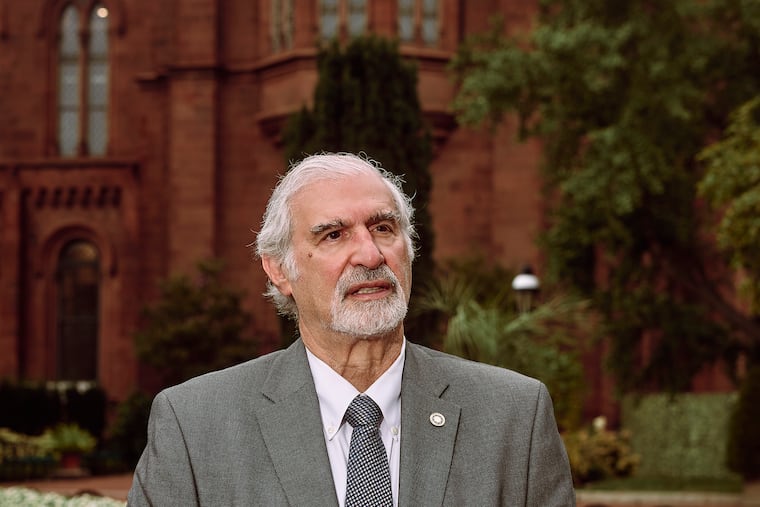
“There’s no clear revenue stream, and there’s significant infrastructure improvements and capital improvements that are required, on top of maintenance costs,” said Brian Abernathy, who served as chair of the preservation corporation when the plan was created.
At the time, Abernathy said, “there was a lot of hope and optimism about what we could accomplish with it. But the plan stalled over obstacles that persist today, he said, including enticing an owner when so many costly repairs are needed.
Under the court order, the corporation — a board composed of officials from Philadelphia and Yeadon, including Hepkins — is responsible for preserving the cemetery but has delegated day-to-day care to Friends of Mount Moriah.
Over the years, Friends of Mount Moriah made visible gains. Its 12-person board and volunteers hauled away abandoned cars, tires. and trash, righted toppled headstones, and uncovered burial vaults beneath thick vines, brush, and overgrowth.
“Until this happened,” said John Schmehl Jr., the group’s president, “security was not our first concern.”
Yet thieves knew the grounds. Last year, Schmehl said, more than $14,000 worth of lawn equipment — including mowers, weed trimmers, and hand tools — was stolen from the cemetery garage. Friends of Mount Moriah entered the growing season without the equipment needed to keep large sections of the cemetery accessible, he said.
Now, the group is scrambling to implement security improvements across the cemetery’s more than 100 acres, including repairing dilapidated fencing, launching random patrols, and installing cameras on both the Philadelphia and Yeadon sides of the property. Fencing construction began last week. Schmehl said the group is seeking a private security company to monitor the cameras around the clock.
Cemetery volunteers dwindle
The backyard of 60-year-old Robin Pitts’ house overlooks the Springfield Avenue side of Mount Moriah, where her mother, brother, and extended family are buried.
As a child, Pitts said, she played kickball on an unfenced stretch of the cemetery near where Betsy Ross — the seamstress whose burial helped cement Mount Moriah’s place in American history — rested for more than a century.
Those memories later drew Pitts to volunteer with Friends of Mount Moriah for nearly two decades, she said. On Saturdays, she said, she grilled hot dogs and hamburgers for volunteers who picked up trash and mowed the grass along Springfield Avenue.
But during the pandemic, Pitts said, the grounds began to deteriorate beyond what volunteers could manage. “I thought, ‘Enough’s enough. I can’t do this anymore,’” she said. She stopped volunteering.
Last week, Pitts walked down a path choked with waist-high grass and weeds where she once mowed. She pointed past a tangle of barren hemlock blocking a path to a tree and several headstones — some toppled, others obscured by vines and brush. “We used to clean it all the way past there,” Pitts said. “Now nobody does.”
A shrinking volunteer base has slowed progress at the cemetery, Schmehl said. Some cleanup events draw just one volunteer. “It’s a struggle, to say the least,” he said, adding that entire sections of the cemetery “have been reclaimed by nature.”
The cemetery is now open just two days a week, Saturdays and Sundays.
The costs of needed improvements are also significant. By Thursday, Friends of Mount Moriah had spent more than $20,000 of its roughly $90,000 annual budget to begin fencing construction and repairs, and secure the mausoleums and vaults that had been desecrated in the recent crimes. Additional donations, Schmehl said, will be needed to sustain the effort.
As recently as spring 2023, Mount Moriah Cemetery Preservation Corp. held more than $400,000 in its endowment, according to a letter filed in Philadelphia Orphans’ Court. Aubrey Powers, the receivership’s chair, did not respond to questions concerning the receivership’s contributions to the Friends of Mount Moriah or what the corporation will do to help address security or infrastructure needs.
As a condition of the receivership, the corporation must file semiannual reports to the court. A year ago, the only reference to security was a brief note stating that the receivership “continues to encourage the Philadelphia and Yeadon Police Departments to schedule patrols in and around Mount Moriah Cemetery more frequently to deter criminal activity.”
Hepkins said increased patrols would be part of a broader strategy to reduce criminal activity and restore oversight to the cemetery. Meanwhile, a spokesperson for the Philadelphia Police Department said officers patrol the cemetery’s perimeter, not its grounds.
“There has to be some sort of intervention in order to rectify what’s happened at Mount Moriah,” Abernathy said. “And I just don’t know who’s going to provide that intervention.”
Whose remains are missing?
Hepkins on Wednesday climbed a steep hill from a small parking lot off Cobbs Creek Parkway to a cluster of mausoleums that Gerlach is accused of breaking into.
At the family mausoleum of John Hunter, a former president of the Mount Moriah Cemetery Association, authorities allege Gerlach smashed through a sealed cinder-block doorway and shattered the marble floor. He then rappelled 10 feet into the crypt and removed the remains of 15-year-old Martha Hunter, who died in 1869.
He left behind a length of white rope and a screwdriver, authorities said.
Just feet away, in the mausoleum of wholesale grocer Jonathan Prichard, Gerlach pulled cinder block from a sealed window and rifled through five of nine caskets inside, investigators allege. The remains of 62-year-old Mary Prichard Steigleman, Prichard’s daughter, are now missing.
Nearby is the family vault of John McCullough, a Shakespearean actor who died in 1889. Beneath a towering monument etched with a line from Julius Caesar, authorities said they found two caskets disturbed, one tipped onto its side. Both were empty.
More than a week after Gerlach’s alleged break-in, bricks torn from the vault’s seal lay piled beside the entrance, and a foot-long hole exposed the floor below. Inside, wooden pallets that investigators believe Gerlach used to climb down cluttered the crypt.
A short walk away is the cemetery’s naval plot, where rows of identical white headstones mark the graves of more than 2,000 Navy officers. It’s Hepkins’ favorite part of the cemetery, he said.
Hepkins once hoped to be buried at Mount Moriah, a place he called “godly.” Now, he said, “I have to reconsider. I want my bones held somewhere in sacred perpetuity.”