They served nearly three decades in prison for murder. Today, a Philadelphia judge overturned their convictions.
A judge vacated the convictions of Marc Brittingham, Rasheed Turner, and Jermal Shuler over evidence subsequently deemed unreliable.
Three men who spent nearly three decades in prison for the 1997 stabbing death of a Northwest Philadelphia woman had their murder convictions overturned Tuesday after prosecutors, defense attorneys, and a judge agreed that key evidence in the case against them was unreliable.
Marc Brittingham, Rasheed Turner, and Jermal Shuler will be set free after a Common Pleas Court judge vacated their convictions and life sentences, dismantling a prosecution that relied heavily on a timeline of the victim’s death that prosecutors now say can no longer be trusted.
At trial in 1998, Bennett Preston, an assistant medical examiner, told jurors Essie Mae Thomas had likely died on the evening of Nov. 8, 1997 — a time frame prosecutors used to bolster the testimony of a sole witness who provided a direct link between the men and the killing.
But the Conviction Integrity Unit of the Philadelphia District Attorney’s Office later determined that Preston’s findings and testimony were not reliable. Experts tapped by both defense attorneys and prosecutors found that Thomas died at least a day later than Preston said she did.
Common Pleas Court Judge Jennifer Schultz said that information would likely have changed the outcome of the trial had jurors heard it at the time.
After Schultz vacated the convictions and sentences, prosecutors withdrew the charges, clearing the way for the men’s release after nearly 28 years in prison.
The case marks the first triple exoneration secured by the conviction integrity unit, which since its creation in 2018 has helped overturn a growing number of convictions tied to flawed forensic testimony, withheld evidence, and other investigative failures.
Inside the courtroom Tuesday, relatives and supporters wept quietly as Schultz delivered her ruling. One woman rocked back and forth in her seat, sobbing. Others embraced and cheered after the judge formally dismissed the case.
Family members declined to comment afterward.
The attorneys — from the Innocence Project, DLA Piper, Pennsylvania Innocence Project, and the Exoneration Project — released a joint statement after the hearing, saying the three men had “maintained their innocence while serving time for a crime they did not commit.
“The absence of physical evidence, along with new evidence discovered during the joint investigation, makes clear that this wrongful conviction should never have occurred,” the statement said.
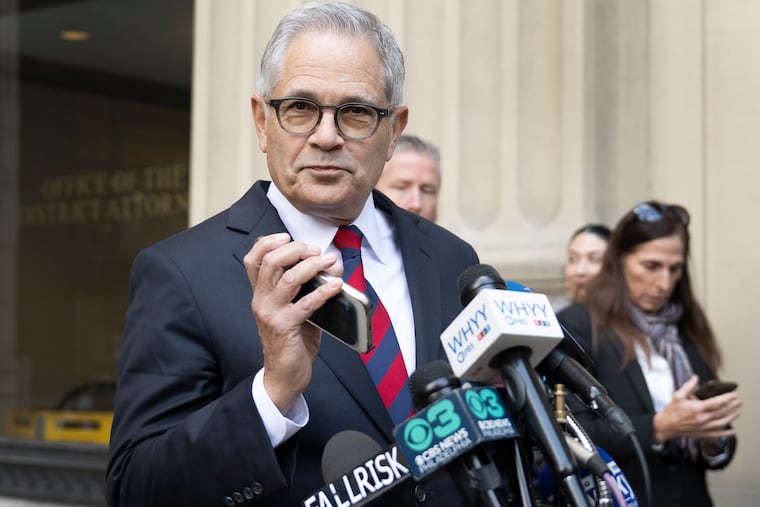
District Attorney Larry Krasner, who addressed reporters outside the courthouse, said the men had been “robbed of a fair trial, simply put.”
He added that while the men’s convictions had been vacated, “that does not necessarily mean they are innocent. It means their convictions lacked integrity.”
Thomas was found dead inside her home. Prosecutors contended at trial that Brittingham, Turner, and Shuler went to her house to rob her and ended up killing her.
The prosecution’s case, led by Assistant District Attorney Carlos Vega, depended heavily on establishing when Thomas died. Vega could not be immediately reached for comment Tuesday.
Preston testified that her injuries and condition indicated she was likely killed on Nov. 8 — a timeline prosecutors said matched the account of a witness who placed the three men at the house that day.
But according to reviews by two forensic pathologists, Preston failed to account for several things that contradicted his conclusion, including evidence that rigor mortis may still have been developing — not disappearing — when Thomas’ body was examined. The experts concluded it was extremely unlikely Thomas died on Nov. 8.
Defense attorneys argued in court filings that without Preston’s testimony, the case against the men largely unraveled. There was little physical evidence tying them to the killing, the lawyers said, and no DNA evidence linked them to the crime scene. Preston’s testimony about the timing of her death, they said, was used to prop up prosecutors’ otherwise unstable sole eyewitness, Wadia Brown, who admitted she was high on crack cocaine on the night she said she saw the three men on Thomas’ porch around that time.
Efforts to reach Preston were unsuccessful Tuesday.
Over the years, questions emerged about Preston’s work in multiple criminal cases, prompting renewed scrutiny from defense attorneys and prosecutors. In recent years, the conviction integrity unit began reexamining cases in which his testimony played a significant role, said unit supervisor Matthew Stiegler.
Many of the specifics underlying the questions about Preston’s findings remain unclear. Court filings in the case were heavily redacted. Stiegler said Tuesday “what broke the case open” was the discovery that disciplinary action had previously been taken against Preston, but did not provide further details.
Schultz concluded that the evidence uncovered by prosecutors and defense attorneys was crucial to the outcome of the trial and warranted a new one — a prosecution the district attorney’s office said it would no longer pursue.