The leader of the Panthers, an armed Black citizens group, had his gun permit revoked by police. He’s calling the move unconstitutional.
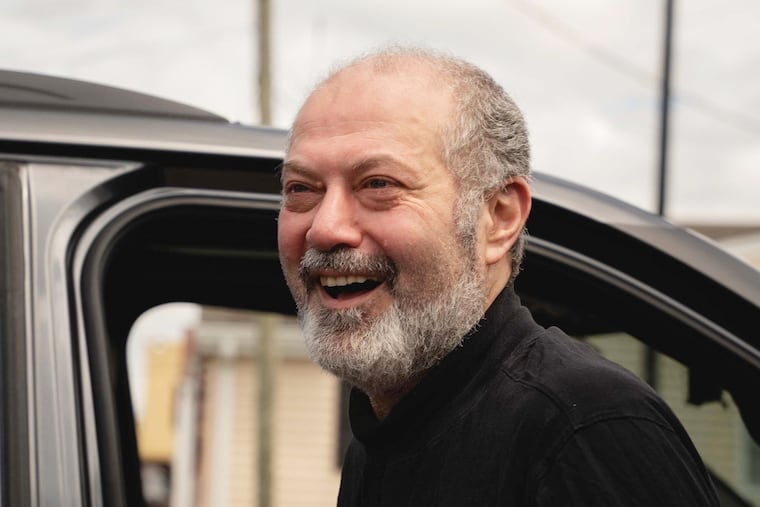
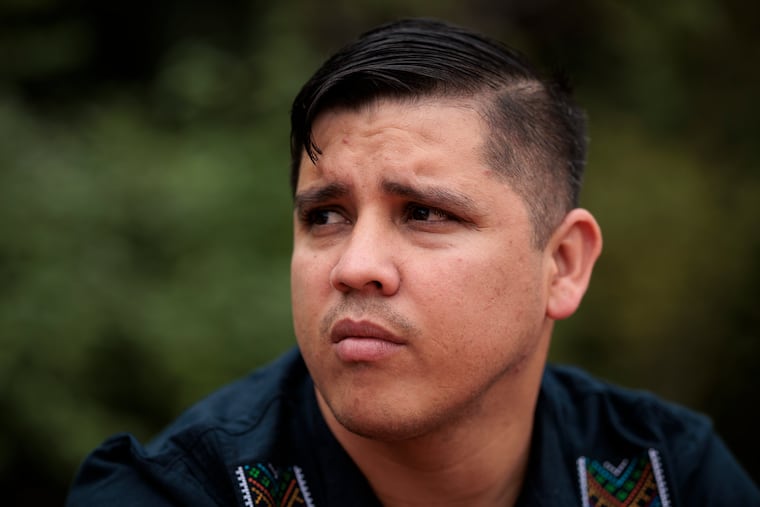
Until recently, Paul Birdsong carried a gun during armed patrols throughout the city alongside other members of the Panthers. Now the weapon stays behind.
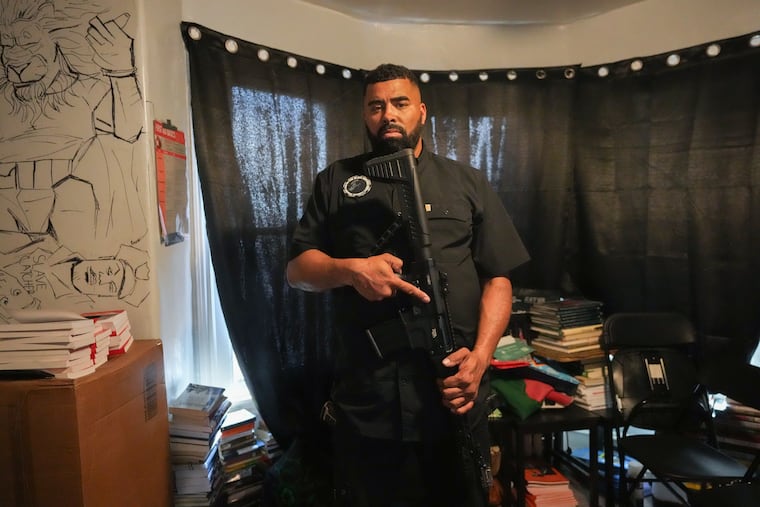
Paul Birdsong, the leader of Philadelphia’s armed citizens group the Panthers, gripped a walkie-talkie in one hand and an AR-12 semiautomatic shotgun in the other.
He was inside the Panthers’ headquarters, a modest two-story rowhouse in a bustling section of West Philadelphia. Stacks of books with titles like Black American Military History filled the room, the walls scrawled with drawings of jungle cats stepping defiantly on the heads of cartoonish police officers.
Near Birdsong’s feet was a bullet-riddled target, not far from a gun rack that held rifles and the shotgun the 39-year-old grabbed enthusiastically midconversation and kept casually at his side.
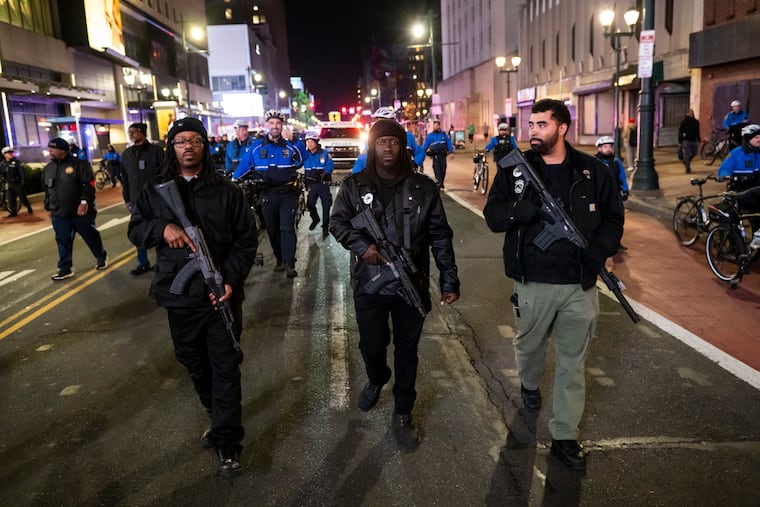
Until February, Birdsong carried the gun during armed patrols throughout the city alongside other members of the Panthers, an emerging local offshoot of the Black Panther Party for Self Defense, the historic political and militant organization.
Now the weapon stays behind doors.
Recently Birdsong learned the police department had revoked his license to carry firearms, saying he posed a threat to public safety after he confronted a police officer during an armed patrol in January.
The following month, Birdsong and four other members of the Panthers received letters informing them their gun permits had been terminated. He and his lawyer say the action is a violation of their constitutional right to bear arms.
The enforcement, first reported by Axios, came not long after the Panthers garnered international attention online when members attended a protest against U.S. Immigration and Customs Enforcement at City Hall carrying assault-style weapons. The group then called itself the “Black Lions” because of a naming dispute with a relative of original Black Panthers co-founder Huey P. Newton. Birdsong says he has resolved the matter by dropping “Black” and retaining “Panthers.”
He said the Panthers were armed at the January demonstration to protect protesters’ right to assemble, showcasing a style of activism more associated with the 1960s than the 2020s.
“They feel a loss of power when someone’s not scared of them,” said Birdsong, who received a letter from the police department saying his permit had been terminated for “good cause” and his “character and reputation” over the Jan. 31 confrontation with an officer, an incident unrelated to the City Hall protests.
Birdsong and a group of other Panthers were on an armed patrol around 23rd and Diamond Streets in North Philadelphia that day when they encountered a police vehicle parked in the roadway, according to Birdsong, his lawyer, and the letter from the department.
The officer’s vehicle was disrupting traffic in the snowy intersection, Birdsong said, and he and other Panthers asked him to move it.
At one point, Birdsong said, he and the officer were face to face, and the officer placed his hand on his gun holster but did not draw his weapon. Birdsong, for his part, said he kept his weapon pointed at the ground.
The incident concluded with tense words but without violence or an arrest, he said.
According to the department’s Feb. 9 letter, signed by Lt. Wanda Newsome, commanding officer of the gun permit unit, Birdsong’s “conduct during a confrontation with an on-duty Philadelphia Police Officer created an unreasonable danger to public safety.”
Sgt. Eric Gripp, a spokesperson for the police department, said state law and pending or potential litigation prohibited him from sharing information about firearms permits.
In Philadelphia, unlike the rest of Pennsylvania, gun owners are required to have a permit to carry a firearm openly, and the police department has broad authority to revoke such licenses.
Still, Birdsong’s attorney, Lyandra Retacco, said the move was unconstitutional.
Earlier this month, she filed an injunction to block the city’s revocation of Birdsong’s gun permit, along with that of another member of the group. A hearing on the matter is expected in late summer.
Two other Panthers who were not present during the January conflict had their gun permits revoked, but have since had them restored after negotiations with the city, according to Retacco.
“The Panthers are trying to be licensed, trying to exercise their First and Second Amendment rights in Philadelphia for mutual aid,” Retacco said. “They’re doing that with their firearms, which they’re allowed to do in this country.”
A Philly group draws widespread attention
Birdsong said the Panthers are an organized movement that serves Black residents who are distrustful of the police department. The group has fewer than 100 members in Philadelphia, he said, declining to say how many are licensed to carry firearms.
Members who do have permits carry weapons and wear body armor during patrols throughout the city, where they address concerns that might normally involve police — from responding to theft incidents to escorting an unaccompanied child home from school, Birdsong said.
“If you were to go with us right now and ask people ‘Do they feel safe with us being out there with the guns?’ they would tell you they feel safer than they’ve ever felt,” Birdsong said. “They feel more safe with us than the police.”
In order to take part in an armed patrol, members must pass a shooting test, undergo combat training, and take a legal course on interactions with police, he said. The group stays in tight formation, he said, and no “comrade” is allowed to stray more than seven feet from another.
The Panthers leader said the group is community-oriented. After gaining traction in the city in 2024, he said, the group began organizing weekly giveaways of food, clothing, and hygiene supplies for people in need.
Sitting inside the group’s headquarters on a recent day with his AR-12 in hand, Birdsong gave instructions to a group of black-clad Panthers who were dutifully setting up such a benefit as neighbors lined up on the street outside.
As a delivery driver approached with hot meals, Birdsong said into the walkie-talkie: “Go chase him down. It’s supposed to be 42 pieces of chicken and a whole bunch of sides.”
Police Commissioner Kevin Bethel declined to comment on the organization. But in February, he told the news outlet the Trace that the Panthers “troubled” him, and that the group had antagonized members of the department.
After the anti-ICE protest, Birdsong said, interest in the Panthers came from as far as Japan and Venezuela and earned the group nods on social media from personalities like the Grammy-winning artist Erykah Badu.
Shifting back to the conversation about his frustration with police, the Panthers leader said he intends to sue the department and the city if his gun permit is not reinstated.
And he questioned why the city needed a gun permit requirement in the first place.
State law allows people to carry firearms in public in Pennsylvania without a license, except in Philadelphia, a stipulation that gun rights advocates have decried as unfair. The rule was adopted in the early 1970s to deter violent crime.
In June, the Pennsylvania Superior Court ruled that the law exempting the city from the statewide open-carry privilege was unconstitutional‚ saying it violated the 14th Amendment’s equal protection clause, but the court stopped short of repealing the law.
In Birdsong’s opinion, only severe mental illness or a history of violent crime should prevent people from being able to openly bear arms, he said. Requiring gun permits for that — and allowing law enforcement discretion to revoke them — gives too much power to police, he added.
“You shouldn’t be able to lose it just because a cop doesn’t like you,” he said.