A Bucks County woman who killed her abusive husband was sentenced to 10 to 30 years in state prison
Sammar Khan told a judge Tuesday that her life had been dominated by her husband's physical and emotional abuse, and that shooting him was the only way to protect their children.
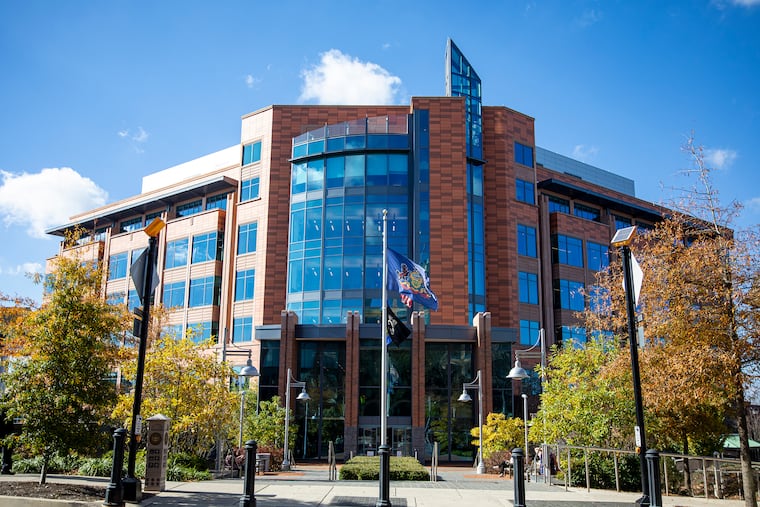
A Levittown woman, through tears, pleaded for leniency Tuesday from a Bucks County judge as she awaited his sentence for third-degree murder.
Sammar Khan told Judge Jeffrey Finley that the last 10 years of her life had been dominated by physical, emotional, and sexual abuse from her husband, whom her family had forced her to marry. Still, she said, she felt remorse for killing the man at Bristol Wharf in May 2023, calling it a cross that she will bear for the rest of her life.
Finley sympathized with Khan, 42, but said her actions could not be excused, even by the guilty plea she entered earlier this year.
“That does not give you the lawful right to gun down an individual and execute them,” the judge said. “There is no justification for doing that.”
Finley sentenced Khan to 10 to 30 years in state prison, a sentence that he said took into account the abuse she endured.
Khan shot her husband, Faisal Iqbal, 38, multiple times at point-blank range with a 9mm handgun she had legally purchased and was licensed to carry, prosecutors said. The couple’s son sat nearby.
Witnesses told investigators the two had been arguing loudly at the public park before the shots rang out, and they said they saw Khan continue to shoot Iqbal as he ran away, screaming for help.
Chief Deputy District Attorney Kristin McElroy said the shooting was unprovoked and a “clear execution” that could have been considered premeditated, first-degree murder. But her office, recognizing the couple’s history, allowed Khan to plead guilty to the lesser charge of third-degree murder.
“That’s not how the law works,” McElroy said, in response to efforts to lessen Khan’s sentence further. “You don’t get the right to execute someone who’s been a problem in your life for a decade.”
Her attorney, Ellis Palividas, said Khan had done everything she could to protect herself from Iqbal, including filing for and obtaining a protection from abuse order, but that the system had failed her.
Khan, he said, had been “on the receiving end of violence her entire life,” starting when she was a child in Pakistan and subjected to harsh physical discipline and sexual abuse. Those early experiences, he said, were later mirrored in her married life.
A forensic psychologist hired by Palividas testified Tuesday that Khan had “one of the most severe cases of battered woman syndrome” he had seen, and said she lived in a constant state of terror from her estranged husband.
Khan was forced into an arranged marriage with Iqbal by her family after they disapproved of her previous relationship, her lawyer said.
And when the couple’s first two children were girls, Palividas said, Iqbal pressured her, even amid her doctor’s concerns about how her preexisting health conditions might affect the baby. Their son was born with a congenital heart condition.
Her marriage to Iqbal continued to deteriorate, the lawyer said, and she repeatedly sought help from police: Records displayed in court showed that Khan called 911 to report domestic disputes and violations of the protection from abuse order dozens of times between 2014 and 2023, weeks before Iqbal was killed.
Videos played in court showed him arriving at Khan’s home and demanding to be let inside. When she refused, the lawyer said, Iqbal smashed the glass front door and some of its windows with a rock.
On Tuesday, after the judge pronounced Khan’s sentence, Palividas expressed disappointment. Had Khan not picked up a gun and defended herself on the day she killed her husband, the lawyer said, she would have been the one to die.
“That is the pattern of domestic violence,” he said. “Fortunately, she didn’t get a death sentence, and she also didn’t get a life sentence here, either.”