A Delco judge denied a motion to dismiss trespassing charges in Swarthmore protest case
Lawyers for the so-called "Swarthmore 9" argued that their arrests were unconstitutional because they targeted a specific type of protest speech.
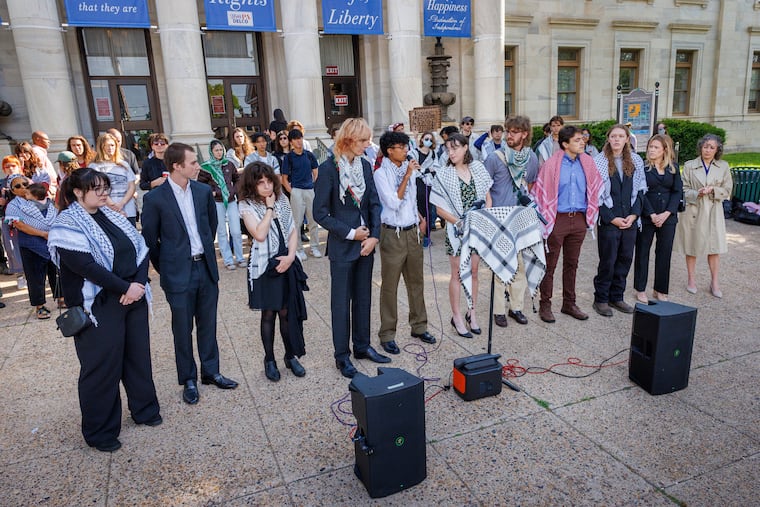
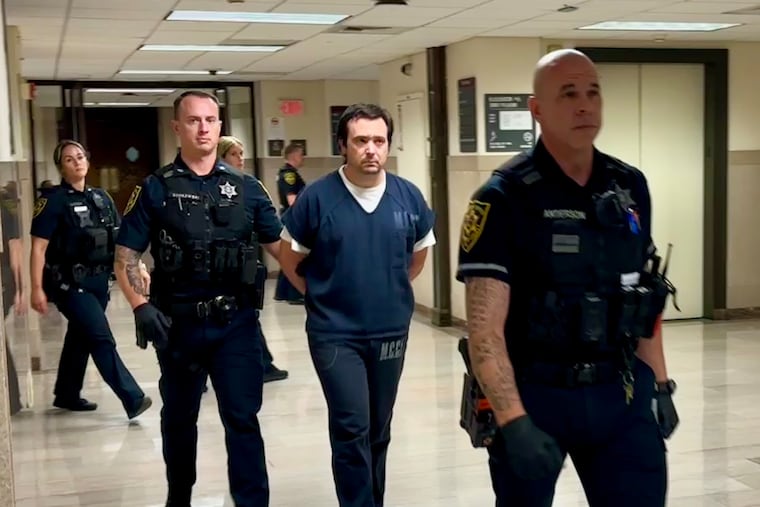
A Delaware County judge on Monday denied a motion to dismiss criminal charges filed against nine people for refusing to leave a pro-Palestinian encampment on Swarthmore College’s campus last spring, setting the stage for a trial next week.
Judge Dominic Pileggi ruled that prosecutors had presented sufficient evidence for the case to proceed to trial and allow a jury to decide whether the so-called Swarthmore 9 had trespassed.
The group was arrested and briefly detained outside the college’s Trotter Hall in May 2025 when officers from surrounding police departments dismantled their encampment protesting the war in Gaza and Swarthmore’s IT contract with Cisco, a company that does business with the Israeli government.
Of the nine people arrested, only one, Jace Boland, is a student at the college. Another, Brendan Cook, is a former student who was suspended for participating in an earlier protest in 2024, but the rest are not affiliated with Swarthmore, according to school officials.
Members of the group — Boland, Cook, Jonathan Britt, Mara Helen Cahill, Daria C. Dressler, Thomas Falcone, Colin Buckley Malcarney, Riley J. McManus, and Andrew Thomas — have all been charged with trespassing, a third-degree misdemeanor.
District Attorney Tanner Rouse has said his office offered each member of the group a plea deal that would see those charges reduced to summary offenses, similar to traffic citations, that could be resolved by paying a fine.
The group has refused, saying pleading guilty would set a precedent on how colleges across the country could curtail students’ protest rights.
During Monday’s hearing, the group’s attorney, Marni Jo Snyder, argued that Swarthmore and county prosecutors violated the protestors’ constitutional rights by arresting them.
She noted that Swarthmore changed its policy allowing protests on its campus to explicitly outlaw encampments after a similar, monthlong demonstration in the same location in 2024.
Policing a specific type of expressive speech, she said, is illegal.
“The policy is wrong, the repeated orders to leave are wrong,” she said. “These are improper responses to constitutionally protected speech.”
Snyder said that, though Swarthmore’s campus is private property, administrators have allowed previous demonstrations to be held there, as well as other quasi-private events. The arrests in this case, she said, showed that prosecutors were specifically targeting demonstrators protesting the war in Gaza.
Samantha Door, who represented the district attorney’s office at the hearing, disputed that, saying the protestors’ conduct, and not the purpose of the encampment, was the reason criminal charges were filed.
Swarthmore issued multiple warnings to the group to disperse over the course of three days, Door said, including one final warning 10 minutes before the encampment was dismantled.
Other protestors who left the encampment and continued to chant and hold protest signs were not arrested, she said.
Also, Door said administrators raised concerns about public safety, since many of the protestors wore masks and refused to identify themselves, vandalized campus property with graffiti, and used pallets and other materials to create barricades around the encampment.
The trial in the case is scheduled to begin with jury selection on June 30.