Could a CHOP nurse and mother’s seemingly random shooting death have been avoided? Some Tredyffrin residents think so.
In a Main Line community with little crime, a seemingly random killing has set neighbors on edge — and has some wondering if police could have done more to prevent a tragedy.
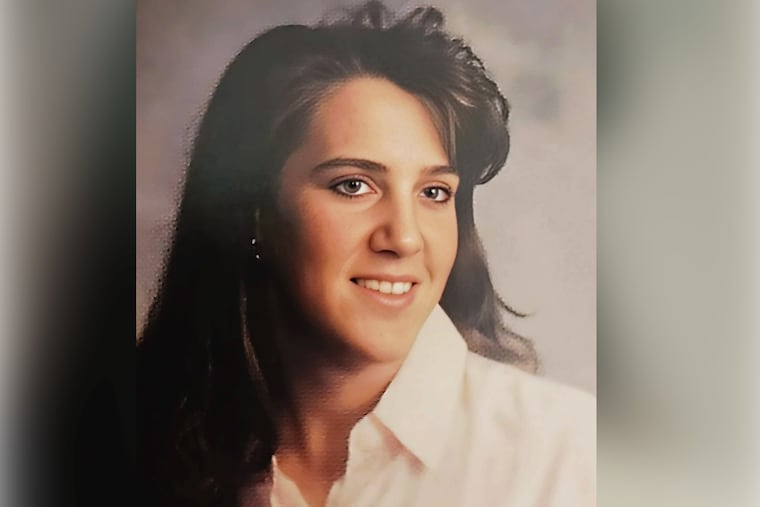
Megan Nieberle, a 53-year-old mother of three and a nurse at Children’s Hospital of Philadelphia, was shot in her car in a quiet residential area of Tredyffrin Township on a Saturday night last month.
The man who police say fired the shot that killed her had called 911 earlier in the evening seeking help in the midst of a mental health crisis, and responding officers escorted him to Paoli Hospital. But when the man hesitated to go inside, officers let him leave — aware that he had a handgun.
Within hours, police say, Steve Jahn drove in his truck through Chester County and, encountering Nieberle’s car near Berwyn, shot her in the head. She died in a hospital the following day.
Jahn, 44, was charged with murder and related crimes in what Chester County District Attorney Christopher de Barrena-Sarob called an “unspeakable tragedy.”
The March 7 incident happened in a county with an internationally-recognized mental health training program for police officers.
The death of Nieberle, a West Chester native and Henderson High School graduate, continues to rattle the community and has led some to question whether the crime could have been prevented had police acted more forcefully during Jahn’s crisis.
“The cops let Jahn go into the wind when he was clearly distressed,” said John Petersen, a Tredyffrin resident and former township supervisor. “He was clearly under duress — a clear and present danger.”
On social media, Chester County neighbors questioned why Tredyffrin police did not have Jahn committed to the hospital for treatment. Others, defending the police, said that criticism placed unfair demands on officers.
“I was speechless,” Heidi Reese, a former high school classmate of Nieberle’s and Chester County resident, said of the shooting in an interview. “How does something like that happen so randomly?”
At the same time, Reese said, “It seems to me, from what I hear, it could have been avoided.”
Around 8:30 p.m. that evening, Jahn — who is from the area and described as homeless by police — called 911 in a paranoid state, telling the operator he believed he was being followed by undercover officers.
Jahn continued to act erratically when Tredyffrin police arrived outside the PNC bank in Paoli, waving his hands in his truck and displaying “frantic behavior,” police said.
Jahn told police he had a gun, a loaded 9mm revolver that was one of several firearms he was licensed to carry.
Officers suggested that Jahn get evaluated, and though he refused to surrender his gun as they requested, he agreed to go to a hospital if police tailed him there.
Outside the hospital, Jahn’s paranoia continued. He told officers the people he believed were following him were in the parking lot and he refused to go inside.
Jahn was “permitted to leave the scene,” police said.
Petersen, the Tredyffrin resident, wondered why police did not use a “302″ hold on Jahn.
State law allows such an involuntary hospital placement when people experiencing mental illness act in ways that indicate they are a danger to themselves or others. Still, experts say it is often seen as a last resort, and police typically work to deescalate a situation first and encourage the person to seek treatment on their own.
Paul Applebaum, a Columbia University psychiatrist who specializes in involuntary commitment, said mental health crises place complex, demanding pressures on police. He noted that it is often difficult to gauge whether someone in crisis will go on to commit a violent crime.
However, he said, Jahn having a gun suggested that officers had a greater responsibility to ensure he received help.
“What is unusual in this case is that the police appear to have changed their mind,” Applebaum said, noting how they allowed him to leave the hospital.
County officials react to ‘tragic’ death
Fatal shootings are rare in Tredyffrin Township, where Nieberle lived with her family. The slaying was one of just three homicides in the township in the past decade, police data shows.
Tredyffrin Police Superintendent Michael Beaty declined to comment on the department’s handling of the case, citing the ongoing criminal case against Jahn.
Jahn’s attorney, Brian Lee McCarthy, said his office would thoroughly review the criminal allegations brought against his client, including the events preceding the shooting.
The District Attorney’s Office declined to comment. There is no suggestion that there will be an inquiry into the police department’s interactions with Jahn.
At a March 16 township meeting, residents asked Beaty and David Miller, chair of Tredyffrin’s supervisors, whether police could have initiated a 302 that night. Officials said they could not reply to those inquiries, again citing the criminal investigation.
Miller, later speaking with The Inquirer, said he believed that police “made their best judgment at the time” and that Jahn’s behavior did not appear to meet the 302 criteria.
He said Pennsylvania needed a “red flag” firearms law that could have allowed officers to legally seize Jahn’s gun.
County commissioners, for their part, called Nieberle’s death a tragedy.
Asked about residents’ comments, Josh Maxwell, a Chester County commissioner who has pushed for improvements to mental health services in the county, said it was “important that we take time to examine what happened and discuss what might have been done differently.”
Over the last decade, Chester County has been at the forefront of mental health training for police.
In 2017, the county adopted the Crisis Intervention Training program, which earned a “silver” certification for going above and beyond in teaching more than 400 police officers in the region about mental health law, deescalation tactics, and trauma.
And in recent years, officials debuted teams of mental health clinicians trained to dispatch across the county 24/7, including to help police with crisis deescalation and behavioral health assessments.
Asked whether the county’s training program addresses instances in which someone in crisis refuses treatment, Andrew Kreider, a county spokesperson, said: “Each situation is unique and requires securing the scene and assessing the totality of the circumstances when determining the best course of action.”
‘She was everybody’s friend’
Meanwhile, Nieberle’s friends and family continue to grieve.
Last Sunday, loved ones gathered at the Desmond Hotel in Malvern to remember the nurse. Her Facebook page shows a dedicated mother who enjoyed spending time with her children, supporting Philadelphia sports teams, and keeping up with national politics.
Nieberle’s family members did not respond to requests for comment.
Reese, who graduated Henderson a year ahead of Nieberle in 1990, remembered her classmate and fellow cheerleader as a laid-back, supportive friend, although the two had lost touch in recent years.
“She was everybody’s friend. She was an easy person to be around,” Reese recalled. “When I learned she was a nurse, it didn’t surprise me at all. Her personality really lends itself to something like that.”
Nieberle received a nursing degree from Immaculata University and worked for nearly three decades at CHOP, where she was a nurse manager for surgical services in King of Prussia.
She loved hiking in Valley Forge Park with her dogs and spending summers in Sea Isle City, N.J., her obituary said. A GoFundMe to support Nieberle’s husband, Gary, and three children has raised more than $130,000.
“She had a rare gift for making those she met feel seen, welcomed, and truly supported,” the fundraiser’s organizer wrote. “We are heartbroken that she is gone, but her impact lives on in the countless lives she touched.”
Staff writer Brooke Schultz contributed to this article.