CEO of South Philadelphia Bitcoin mining company defrauded investors out of $48.5 million, regulators say
Dahn C. Vo, founder of the now-defunct VBit Technologies Corp. based in South Philly, was accused by the SEC of misappropriating more than $48 million of investor funds in a nationwide scheme.
For years after the abrupt folding of a South Philadelphia-based company that promised big returns on cryptocurrency, investors who lost thousands of dollars had two questions — where was the firm’s elusive CEO, and when would he be held accountable?
A lawsuit brought by the Securities and Exchange Commission this month is offering answers.
Danh C. Vo, the 37-year-old founder of the now-defunct VBit Technologies Corp., was accused last week of misappropriating more than $48 million of investor funds in a nationwide scheme that affected 6,400 people. Vo’s alleged victims, many of them in the Philadelphia region, gave him money to maintain highly advanced computers they believed would generate passive income through the cryptocurrency Bitcoin.
But Vo, whose company lured potential investors into a multilevel marketing program with sports cars and luxury watches, instead ran something of a one-man shadow company, according to the SEC’s 28-page complaint, filed in federal court last Wednesday.
While Vo possessed some of the computers — devices that process cryptocurrency transactions and reward the owner with a fraction of Bitcoin in exchange for maintaining the costly technology — SEC investigators found VBit’s customers did not own the computers Vo said he had sold them.
That was hardly the only alleged fabrication in VBit’s four-year existence.
In all, Vo raised more than $95 million from investors and kept much of the Bitcoin the company generated in a personal account before fleeing the Philadelphia area to Vietnam in 2021, SEC investigators say.
Weeks earlier, Vo had learned he was the subject of a federal investigation.
As customers grew increasingly suspicious of VBit’s supposed sale that winter to an “Asia-based company” — an organization the SEC now says existed only on paper — Vo blamed his lack of communication on mysterious health issues, the complaint says.
All the while, the company’s day-to-day operations ground to a halt and investors found they were no longer able to withdraw their money.
The complaint also names a handful of Vo’s family members, who are not accused of wrongdoing but have been ordered to return investor funds.
Investigators say that before he fled the country, Vo gifted $5 million to his wife and others close to him.
Vo has yet to hire an attorney, court records show. The complaint does not show whether investigators know his current location. He could not be reached by phone, and a number for his wife was disconnected.
Bitcoin ‘without the headaches’
Before the cryptocurrency industry’s rise in the public eye, Bitcoin and other digital tokens were considered niche financial tools used by only the most devout believers.
Then, in the thick of the pandemic, crypto was seemingly everywhere, from Matt Damon-assisted Super Bowl commercials to the portfolios of billion-dollar hedge funds and international banking institutions.
When used for making transactions or storing value, Bitcoin and other cryptocurrencies can serve legitimate purposes.
But companies like VBit took the hype a step further. In the view of burgeoning executives like Vo, “mining” for Bitcoin with advanced computers offered the average person a near-mythic opportunity to get rich.
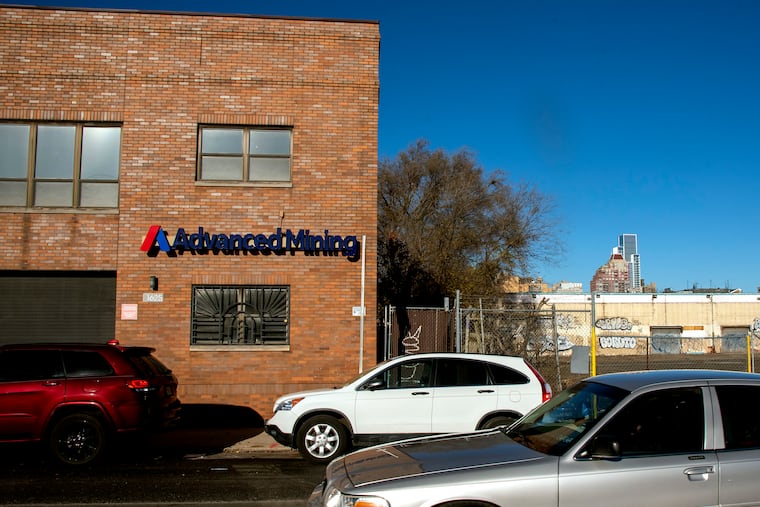
Vo started VBit Technologies in 2018 with the uninitiated in mind. He set up shop in a redbrick office building on bustling Washington Avenue, keeping a small staff of employees there.
An investigation published in The Inquirer in 2022 found some of Vo’s customers had little knowledge of how cryptocurrencies actually worked. SEC investigators say customers believed VBit would provide them with a “turnkey solution” for those complexities.
Vo sold investors “hosting agreements” for the computers that, in some cases, cost upward of $100,000 per package, according to the complaint. VBit told customers that if they purchased one of the Bitcoin-earning computers, the company would pool together their devices’ collective computing power, generating even greater returns.
Vo owned a building in rural Montana and leased facilities elsewhere to house thousands of the noisy devices, which use massive amounts of power and rarely make sense for an individual to operate at home.
As the Bitcoin piled up, customers tracked their profits on digital portals that VBit had created for them.
According to the SEC, those figures were nothing more than pixels on a screen.
The complaint says the actual profits went directly into accounts that only Vo controlled. Meanwhile, customers had no way to know what exactly the CEO had even sold them.
Investors were not provided serial numbers for their computers, and were largely barred from visiting the far-flung facilities that housed them, according to the complaint. Instead, Vo alone controlled the devices — and sold many more than he actually possessed.
In 2021, the company’s peak sales year, VBit sold agreements to host more than 8,400 computers, according to the complaint. The company had just 1,643 on hand.
Meanwhile, of the $48 million of investor funds Vo allegedly misappropriated, the CEO “gambled away” around $32 million on other cryptocurrency investments, the complaint says.
For customers who did choose to cash in on their profits, Vo kept several million in a separate account to dole out. Still, the SEC found that VBit had never had enough money to back up the total value of the investments.
And because many customers had only partially purchased their computers, using their newfound income to pay VBit back the balance they owed on the device, the scheme largely averted their suspicions.
At least until the company’s final days.
A mysterious exit
On Oct. 19, 2021, Vo learned the SEC was investigating his company for selling unregistered securities, according to the complaint.
The CEO soon began laying the seeds of a supposed sale of his company to a new firm, Advanced Mining Group.
A website for Advanced Mining was registered on Nov. 1, and by January 2022, a news release went out to crypto-related news outlets announcing that VBit had been sold for more than $100 million.
The sale would give Vo “peace of mind and freedom to focus on my health,” the CEO said in a cryptic statement.
Meanwhile, investigators say, Vo began transferring investors’ money to his family and himself.
More than $15 million went to Vo’s personal bank account, according to the complaint. His sister received $300,000, his brother, $500,000, and his mother, $100,000.
Vo’s daughter, who is a minor, received $1 million in a trust fund. None of the family members provided services in exchange for the funds, the complaint says.
The only person who received more than Vo’s daughter was his wife, Phuong D. Vo. The CEO gifted her $1.8 million over a monthlong period, according to the complaint.
And on Nov. 19 — the day Vo began transferring the funds — he filed for divorce from his wife, the complaint says. The CEO’s travel records indicated he was headed for Vietnam the following day.
For VBit’s customers, Vo’s secretive exit and the supposed sale to Advanced Mining began a period of decline and confusion.
Customers who had been incentivized to recruit other investors through video-based information sessions soon began to lose communication with those higher up in the marketing chain.
And for the sliver of investors who had been cashing in, withdrawals went from taking hours to weeks. By June 2022, customers found they were frozen out of their accounts entirely.
Attempting to explain the chaos, representatives with Advanced Mining told customers through email that the company was having regulatory issues with the SEC. The agency declined to comment on any such probe at the time.
In July, Advanced Mining promised refunds that investors say never came. By the fall, company communication had gone dark.
Customers soon launched a series of unsuccessful lawsuits in multiple states, hoping to claw back their money via a judge. In Washington state, financial regulators opened a smaller-scale investigation into potential fraud on behalf of a group of residents.
In group chats on the messaging app Telegram, hundreds of investors began to gather, finding solace that others, too, had allegedly been victims of Vo’s company. Members spent the months after VBit’s collapse speculating about the CEO’s whereabouts and the increasingly unlikely odds of getting their money back.
The SEC’s lawsuit this month signals the first sign of closure in those customers’ yearslong quest for justice.
There has not been a post in one of those chats, dubbed “PA Advanced Mining Lawsuit Group,” since 2023.