'Mama Africa' dies at 76
JOHANNESBURG, South Africa - She died as she would have wanted - singing on stage for a good cause. Miriam Makeba, the "Mama Africa" whose sultry voice gave South Africans hope when the country was gripped by apartheid, died yesterday of a heart attack after collapsing on stage in Italy. She was 76.
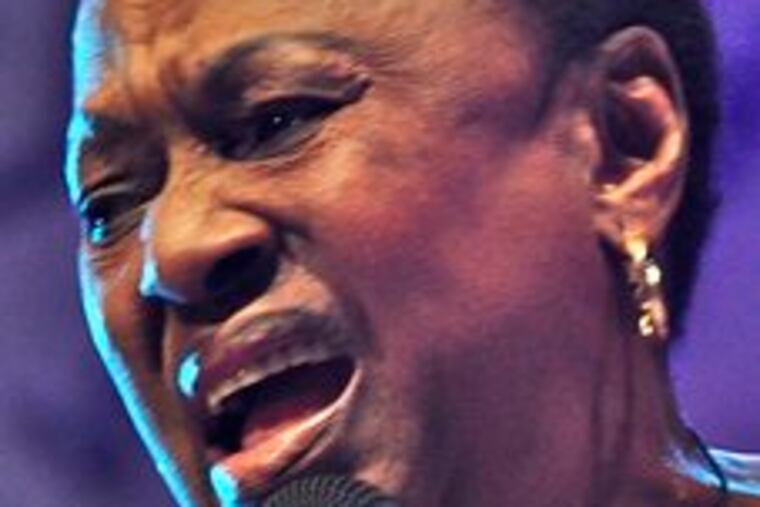
JOHANNESBURG, South Africa - She died as she would have wanted - singing on stage for a good cause.
Miriam Makeba, the "Mama Africa" whose sultry voice gave South Africans hope when the country was gripped by apartheid, died yesterday of a heart attack after collapsing on stage in Italy. She was 76.
In her dazzling career, Makeba performed with musical legends from around the world - jazz maestros Nina Simone and Dizzy Gillespie, Harry Belafonte, Paul Simon - and sang for world leaders such as John F. Kennedy and Nelson Mandela.
Her distinctive style, which combined jazz, folk and South African-township rhythms, managed to get her banned from South Africa for more than 30 years.
"Her haunting melodies gave voice to the pain of exile and dislocation, which she felt for 31 long years," Mandela said in a statement. "At the same time, her music inspired a powerful sense of hope in all of us."
He said it was "fitting" that her last moments were spent on stage.
Makeba died near Naples, after singing at a concert promoting solidarity with six immigrants from Ghana who were shot to death in September in the town.
Her death sent shock waves through South Africa, where callers flooded local radio stations with their recollections of her.
In Guinea, where Makeba lived most of her exile, radio stations played mournful music and tributes to their adopted icon.
Makeba received a Grammy Award for best folk recording in 1966 together with Belafonte for "An Evening With Belafonte/Makeba."She fell briefly out of favor in the United States when she married black-power activist Stokely Carmichael - later known as Kwame Ture - and moved to Guinea in the late 1960s.
After three decades abroad, Makeba was invited back to South Africa by Mandela shortly after his release from prison in 1990 as white racist rule crumbled.
"It was like a revival," she said about going home.
"My music having been banned for so long, that people still felt the same way about me was too much for me. I just went home and I cried." *