Whoever is captaining the Eagles offense — Nick Sirianni or Kevin Patullo — veered off course in loss to the Cowboys
A conservative offense approach might have helped the Eagles start 8-2, but it backfired during a worrying collapse at Jerry World.
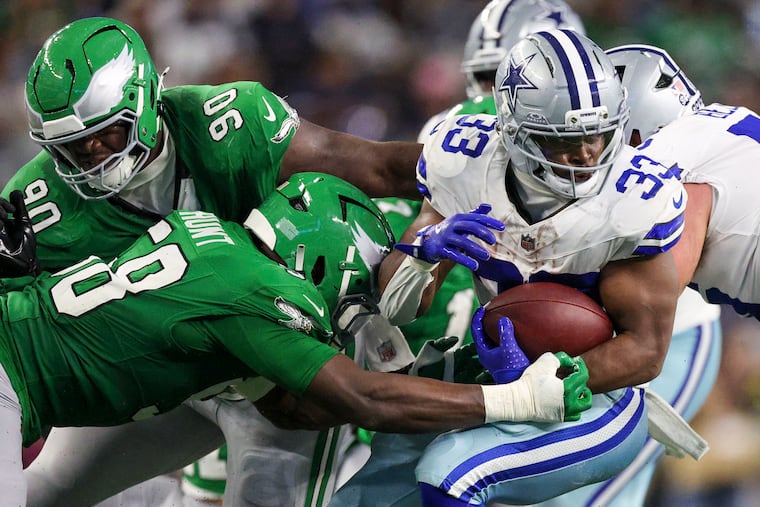
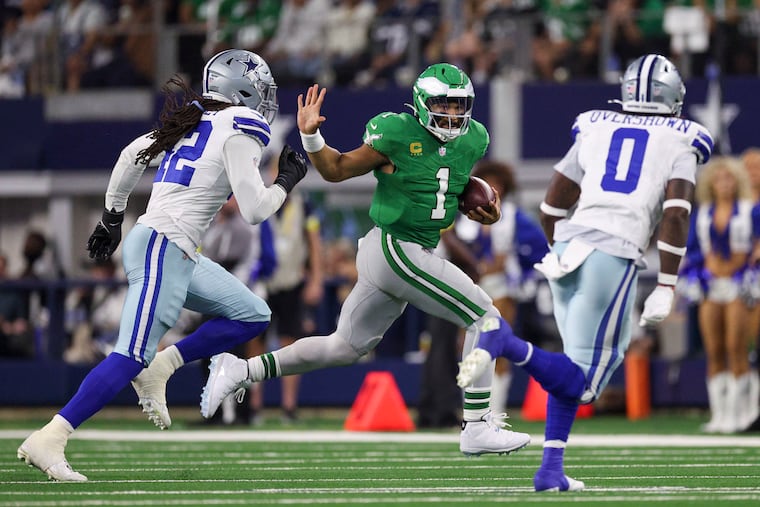
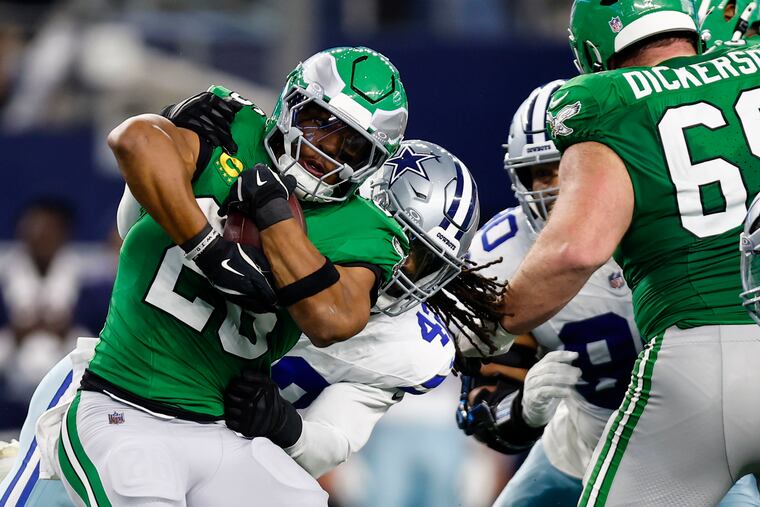
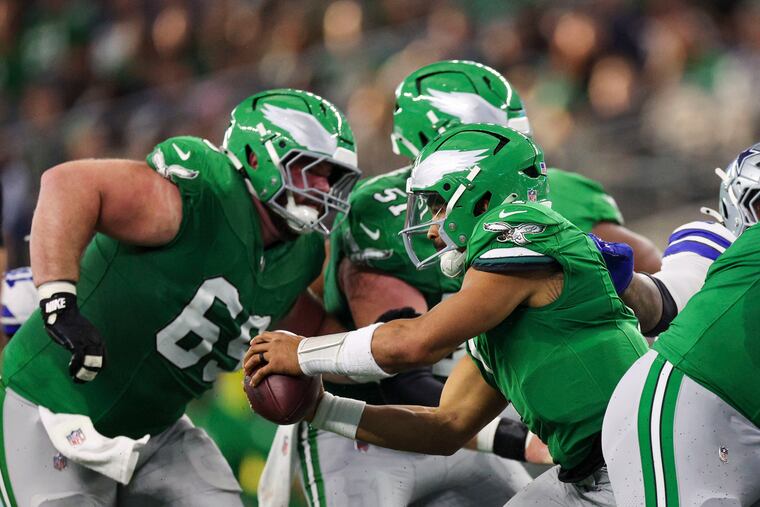
ARLINGTON, Texas — The Eagles couldn’t run the ball again, and yet, after they jumped out to a 21-0 lead, Saquon Barkley rushed on four first downs in the next five possessions.
He gained a total of 5 yards on the carries.
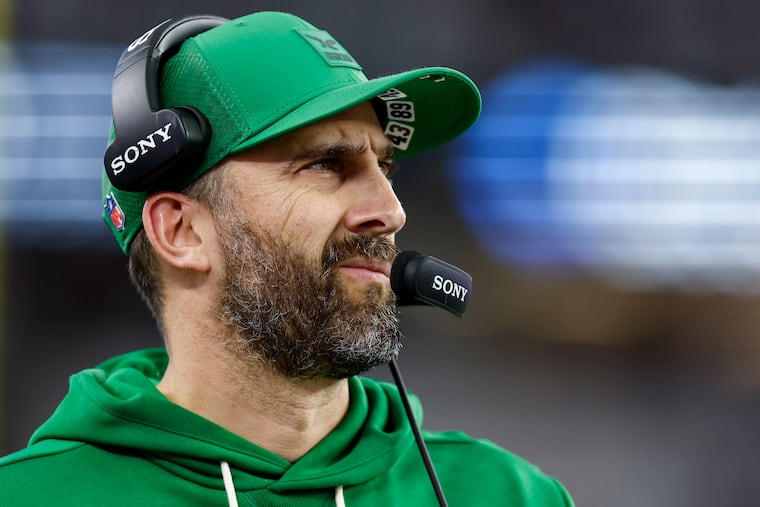
The play-calling defied logic after the offense had used an 8-18 run-pass ratio to score touchdowns on its first three drives. Offensive coordinator Kevin Patullo powered down the engine, but make no mistake, it was coach Nick Sirianni who was at the commands.
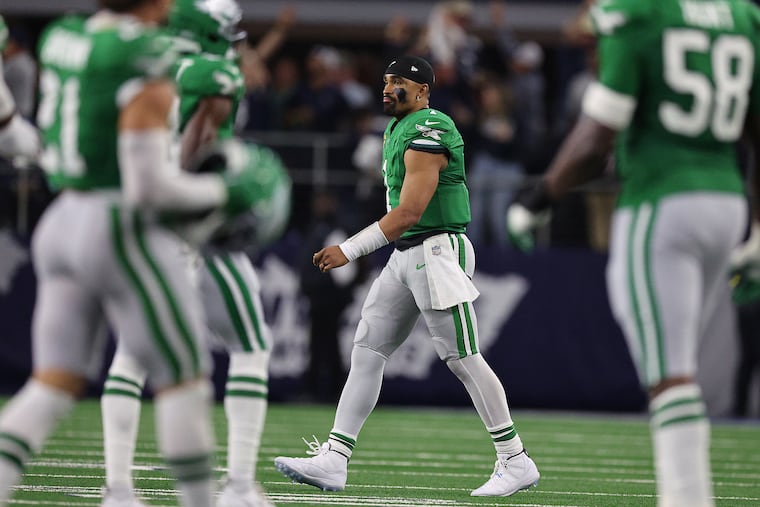
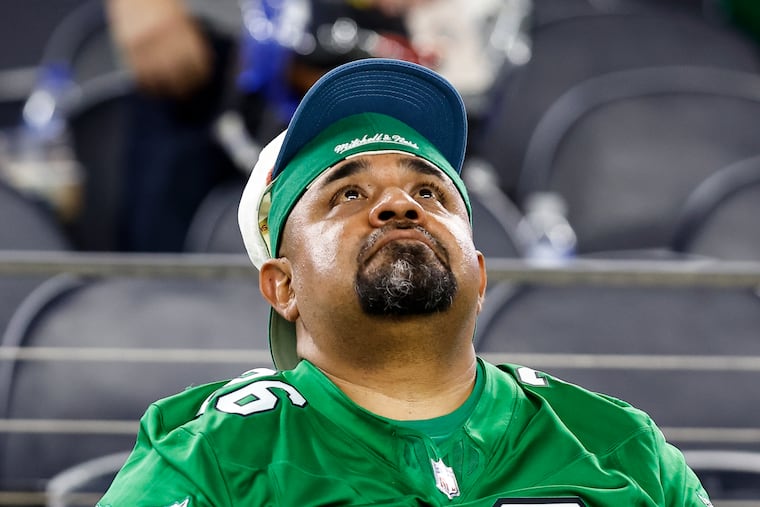
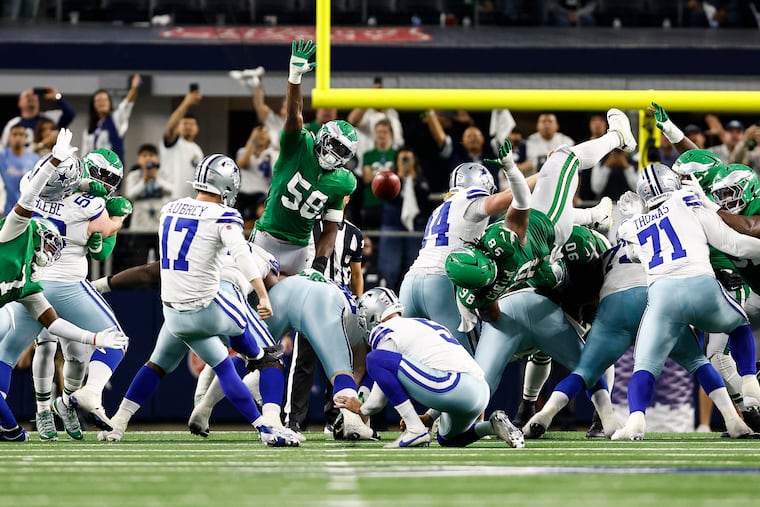
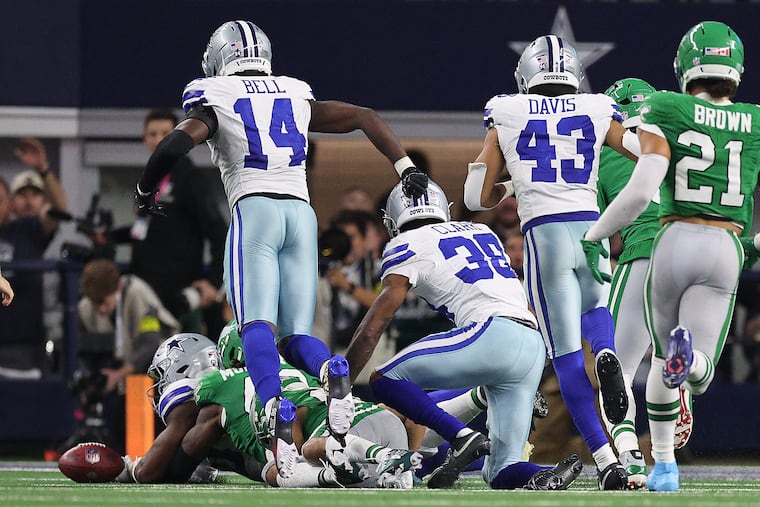
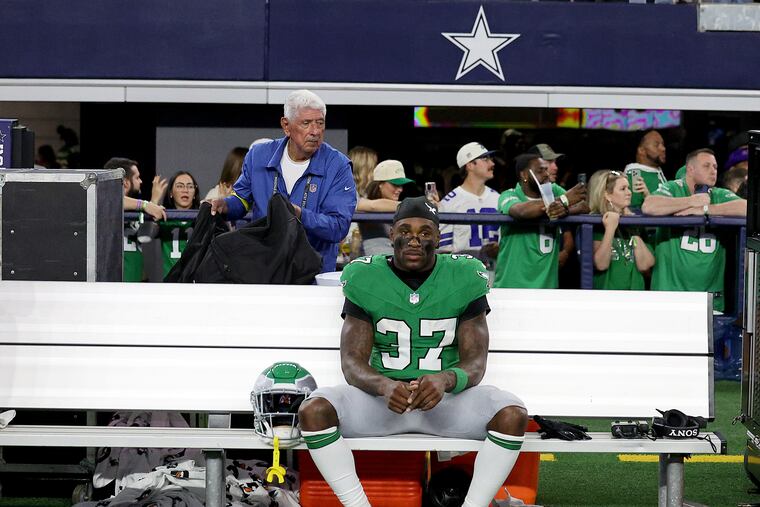
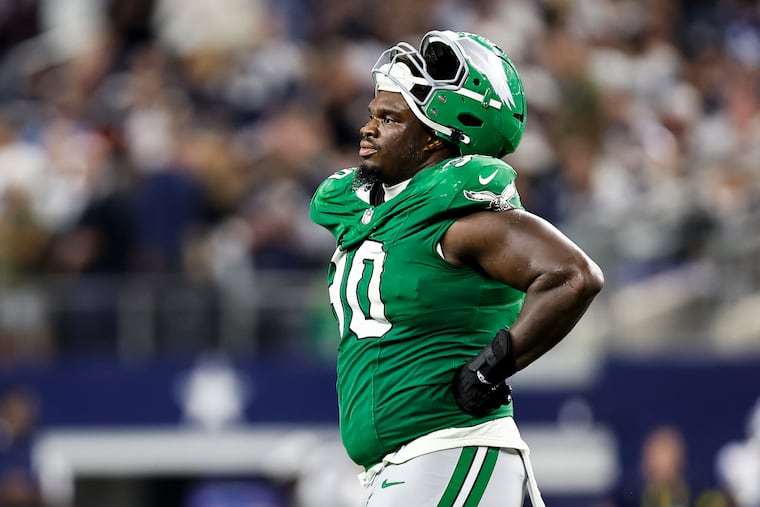
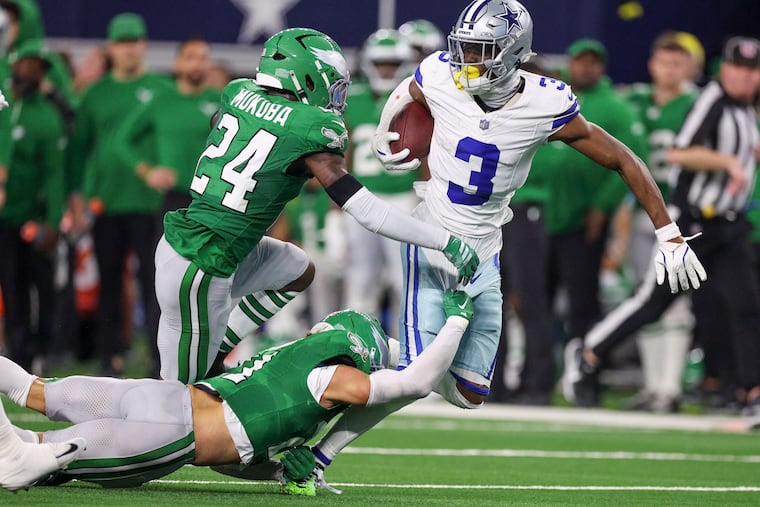
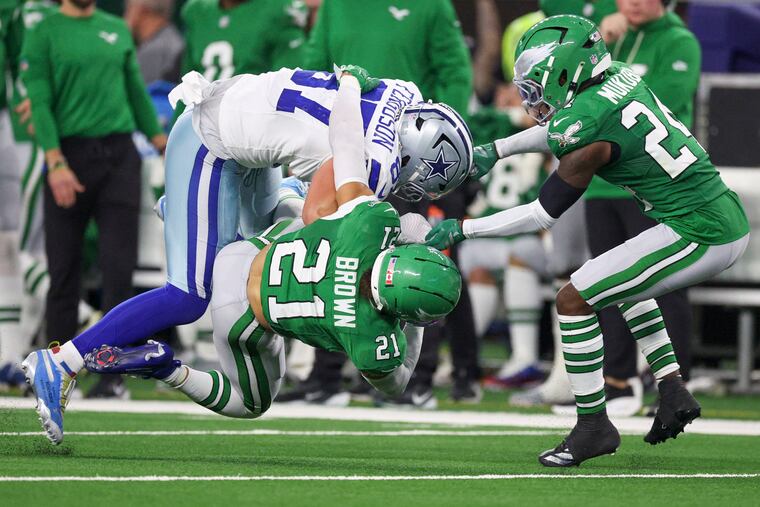
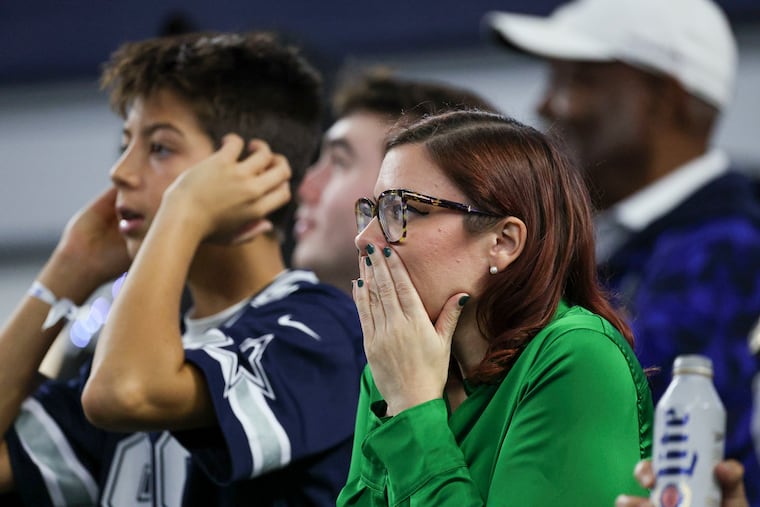
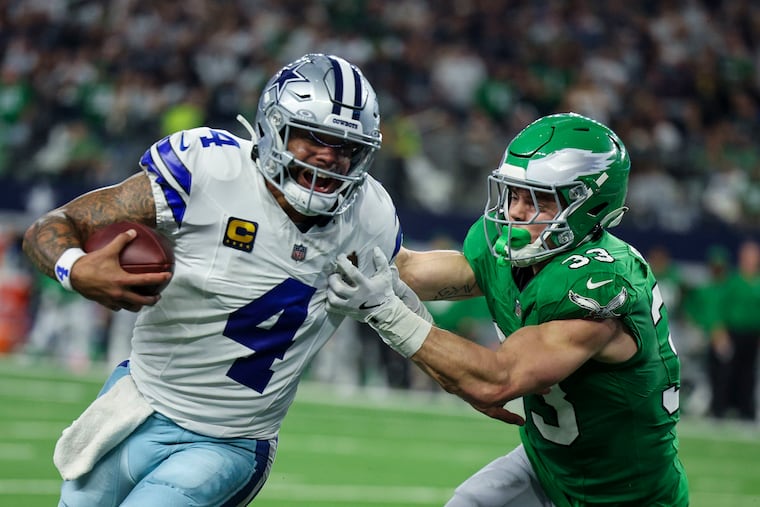
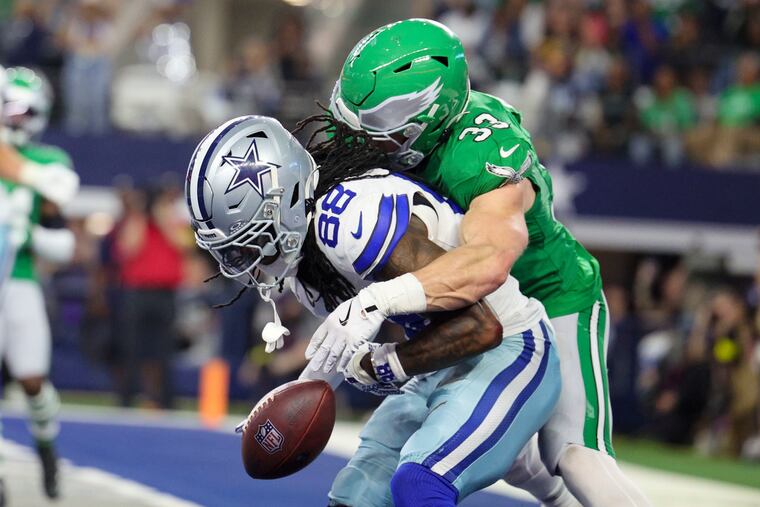
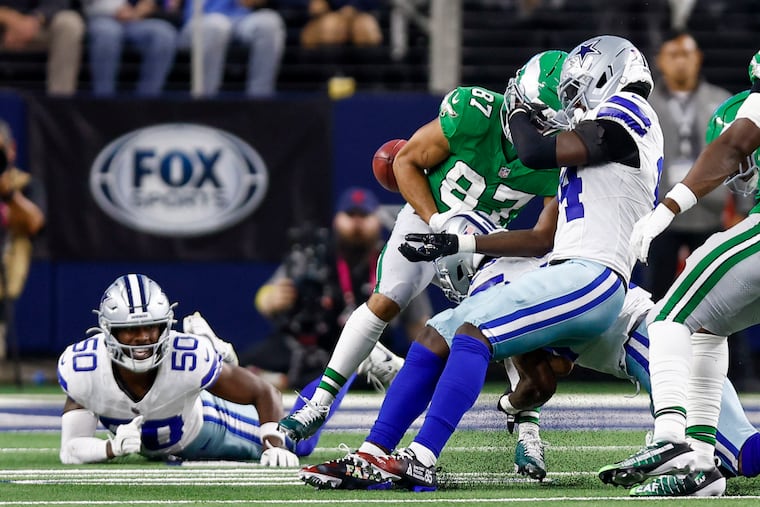
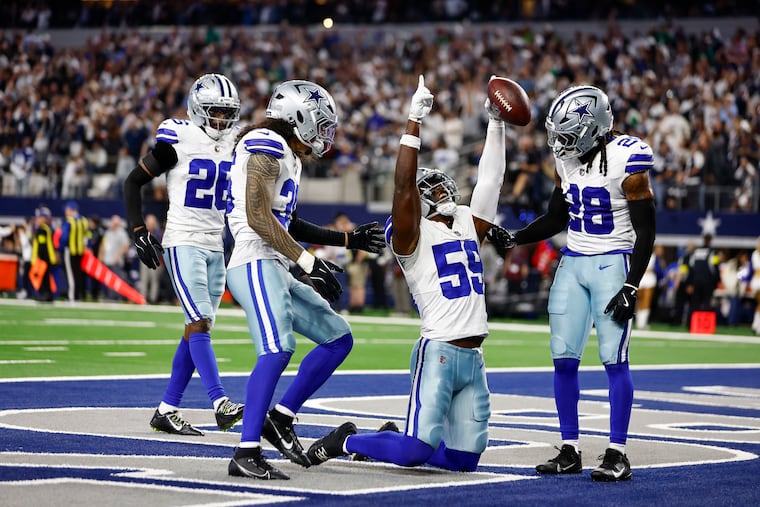
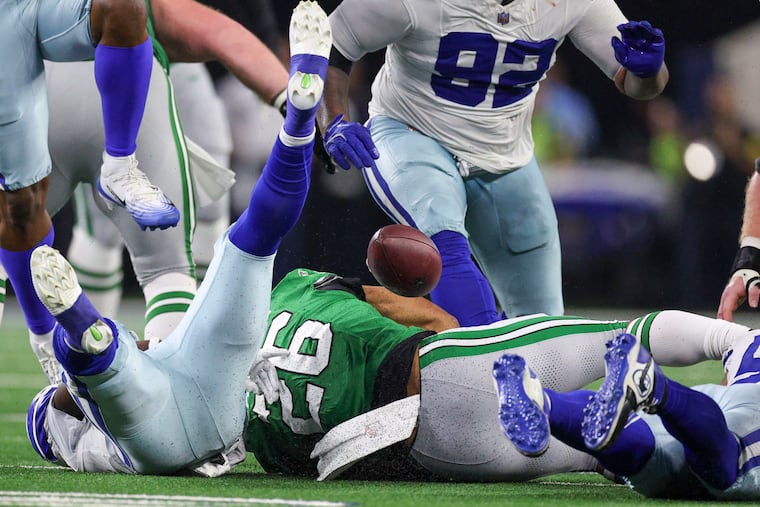
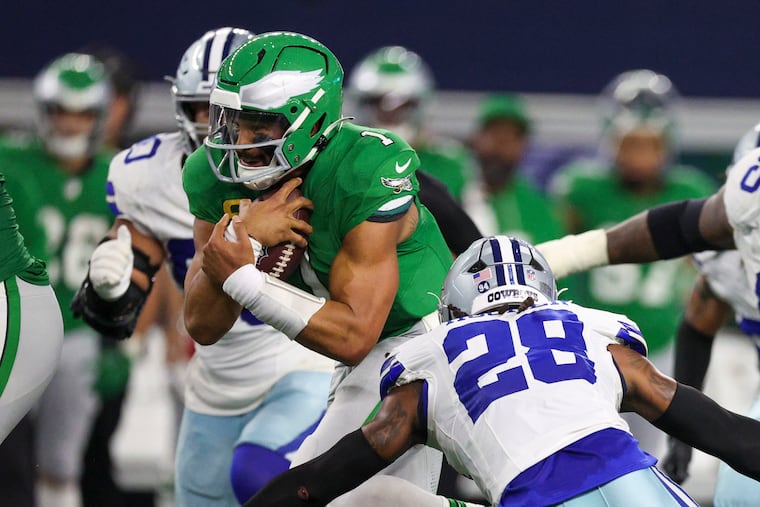
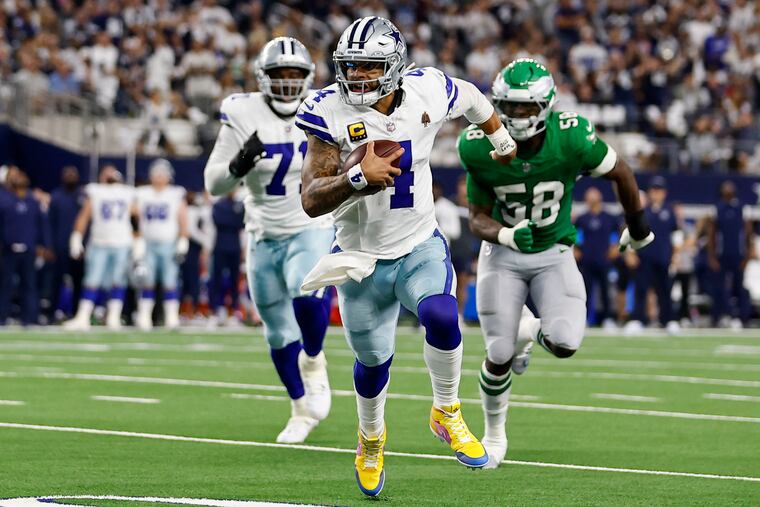
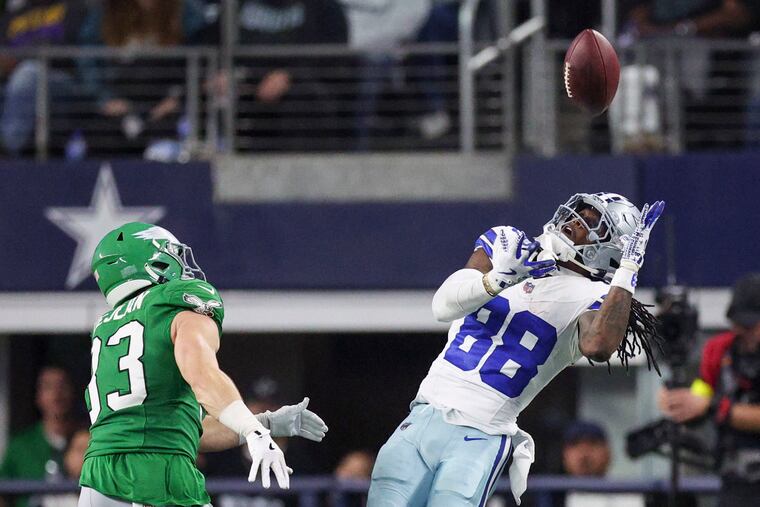
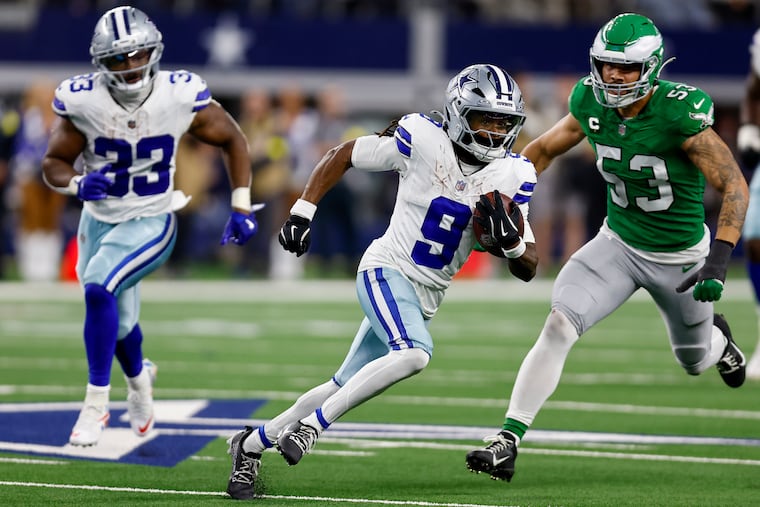
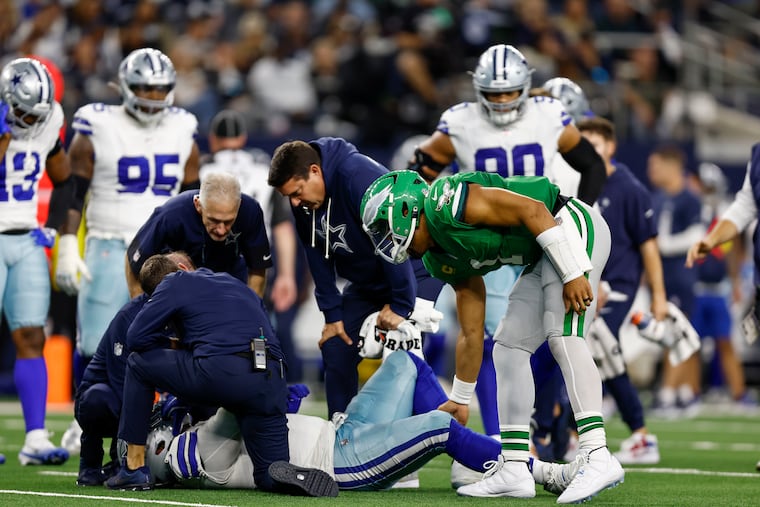
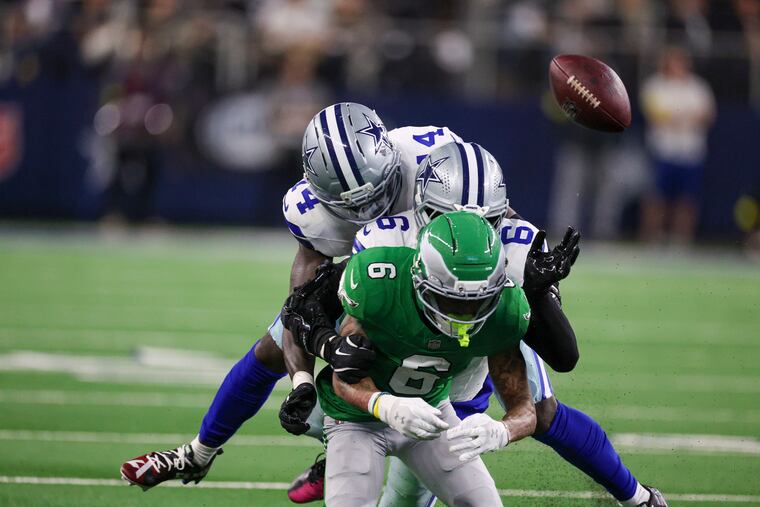
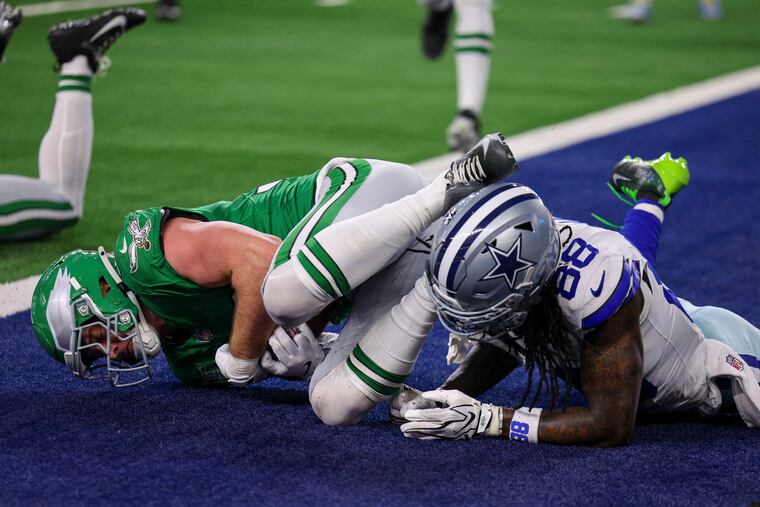
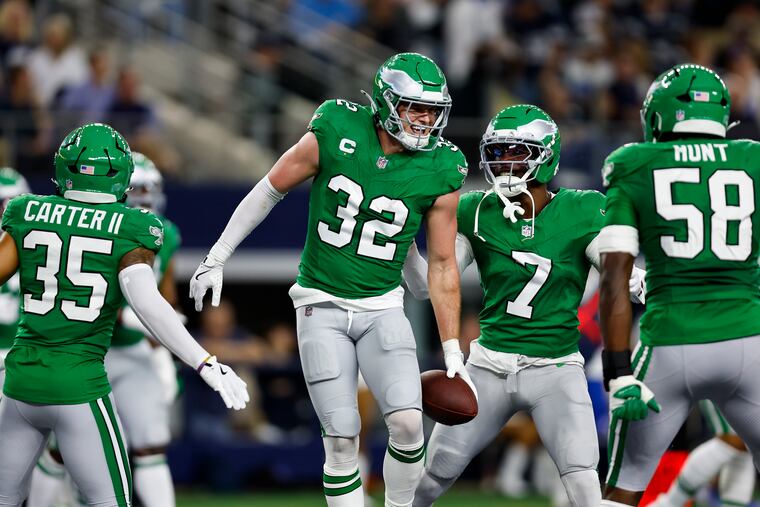

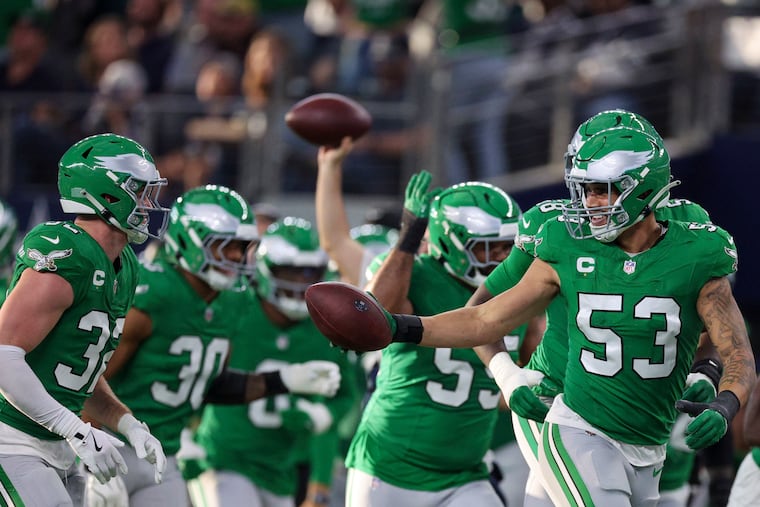
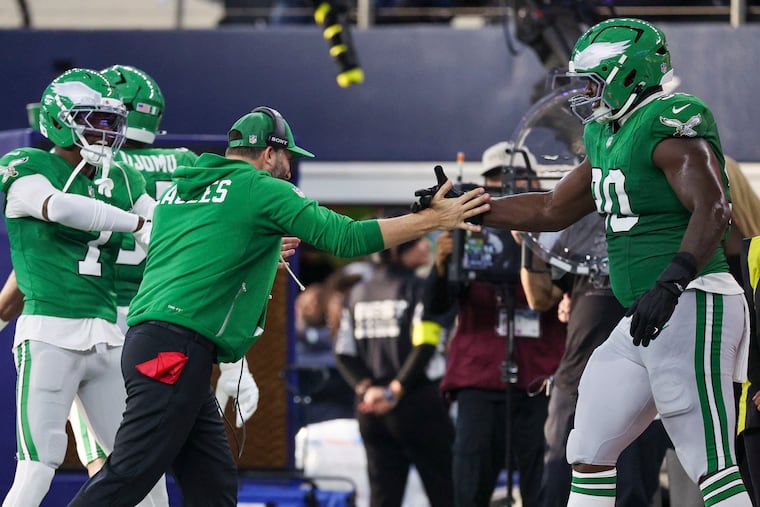
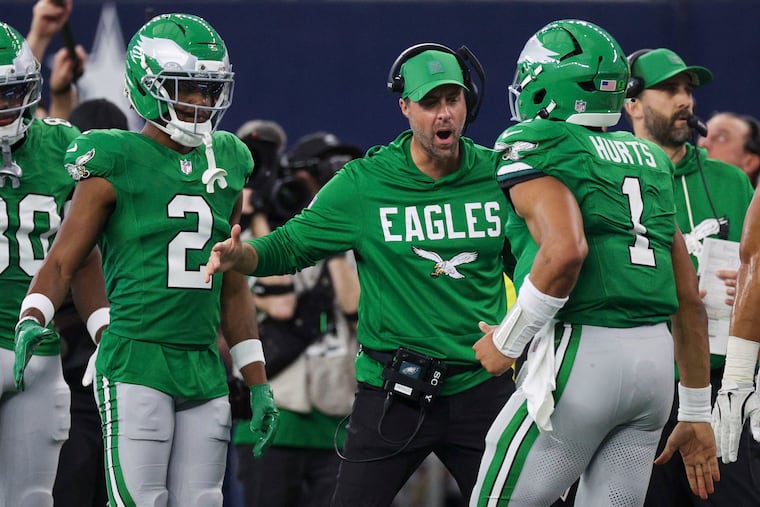
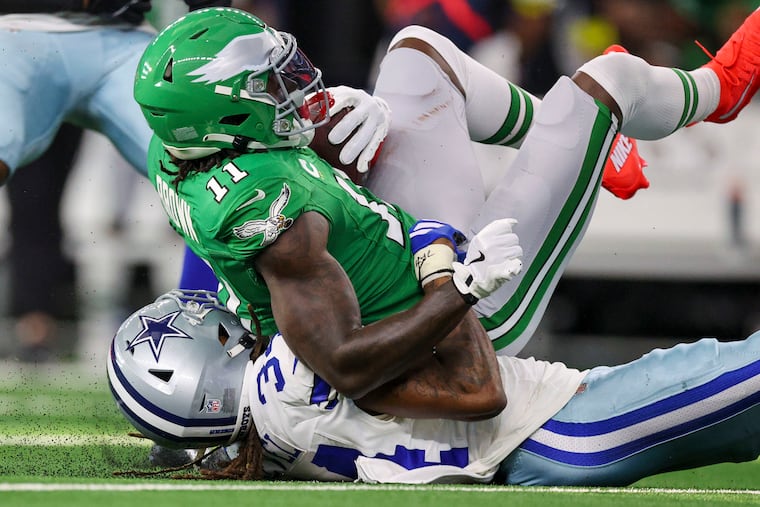
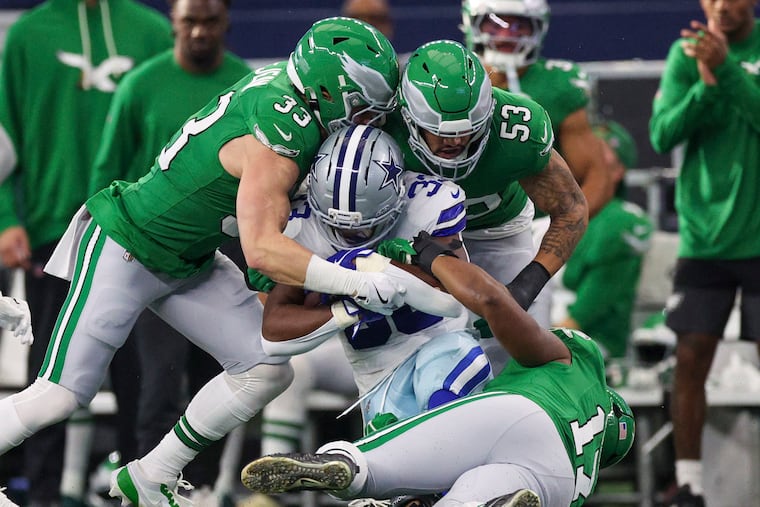
He’s the driver of the Eagles’ conservatism this season and it finally caught up to his team, which coughed up a 24-21 loss to the Dallas Cowboys on Sunday at AT&T Stadium.
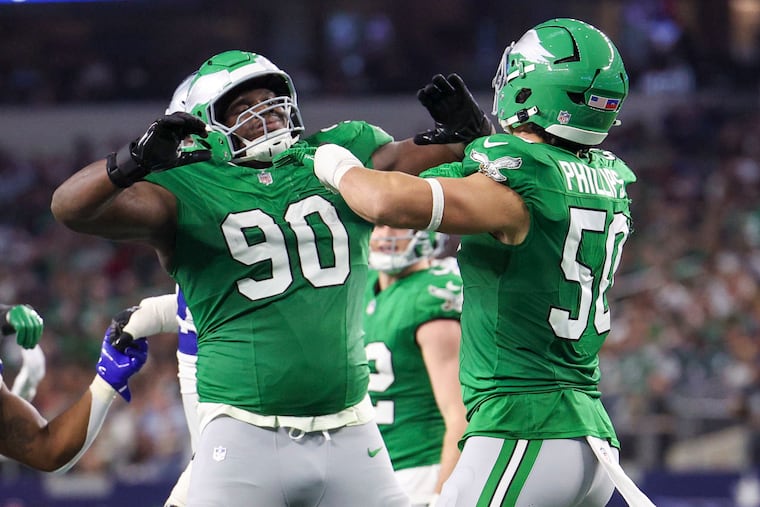
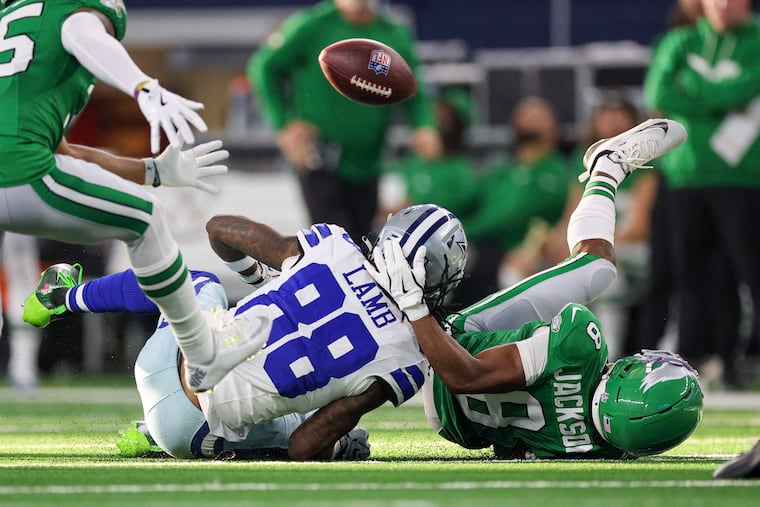
There were myriad reasons for the Eagles falling to 8-3. Two uncharacteristic turnovers. Fourteen penalties — many of them unforced. And an injury-marred defense that succumbed under the weight of the offense’s ineffectiveness.
But Sirianni and Patullo turtled up when they should have pounced on the Cowboys’ sloppiness. Running the ball into five-man fronts — more on that mystery later — was puzzling. The lack of aggressiveness before the half and in fourth-down situations wasn’t as egregious, but decisions in those situations were emblematic of the overall timidness.
» READ MORE: Eagles grades: Nick Sirianni’s conservatism; offense’s complacency costs the Birds at Dallas
“We just weren’t very efficient as an offense in that second half,” Sirianni said. “I didn’t really feel that we took our foot off the gas.”
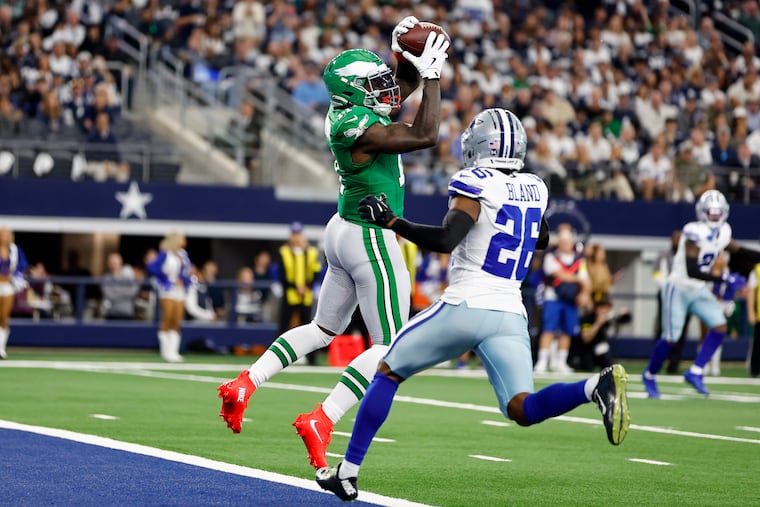
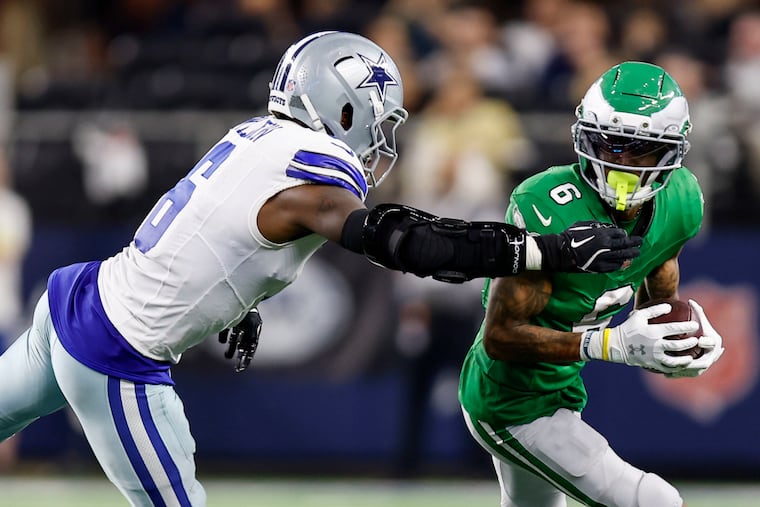
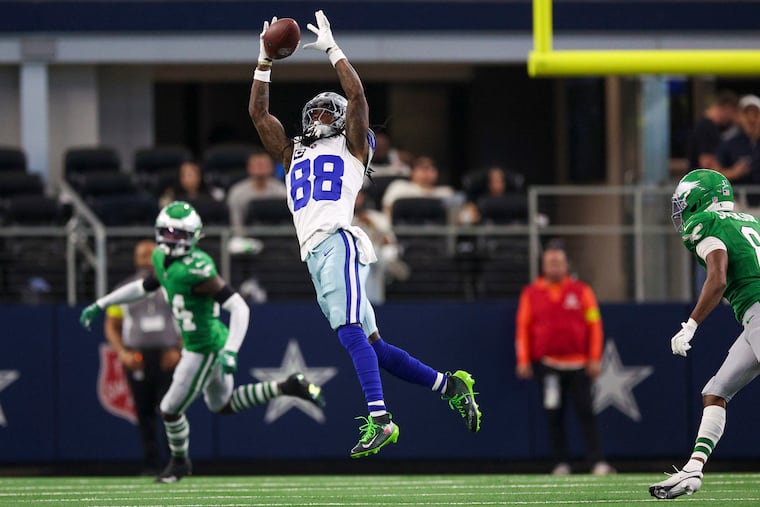
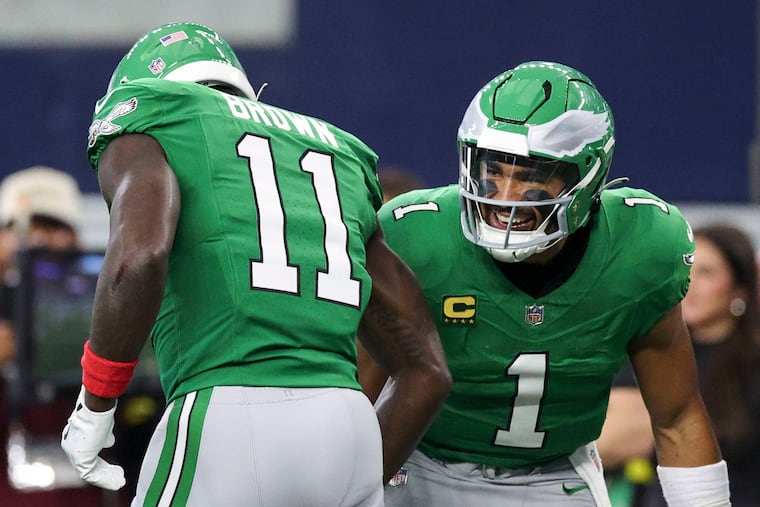
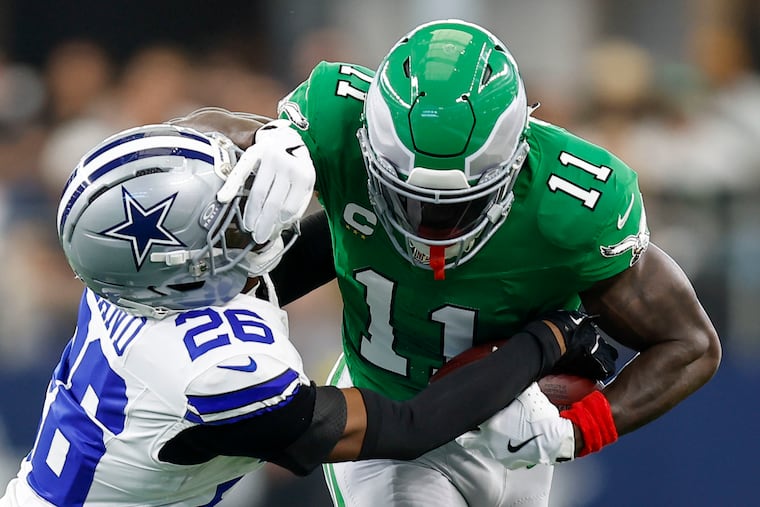
It’s been the tale of the Eagles offense for the past three months. They have spurts or even an entire half of efficiency. But consistency has been fleeting. The game plan opened with quick passes from quarterback Jalen Hurts to A.J. Brown, and eventually a downfield shot to DeVonta Smith.
There was diversity in the calls and innovation in the red zone. But the Cowboys adjusted and the Eagles failed to counter.
“They tried to take away some of the things that we were throwing to A.J. and Jalen did a good job on some of those, getting the ball down to Saquon [Barkley] in the flat,” Sirianni said. “Just a little different variations of how they played the coverages from what I’m seeing on the fly.
“Hats off to them.”
But this wasn’t a comparable defense to that of the Green Bay Packers and Detroit Lions, who held the Eagles to 16 and 10 points in the previous two games. The Cowboys’ defense entered Week 12 ranked 31st in expected points added per drive, 30th in points per drive, and near the bottom in most other statistical categories.
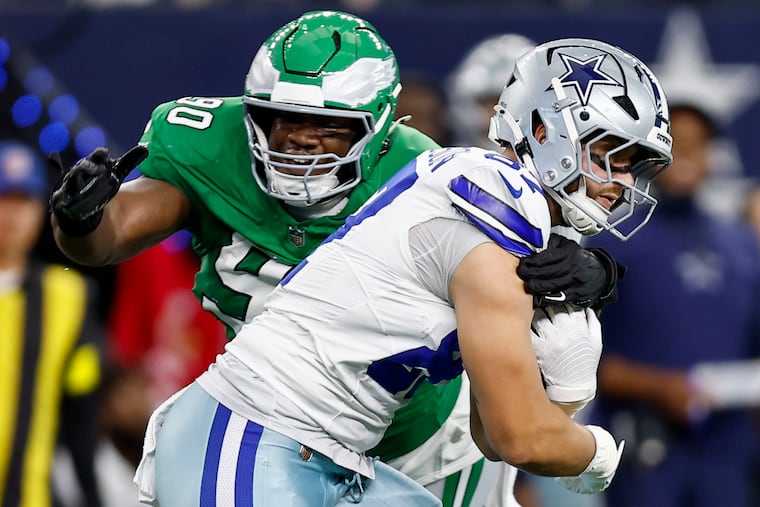
They’ve had marginal improvement after the trade for defensive tackle Quinnen Williams, partly due to a schematic change. Coordinator Matt Eberflus started utilizing more five-man fronts — with Kenny Clark and Osa Odighizuwa also in the interior — to help a unit that was last in the NFL in rush success percentage.
“I think that’s just how they’re built now, given the three interior defenders they have,” Hurts said. “They want to keep their best guys on the field, and it’s very effective, and it was something that we didn’t handle as good as we like to.
» READ MORE: A championship team doesn’t give away wins. That’s exactly what the Eagles did at Dallas.
“So good opportunity to build if that’s something that teams show us.”
Eagles guard Landon Dickerson had a different take on Dallas’ five-man front.
“It’s not usually, typically something they were running a whole lot,” he said, “and turns out that was their flavor of the day.”
But opponents haven’t been vanilla in defending the Eagles ground game all season. They’ve been exotic and the offensive line has yet to find a blocking scheme to counter extra bodies in the box.
“I think a big thing is … time on task,” Dickerson said. “Obviously, you can’t run every play to every defense during the week, so I think we really just have to [home] in on having a game plan for every defense that a team has run, and every possible defense that they could run, and make sure that we can execute against all of them.”
This is who the Eagles are on offense now. They used to run the ball at will, especially when matched up against nickel defenses. But the O-line isn’t as strong because of injuries, a personnel change at right guard, and age.
And Barkley, who gained 22 yards on 10 tries and had a costly fumble as a receiver, just doesn’t seem to have the same pop. He said he’s healthy, but he’s clearly wearing down from all the attention.
“I’m tired of the excuse of people trying to stop the run game,” said Barkley, who’s gone from last year’s 5.8-yard rushing average to 3.7. “I don’t really subscribe to that. Just got to be better. Got to make plays.”
And that goes for Hurts, as well, who should be able to check out of bad runs vs. heavy fronts. But more than anything, he needs to make defenses pay when they’re light in the secondary, and he and the pass offense didn’t do it enough.
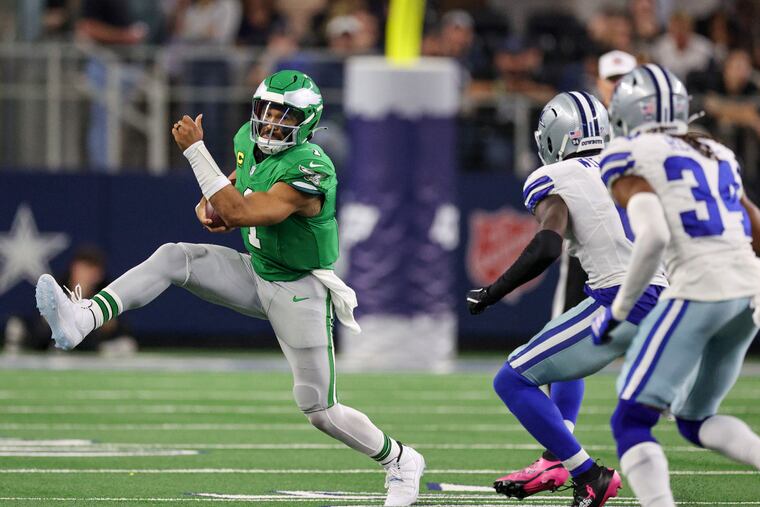
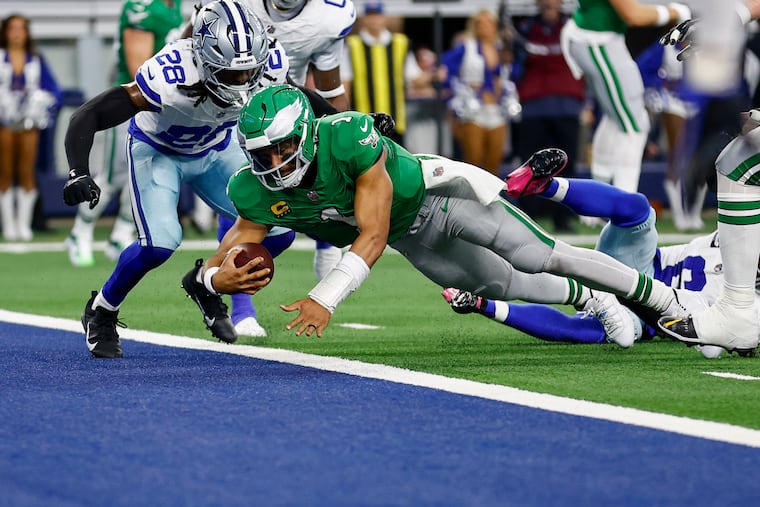
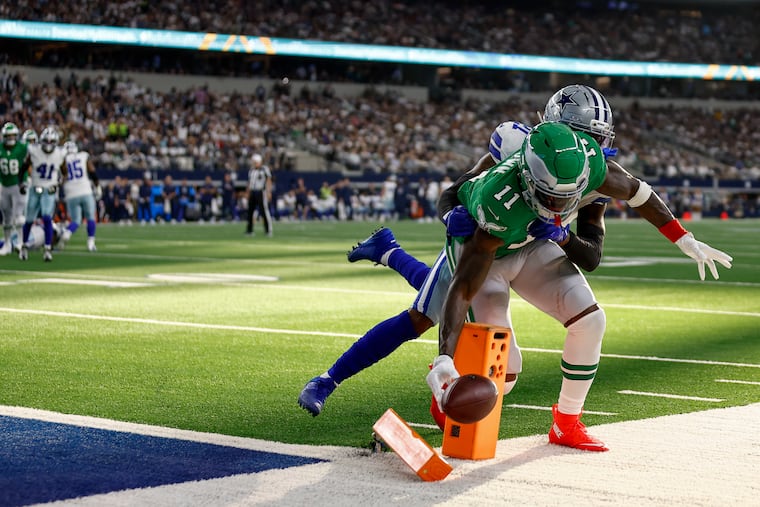
The quarterback’s numbers don’t look so bad on paper: 27 of 39 for 289 yards and a touchdown with no turnovers. Hurts also rushed for two TDs. But given the chance to lead the Eagles on a game-winning drive, he took a third-down sack after holding the ball for four-plus seconds.
“There’s nothing more you can ask for than to have the ball in your hands to go out and drive and finish the game on your terms, and we had an opportunity to do that,” Hurts said. “And I didn’t do enough.”
But this loss was more on the coaches. Fourteen penalties — for 96 yards — matched a high in the Sirianni era.
“You always put that on me,” Sirianni said. “If there’s stuff that like that that we spend time going over, obviously, I’ve got to get my message across better. So that’s got to be on me.”
» READ MORE: Sloppy Eagles surrender 21-point lead, fall at Cowboys to end win streak
Two offensive penalties negated catches for 20 and 16 yards in the second half. On the first, Matt Pryor was flagged for lining up in an illegal formation.
“I believe I was supposed to line up off the ball,” Pryor said. “Miscommunication going in. So it’s just something that I have to catch onto the formation that we call and make sure we’re aligned.”
Lane Johnson’s absence due to a foot injury forced Fred Johnson in at right tackle and meant Pryor filled the latter Johnson’s role as a sixth O-lineman. But why wasn’t he prepared in that moment?
Sirianni called the high number of penalties “uncharacteristic,” but the Eagles’ 84 penalties are the seventh-most in the NFL, and have consistently put them behind the sticks. The offense added three more three-and-outs to its league-worst total. Sirianni’s game management is seemingly an admission that he knows his once-potent unit is substandard.
Given the ball with 17 seconds left in the half and two timeouts at the Eagles 28, Sirianni had Patullo call a running play. Barkley gained a yard running off left tackle.
“We tried to run it to see if we could bounce one out of there and see what happened after that,” Sirianni said, and noted the Cowboys “had their timeouts, as well, and that kicker can make it from long range. We had a 21-7 lead.”
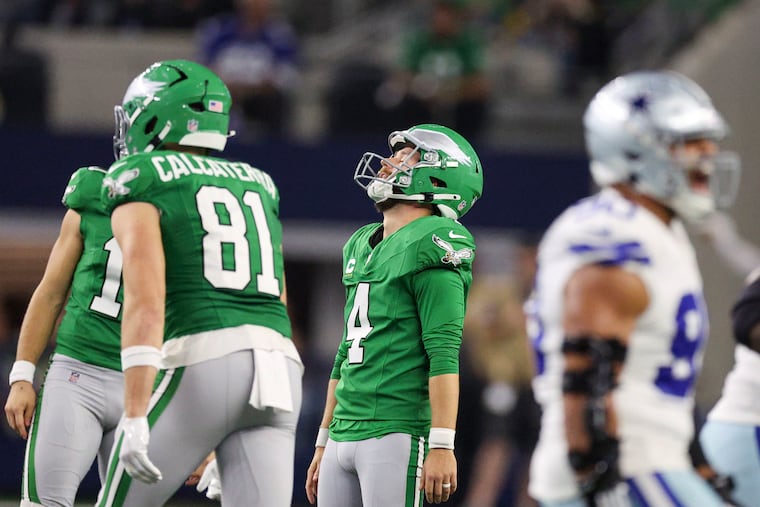
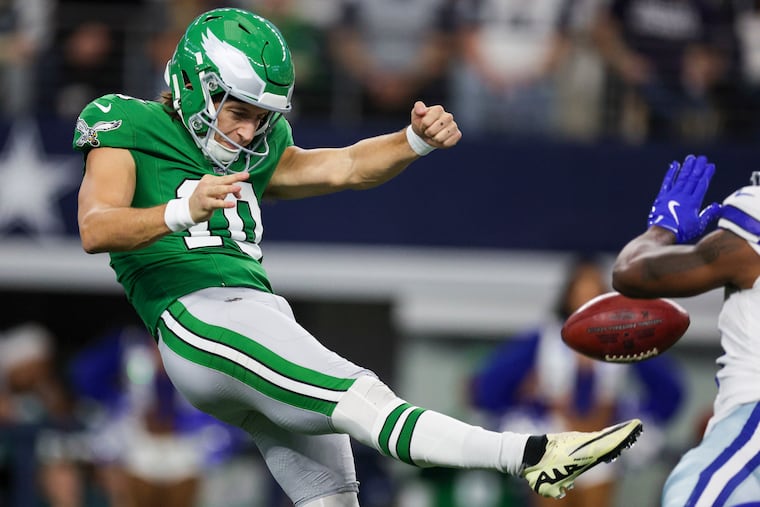
The score remained the same early in the third quarter when the Eagles punted on fourth-and-5 at their own 48. The Cowboys cut the margin in half two series later. Early in the fourth quarter, Sirianni elected to have Jake Elliott attempt a 56-yard field goal on fourth-and-5. The kicker missed wide right.
Both decisions can be justified. But they were indicative of a coach who has increasingly played not to lose. Even that philosophy can be defended to some degree. Sirianni won eight of his first 10 games that way.
Losing to the 5-5-1 Cowboys shouldn’t be the end of the world. The Eagles control their NFC East destiny, if no longer for the No. 1 seed in the playoffs. A win over the 8-3 Bears on a short week would right the ship.
But after 11 games, it’s difficult to see the offense at the wheel, and whether there’s someone competent on the bridge.
“I’m not going to make any sweeping judgments right this particular time,” Sirianni said. “I think it was a wide variety of things. Obviously, at the end of the day, we didn’t coach well enough, we didn’t play well enough.”
It sure seemed like one more than the other.

Earlier this year, the scenario seemed far-fetched, especially after the Eagles used a second-round draft pick on a tight end. Zach Ertz overcoming a serious injury to make a nostalgic return? It just didn’t feel like a possibility. Then rookie Eli Stowers got hurt in the preseason, and starter Dallas Goedert went down Week 2 vs. Tennessee. All of a sudden, the Eagles had a need. Now, the 35-year old Ertz has been tapped to fill it. The Inquirer's Jeff McLane explains how an unlikely reunion between Ertz and the Eagles came together, why both sides are hoping for more than a feel-good story, and which player on the roster could be affected by this move the most. Listen here.
Listen to all episodes here or wherever you get your podcasts.