AI will drive the economy in 2026, for better or worse, economist says
Spending related to AI accounted for about a quarter of GDP growth in the first half of 2025, Joel Naroff writes. This year, it could be even more important.
It seems like it is déjà vu all over again. The economy is growing, people are getting rich, and we are assuming the next great economic engine of growth, AI, will keep on keeping on.
Unfortunately, history has shown us that growth, when it is not well diversified, can meet an untimely and difficult end.
In the 1980s to early 1990s, savings and loan institutions teetered on the edge of failure. Many crashed and burned and so did the economy.
In the second half of the 1990s, the dot.com mania spurred enormous investment — until the bubble burst, taking the economy with it.
The mid-2000s gave us the housing bubble and the over-leveraging of the financial sector. The resulting near-total-meltdown of the world’s financial system led to the Great Recession.
And now the economy has become dependent on artificial intelligence (AI), which has exploded with the creation of generative AI programs, new chip technologies, rapidly advancing robot technology, and the need for data centers.
Will AI lead to an extended period of growth, or will we discover it was just another bubble?
AI turned tepid growth into decent growth in 2025
The economy grew moderately last year, but it needed significant help from the rush to cash in on AI.
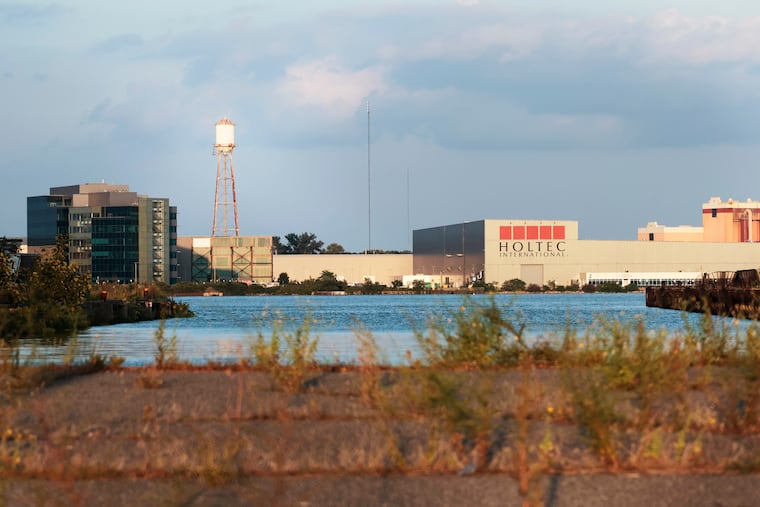
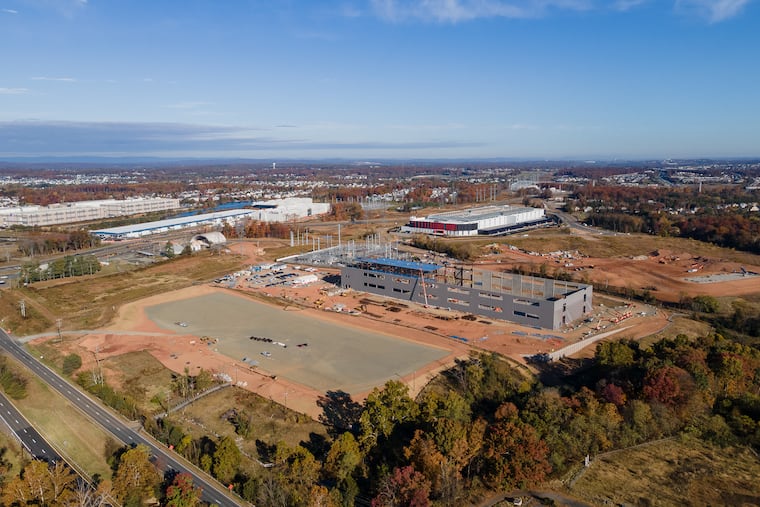
Spending on new data centers, servers, software, infrastructure, chip production, and everything else that goes into creating and supporting the AI computing capacity is estimated to have accounted for roughly 25% of GDP growth in the first half of 2025.
When you account for the secondary expenditures by the public sector on things such as roads, utilities, and energy capacity, the AI capital expenditure binge impact on growth was even greater, as much as 30%.
But there is more.
AI-driven labor productivity gains are just starting to appear. It is hard to estimate how much AI has or will add to output per worker. But it will.
Essentially, AI likely boosted 2025 growth from a tepid 1.5% to about 2%.
This year, AI-related activity could be the most important driver of growth.
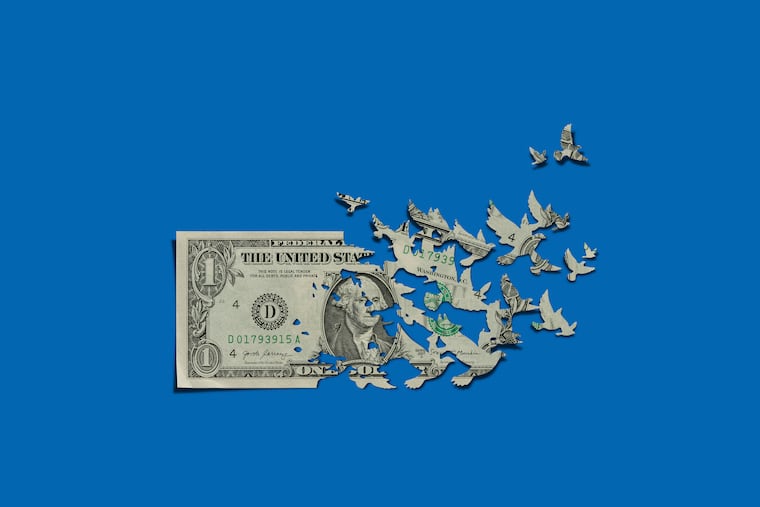
Has the AI exuberance reached bubble status?
AI has kicked the nation’s competitive spirits into high gear, pulling in capital similar to the way dot.coms did during the high-tech bubble.
Every major tech company is spending or planning to spend at levels not seen before. The approach is simple: Spend big or pack it in.
The problem is, we have no idea who or if there will be any big winners in the race to the top of the AI world.
And we don’t know how long the winners can stay at the top of the mountain. The pace of innovation has accelerated to the point where leaders could be taken down in a much shorter time period than previously.
Until then, the racers are being rewarded royally. And that is a worry.
The Morningstar US Market Index measures most of the stocks traded. Last year, the tech and communication services sectors accounted for almost 60% of the index’s rise. Chipmaker Nvidia by itself accounted for about 12% of the total market’s gains.
When it comes to the equity markets, it has been all about AI and its associated industries.
That raises the question: Are the equity markets suffering from what former Fed Chair Alan Greenspan called “irrational exuberance?”
The answer to that question will not be known for a while. As Greenspan noted, it is really difficult to determine whether a bubble exists or has reached a dangerous level until it has actually burst.
He also recognized that slowly letting the air out of the bubble is exceedingly difficult without causing a recession. Greenspan’s successor, Ben Bernanke, learned that lesson all too well when he thought the housing market was headed for a soft-landing. Whoops.
That’s the fear. The dot.com bubble was not a problem until it was a really big problem. Housing was not a problem until it was an even bigger problem and nearly took down the world economy.
Now, few believe the concentration of growth in AI is a problem.
What does this all mean?
There are some lessons we can learn from the tech collapse.
Dot.coms were going to change the world and guess what, they did! It’s just that there were too many of them and some were too far ahead of the times. Some had brilliant ideas that didn’t survive the competitive meat grinder. Some just ran out of money, especially when the bubble started to burst.
And some just had products or services that were readily reproducible by competitors. Being first in or early leaders didn’t ensure survival. Remember BlackBerry, AOL, Netscape, and Myspace?
Will we wind up with so many competitors that the demand cannot support all of them?
Unlike the tech bubble, the other bust periods don’t tell us much.
The S&L crisis was due to regulatory changes that essentially made those financial institutions zombies. That is not the case now.
The housing bubble bursting caused a financial crisis because the sector became way overleveraged. The regulators were asleep at the switch. It’s not clear how regulation fits into today’s situation.
Most of the companies fighting the AI survival of the fittest test are massive and at least for now financially capable of carrying on the fight for an extended period.
But there is a problem that the Federal Reserve faced when the financial crisis reached its peak: Are there companies that are too big to fail?
Few thought the biggest banks could be taken down so easily, but almost all needed bailout funding to survive.
And that is my concern. The tech behemoths need to show the value of AI to the economy as a whole. They need to start generating real earnings this year. And they need to show that having a data center on every corner is a sustainable business model.
AI holds out great hopes for the economy, but significant risks as well. Those hopes will be confirmed if at the end of the year we are saying “AI that” instead of “Google that.”