How the Canadian prime minister’s anti-Trump speech could change the U.S. economy | Expert Opinion
Canadian Prime Minister Mark Carney’s speech at the World Economic Forum throws down the gauntlet on U.S. trade.
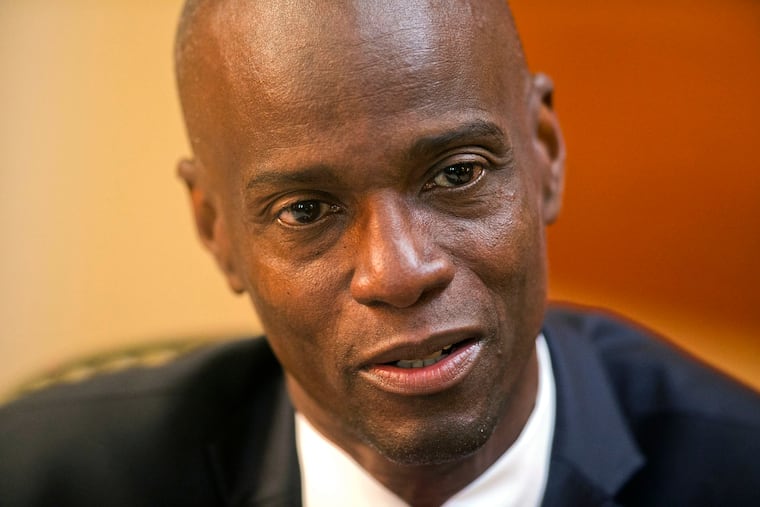
Canadian Prime Minister Mark Carney may have given the most important economic speech of all the attendees at the World Economic Forum in Davos, Switzerland.
In it, he addressed the changing face of world economic relationships with a clear, challenging conclusion: “Let me be direct: We are in the midst of a rupture, not a transition.”
His statement made it clear that the imposition of rules by the world’s most powerful nations will no longer be accepted quietly.
On behalf of Canada, the tenth largest economy, Carney threw down the gauntlet, saying the pattern of trade and economic relationships that has persisted for decades will undergo great changes, led not by the world’s superpowers, but by the midsize nations who trade with them.
This is the clearest indication that the backlash to the tariff wars that President Donald Trump started has cut the cords with previously passive but supportive nations.
The potential economic consequences for the U.S. are massive, though it could take many years before the impacts are clearly understood.
Many countries will alter their U.S. trade
While trade is a country-to-country activity, it is no different from a business-to-business relationship.
If your business partners work well with you, the relationship is long-lasting. But if your partner becomes abusive, a change in the nature of the collaboration is inevitable. You diversify.
After all the tariffs and threats, our trading partners realize they cannot remain overly dependent on the U.S. They must spread their exports and imports across a larger number of nations.
Already, Canada, Britain, and the European Union are discussing or finalizing deals with China and India on a variety of goods. These are just the start.
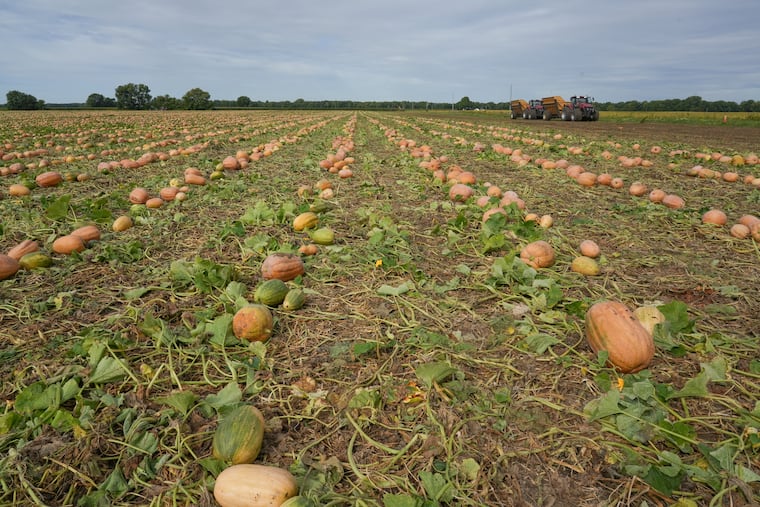
Agriculture in the crosshairs
China has cut back on soybean purchases from U.S. farmers. For the five months ending in October 2025, China bought no soybeans.
Given that China has been purchasing about 55% of U.S. production, U.S. soybean farmers have been devastated, requiring a multibillion-dollar bailout.
And to make it clear this is not a one-time reduction, China is working to expand its agricultural relationships with South American nations to more permanently diversify its farm supply chain.
The Canadian call to arms indicates other nations will likely follow the Chinese playbook to escape the political/tariff consequences of disagreeing with U.S. policy.
There is no coming back from that, to the long-term detriment of U.S. farmers.
Other key industries at risk
The military industrial complex is one. Europe purchases a significant amount of U.S. military products because its defense industry cannot supply the continent with enough weapons to go it alone. Instead, it has been hiding behind the U.S. defense shield.
With U.S. support for NATO in question, Europe now understands it must expand its domestic defense production and diversify its military supply chain.
While in the near-term, much of the growing European military demand might be met by U.S. suppliers, over the next five to 10 years, a whole new European defense industry is likely to be developed, putting sales to NATO nations by U.S. manufacturers at risk.
EVs and alternative energy
The Trump administration is ending much of the government’s support for electric vehicles (EVs). At the same time the rest of the world is gravitating toward EVs.
In China, EV sales topped 50% of the market last year, while in Europe, EV demand exceeded gasoline-powered vehicles in December for the first time. Sales growth in areas such as South Korea and South and Central America were up by about 50% in 2025.
Placing tariffs on products being embraced by the rest of the world, while disincentivizing their purchases domestically, is shifting the EV supply chain to countries where it is welcomed.
Similarly, the antagonism toward renewable energy is also creating competitive issues for U.S. companies.
Europe blew it badly when it decided to depend on Russian oil and natural gas for a significant portion of its energy needs. That has changed dramatically.
Europe is in a race to diversify its energy supply chain. But instead of ramping up demand for U.S. petroleum products, it is making agreements with energy companies based in the Middle East, North Africa, and Canada, and is rushing into renewable energy sources such as wind and solar.
As long as the U.S. wants to dictate to foreign countries how they should behave, the search for more dependable trading partners will continue. That will affect not just the industries highlighted but the entire economy.
The delinking of Europe and other countries from the U.S. will, over time, reduce foreign demand for our exports. They will have other sources of supply. That slows growth.
Prices and interest rates may rise
Interestingly, this change in the world’s trade patterns could force some manufacturers to return to the U.S.
That may sound positive, but it’s not. The reason goods aren’t produced domestically is that they can be produced more cheaply outside the U.S.
The only way previously imported products can be manufactured here is if the tariffs are high enough to make foreign goods more expensive than the domestically produced ones.
If the price we pay for the made-in-America goods is higher than what we paid when they were imported, replacing imported goods with tariff-protected domestic production is inflationary.
Higher prices also reduce consumer spending power.
Which brings us to the Federal Reserve and interest rates.
In this new tariff-driven world, inflation is likely to remain higher than the Fed desires.
It will be difficult to cut interest rates significantly if inflation doesn’t come down.
In summary
Demand for U.S. exports will decline, slowing growth, while prices of imported products continue to rise.
Inflation is likely to remain high, cutting consumer spending power and keeping interest rates elevated.
A wide variety of industries could see their worldwide sales hurt, potentially significantly.
So, buckle up, the future is no longer what it used to be.