‘Job performance and nothing else’ led to Cherry Hill administrator’s firing, court filings claim
In legal filings last month, former Cherry Hill High School East principal Daniel Finkle denied allegations made against him by former assistant principal David Francis-Maurer.
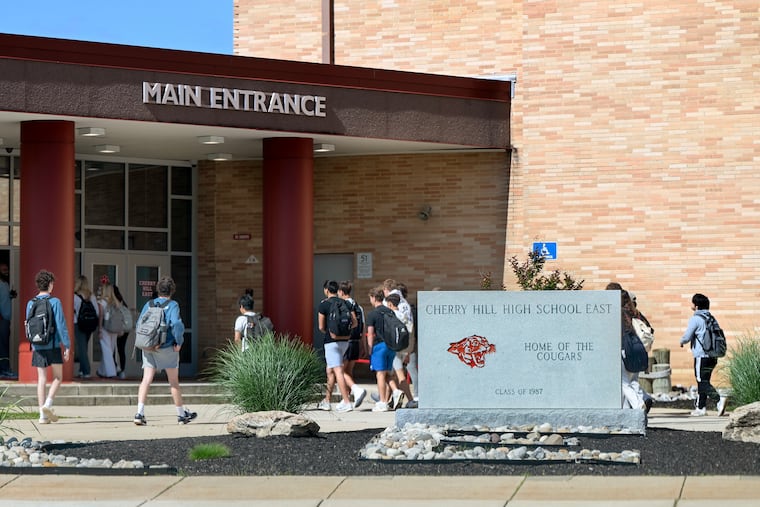
A former Cherry Hill principal claims he did not engage in discriminatory behavior or retaliate against a former employee following a lawsuit filed earlier this year against administrators in the South Jersey school district.
In court documents filed last month, legal counsel for Daniel Finkle, the former principal of Cherry Hill High School East, denies claims made by former assistant principal David Francis-Maurer, who sued the school district and Finkle in September over alleged discrimination and retaliation.
Francis-Maurer’s lawsuit claims that top Cherry Hill officials, including Finkle and Superintendent Kwame Morton, “unlawfully conspired with each other” to subject Francis-Maurer to ”retaliatory conduct” and “severe, pervasive, and continuing instances of discrimination” based on his sexual orientation and religion (Francis-Maurer is gay and practices Judaism). Francis-Maurer also claims that administrators skirted student drug testing and mental health protocols. At the crux of Francis-Maurer’s lawsuit is the allegation that he was wrongfully terminated in May for blowing the whistle on Finkle’s behavior.
Legal counsel for Finkle says Francis-Maurer’s job performance, not whistleblowing, led to his firing.
According to filings from Finkle’s attorneys, Francis-Maurer was argumentative and made “egregious errors” as assistant principal. Specifically, they contend, Francis-Maurer was allegedly unresponsive to feedback and unwilling to collaborate with colleagues, and he failed to complete mandatory performance reviews of employees.
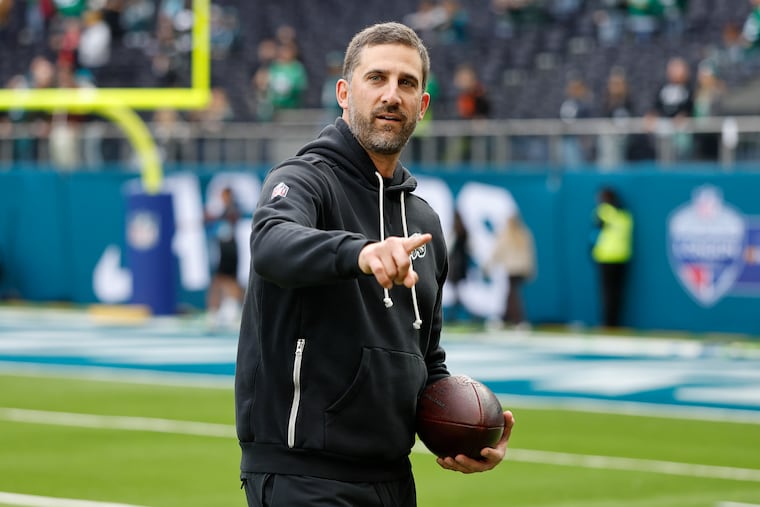
Finkle served as the principal of Cherry Hill High School East from August 2024 through his resignation in September. He was set to become principal of Hightstown High School in the East Windsor Regional School District this fall until the district rescinded its offer.
Francis-Maurer, called “DFM” by students, was hired in 2023 as an assistant principal at East. His termination in May was met with protest in the community, including a student-led walkout and a contentious public meeting in which students implored the school board to retain Francis-Maurer, calling him a “rare talent” who advocated for their needs. He is currently serving as assistant principal of Central High School in North Philadelphia.
» READ MORE: Administrative shakeups follow Cherry Hill School District lawsuit
Court filings by Finkle and the district dispute Francis-Maurer’s telling of numerous events over the course of the 2024-25 school year.
In Francis-Maurer’s lawsuit, he alleges that Finkle told him to “leave his identities ‘at the door,’” referring to Francis-Maurer’s being gay and practicing Judaism.
Finkle, who is also openly gay and Jewish, rebuts this, saying that “the insinuation that [Francis-Maurer] could not express this same identity is ludicrous.” Rather, Finkle says, he was explaining that when he walks through the school doors, he “does not assert any other identity than a high school principal” as his job is to “be there for every student regardless of their beliefs.” When Francis-Maurer asked if he was required to take the same approach, Finkle says he “told him no” but said that it has been effective, which Finkle described as an act of mentorship.
Francis-Maurer’s lawsuit claims that Finkle appeared in a video “trivializing” and “mocking” gender identity. Finkle was featured in a video published by the student government association lip-syncing to a sound bite that stated, “My pronouns are U.S.A.” Francis-Maurer says that parents complained to him about the video, and that when he confronted Finkle, the principal was “dismissive” and brushed him off.
In Finkle’s telling, he was “ignorant at the time” and didn’t know the sound bite was “anti-trans.” As soon as he was made aware of the video’s connotations, Finkle says, he immediately asked the student to take it down, which he did. Finkle says he then emailed the school’s Gay Straight Alliance adviser to take ownership of the incident and express that it was “never his intention to make any group feel marginalized.”
Finkle also pushed back against Francis-Maurer’s characterization of his handling of sensitive student issues.
Francis-Maurer claims that when a student who appeared to be under the influence was referred for drug testing, testing protocols were skirted, and that Finkle said, “I know the student doesn’t take drugs.”
According to Finkle’s court filings, a teacher’s suspicion that a student might be under the influence is not enough to constitute required drug testing. That particular student was not tested for drugs because a parent refused the test, the filing claims.
Francis-Maurer’s lawsuit also claims that after a student reported suicidal thoughts to a club adviser, the adviser texted the student continuously for five days without a response. Francis-Maurer says he raised concerns that an adviser was texting with a student from a personal phone, but “no disciplinary action was taken.”
Finkle, on the other hand, says that the student’s parent was immediately contacted and that Finkle met with the club adviser to explain that he could not use his personal cell phone to contact students. Finkle was informed that the adviser did not have a school email and worked with the district technology team to get him one. Finkle states that Francis-Maurer, who was then the supervisor of the club, “should have been more aware of the situation and addressed it before an issue arose.”
Francis-Maurer says that “the very next day” after he submitted a detailed complaint to top administrators about Finkle, outlining those concerns, Francis-Maurer was rated “partially effective” on parts of his performance review for the first time and was later placed on a performance improvement plan, despite a successful track record.
In a separate filing, attorneys for the district say this did not happen on “the very next day.” Rather, they say, Francis-Maurer submitted his complaint on Feb. 24 and the district submitted his performance evaluation on March 17.
Attorneys for Francis-Maurer describe his work as successful, citing an outpouring of support after his contract was not renewed. In Finkle’s characterization, however, Francis-Maurer would “argue incessantly” when told to complete a task and made “egregious errors” in his failure to properly evaluate employees.
Francis-Maurer’s conduct “demonstrated a lack of alignment with District and building priorities and an unwillingness to fully support the collective vision of the administrative team at High School East,” court filings from Finkle’s legal counsel claim.

Inquirer Cherry Hill
This suburban content is produced with support from the Leslie Miller and Richard Worley Foundation and The Lenfest Institute for Journalism. Editorial content is created independently of the project donors. Gifts to support The Inquirer’s high-impact journalism can be made at inquirer.com/donate. A list of Lenfest Institute donors can be found at lenfestinstitute.org/supporters.