Cherry Hill schools may require parental approval for students checking out ‘sensitive’ books
Cherry Hill public schools may begin requiring parental permission for students to check out sensitive books, according to an internal memo obtained by The Inquirer.
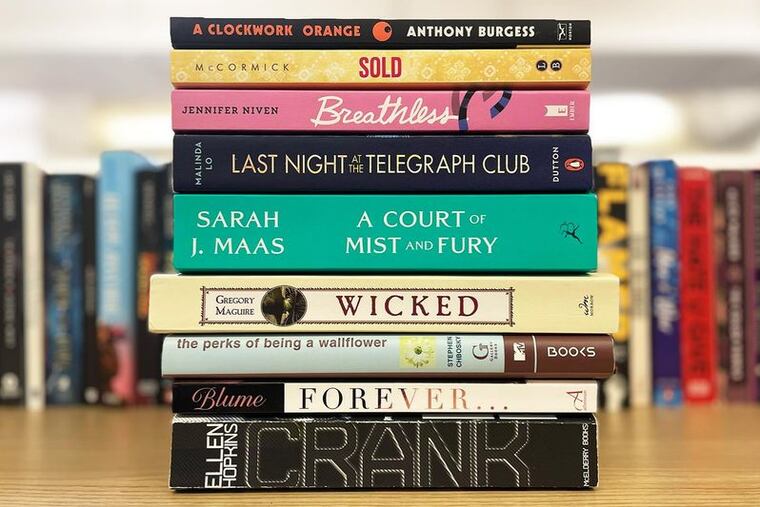
Cherry Hill public school librarians may begin asking parents to sign permission slips before allowing students to check out books that school staff determine have “sensitive content.”
In a memo to the district’s media specialists, Allison Staffin, director of curriculum and instruction, outlined steps for handling books with sensitive material. The memo, dated Oct. 31 and obtained by The Inquirer, did not specify what kinds of content should be deemed sensitive.
Staffin‘s memo said such books would require a permission slip from a parent or guardian before they are checked out by a student.
“Our goal is to nurture curiosity and foster a love of reading while respecting the diverse needs and backgrounds of our students,” she wrote.
The suggestion drew a swift response from some Cherry Hill parents, as well as Olga Polites, a leader of the New Jersey chapter of Media Literacy Now, which pushed the state to adopt a requirement for media literacy for kindergarten through 12th grade.
» READ MORE: N.J. law now prohibits book bans in libraries, so issues can be raised ‘without resorting to bullying’
“That is disappointing and disheartening,” said Polites, a former English teacher. “It looks like it comes up to the line of censorship.”
Carolina Bevad, a mother of three Cherry Hill students, stopped short of calling the memo censorship, but said it was a fine line. She said she trusts her children to select appropriate books.
“Who’s making the determination which book needs parental approval?” Bevad asked. “I just think it’s murky water and would be hard to enforce.”
Superintendent Kwame Morton said the memo has “been taken completely out of context.” Teachers and curriculum officials have been addressing the matter and will determine a path forward, he said.
“We don’t ban books in the district. That couldn’t be the furthest thing from the truth,” Morton said in an interview Wednesday.
In the two-page memo, Staffin said the school district must curate a library collection with books that are developmentally and age appropriate for students.
Before adding a book to the library, the media specialist should “evaluate themes, language and any potentially sensitive topics,” she wrote.
Students would complete a permission slip filling in the book’s title and a few sentences of what the book is about. The slip says it is required for books “not necessarily on the board-approved book list.”
Staffin‘s memo said the media specialists should keep a record of all books with sensitive content and the parental permission slips. She said that would provide an audit trail and ensure accountability.
A timeline was not provided for implementing the steps. Morton said the information has not been released to parents in the district, the 11th largest in the state with nearly 11,000 students.
“There’s nothing that’s been established at this point,” Morton said. “There is no policy. There is nothing binding.”
Amy Penwell, vice president of the New Jersey Association of School Librarians believes the new book protocol, if implemented, would violate students’ First Amendment rights.
“I’m really surprised that a large suburban school district would make moves to put this kind of policy in effect. Talk about a can of worms,” Penwell said.
Polites said she was concerned about the memo, given a growing conservative movement across the country to have books about race, racism, gender, or sexuality removed.
“We know that kids check out stuff knowing that if it is a school library book, parents will never find out,” she said. “Libraries are such important institutions.”
Cherry Hill parent Rachel Burkett said she believes children should be able to read about such topics as same-sex marriage.
Burkett, who is married to a woman, said she also worries about how library officials would determine what should be classified as sensitive. The district already has a rigorous book approval process, she said.
“I think it’s a scapegoat so that they can censor what is being held in the library,” Burkett said. “It doesn’t make sense. It seems very hateful cloaked in necessity.”
Said Morton: “It’s not up to us what families should read and what they should expose their children to, that’s a family decision.”
Gov. Phil Murphy, a Democrat, last year signed the Freedom to Read Act, joining several states in prohibiting book bans in public and school libraries. A number of public libraries, including Cherry Hill, Moorestown, and Mount Laurel, have adopted a designation as a book sanctuary.
» READ MORE: A South Jersey school district has pulled Toni Morrison’s ‘Bluest Eye’ from its curriculum
The law requires local school boards and the governing bodies of public libraries to set up policies for book curation and the removal of library materials, including a way to address concerns over certain items.

Inquirer Cherry Hill