Congrats, new grads! Welcome to job market hell.
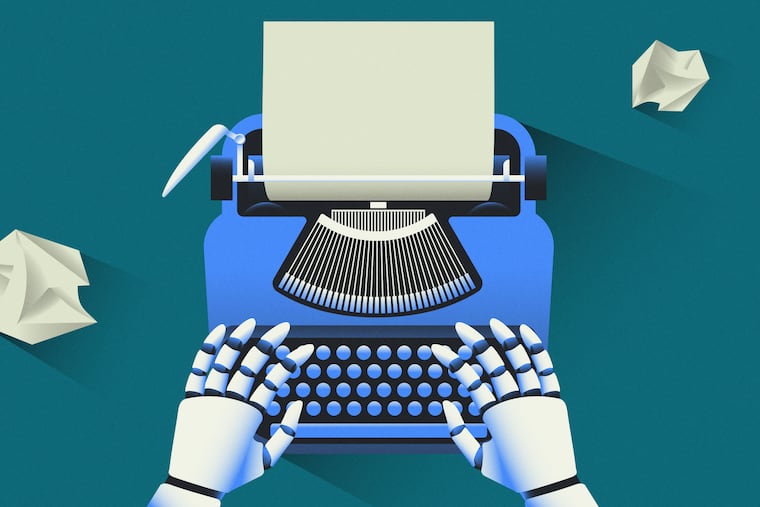
For 15 years after the Great Recession, young Americans flooded into college computer science programs to grab a stable, high-paying career. AI now threatens to undermine that dependable path.
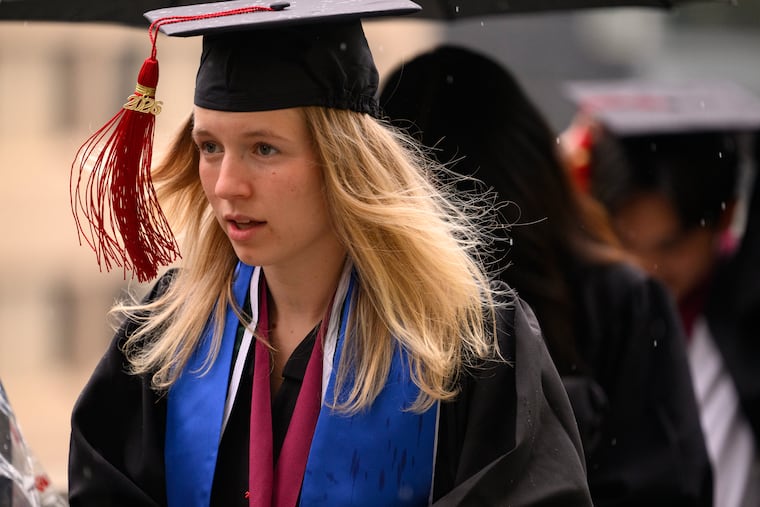
When Audrey Hasson started her freshman year at Carnegie Mellon University in 2022, ChatGPT was still locked inside a lab. As she graduated this month, Hasson and her peers are casting off into a world where many believe they’re cannon fodder in the artificial intelligence revolution.
Hasson’s father, a caricature artist, asked her for the first time a few months ago whether AI might wreck her job prospects. “There’s a perception right now that it’s impossible to get a career as a graduate in computer science,” said the 22-year-old Hasson, who is from Ellicott City, Maryland.
For 15 years after the Great Recession, young Americans flooded into college computer science programs to grab a stable, high-paying career. AI now threatens to undermine that dependable path to a secure future for the Class of 2026. Young software coders are predicted to be among the first to get whacked in AI job destruction.
Carnegie Mellon’s computer science grads offer a window onto the dueling trepidation and excitement of Generation GPT, a cohort that will help shape the future of AI and in turn be reshaped by it. There are early signs that young technologists will find it harder to break into Silicon Valley dream jobs than their predecessors. Hasson and her peers may need to reinvent themselves professionally repeatedly — for worse or possibly better. Data from Carnegie Mellon suggest its grads are taking different career paths compared with young coders a few years ago.
Uncertainty is the only certainty, said Theo Urban, another new grad from the computer science school. “In some sense there’s no point in being scared. What am I going to do?” he said. “I’m out here surfing and I’ll figure out how to ride the wave.”
This is not the first crop of new grads to face a rocky job market or disruptive technology changes, but the Class of 2026 has been cursed by multiple upheavals. The coronavirus pandemic interrupted these students’ high school years, and a topsy-turvy economy since has stalled hiring even for once-plentiful tech jobs. Most of all, the last class to start college in the pre-ChatGPT age is shadowed by widespread unease about AI reordering life, work and the economy.
“No generation in recent memory has absorbed this many structural shocks in such a compressed window,” said Nicole Bachaud, a labor economist with the career site ZipRecruiter.
Without question, it’s a terrible time to be a new college graduate looking for work.
For the first time in decades, new and recent graduates with at least a bachelor’s degree have consistently higher unemployment rates than the overall American workforce, according to data on 22-to-27-year-olds compiled by the Federal Reserve Bank of New York.
Older college grads are less likely to be jobless. Young people whose education ended with a high school diploma are more likely to be out of work.
While AI may be making postcollege job struggles worse, the root causes predate the technology.
The United States is pumping out new grads at a time when most jobs being created are in sectors such as health care and warehousing that may not require a college education. Industries with many tech workers are hiring fewer people than they were a decade ago, government figures show.
“We have a graduate glut,” said Matt Sigelman, president of the Burning Glass Institute, a nonprofit center that researches education and work. “Naturally what happens is students wind up unemployed or taking jobs that don’t require a degree.”
Economic changes since 2020, including unpredictable federal policy and higher costs to borrow money, have also made employers think twice about hiring early-career workers. People with less experience require more training and time before they’re productive compared with those with more years on the job, economists say.
There are early signs that AI may be starting to bleed jobs from young workers, according to an influential Stanford University analysis and some employers. Other researchers say the data on young workers’ job struggles show they are largely unrelated to AI.
Job prospects have clearly deteriorated for young computer science grads, though they’re still faring better than peers who completed most other majors, according to a preliminary analysis through the Class of 2025 by Burning Glass. Sigelman said the belief that computer science grads are professionally doomed is “very much exaggerated,” but the difficulty in landing a tech job feels like a breach of an implicit 21st-century promise: Learn to code, and you’re set for life.
Urban found it takes hustle to find jobs — even when you’re graduating from an elite institution. Nearly all grads from Carnegie Mellon’s computer science school land a job or pursue further study within six months of finishing a degree, according to data from the university based in Pittsburgh.
Big technology and finance companies typically start collecting applications for summer internship programs — a coveted ticket to postcollege jobs -- a year in advance, Urban said. He fired off hundreds of applications for summer spots, he estimated. “I didn’t count because it’s depressing,” said the 20-year-old, who is from Pittsburgh.
He said the system seemed broken in forcing both employers and applicants to play a numbers game with low odds.
The path to a full-time job was easier, Urban said, although he wasn’t sure why. He received four job offers and accepted one last fall at a large Silicon Valley technology company.
Urban said his leadership position at a student-run coding club, ScottyLabs, made him more visible to corporate representatives and helped him understand what employers want. That affirms what professors and career advisers say is the growing necessity of working connections with potential employers in the AI age. “I have a much better sense of how to get past that résumé screen,” Urban said.
Scoring a job at a tech giant makes Urban something of a throwback.
A recent LinkedIn analysis found that a smaller percentage of fresh computer science degree holders are taking a software engineering job compared with a few years ago. That has been a default occupation for computer science grads and a common role at technology companies.
The figures suggest that it’s harder to take a conventional tech worker career path, said Kory Kantenga, LinkedIn’s head of economics for the Americas. But a broad set of industries, including retail and health care, now want more workers with data analysis or AI capabilities, he said, opening opportunities for technical degree holders who could have otherwise landed in tech or finance.
That’s showing up in the fates of grads from Carnegie Mellon’s computer science school.
In 2022, a peak year for Big Tech hiring, five technology companies — led by Meta, Google and Amazon — hired about half of the computer science school’s fresh bachelor’s degree holders who didn’t go on to further study. Last year, the share of grads hired by the biggest employers dropped below 32 percent, according to surveys compiled by Carnegie Mellon’s career and professional development center. (Amazon Executive Chairman Jeff Bezos owns The Washington Post.)
In 2025, the typical salary was $140,000 for new bachelor’s degree recipients from the computer science school, according to self-reported information from the survey responses. (About half of respondents disclosed their salary.) The figure was roughly the same in 2022, adjusted for inflation.
The hiring analysis isn’t finished for the Class of 2026, but the pattern looks roughly in line with last year, said Kevin Monahan, senior associate dean of student affairs.
The number of employers hiring undergrads and graduate degree holders from the computer science school has also significantly increased, from 267 in 2022 to 367 last year, according to Monahan. He said that reflects a pullback in hiring by Silicon Valley tech titans, the school doing outreach to more employers, and students broadening their horizons by choice or necessity.
For years, “we all heard about the benefits of working at a Google or Meta, and that was very attractive for a generation of students,” Monahan said. “Now they’re reading the news and it’s saying layoffs or AI is going to replace a job.”
More technically skilled young people landing in companies and industries beyond big-name corporations on the East and West coasts may be healthy for the U.S. economy and for graduates, Sigelman said.
Ashveen Banga, a 21-year-old new grad from Carnegie Mellon’s computer science school, remembers the buzz of conversations on campus when ChatGPT exploded into the public’s consciousness starting in November 2022, during the middle of freshman year.
She wasn’t bowled over when she tried it, Banga said in an interview this month. “‘Okay, this is a fun email draft helper,’” she recalled thinking. She added, “I definitely didn’t connect the dots on how this might impact my career.” (The Post has a content partnership with OpenAI, the creator of ChatGPT.)
Now her desire to avoid AI dislocation is helping shape her choices. Banga is planning to start a one-year graduate program that combines AI, robotics and sensors. Those are technologies she’s enthusiastic about — she previously helped develop a AI-sensing koala-shaped robot to curb doomscrolling — but Banga also hopes a mix of AI and hardware will make her more resilient to AI-related job elimination.
For Banga and Hasson, the rapid emergence of AI since they started college makes them concerned for their career prospects and society, but also excited about using their technical skills to help people.
Hasson, who minored in creative writing, said she isn’t an AI die-hard. “There’s something inherently sad about creative work being taken over,” she said.
But AI also helped her find a professional community and career opportunities that she feels passionate about.
Hasson is starting a job next month at a roughly 12-person start-up, Baba, which uses AI and expert advocates to help people navigate government health care services.
Hasson said she and her entrepreneurial friends are “buzzing” about the potential to more easily kick-start companies thanks to AI that can pump out nearly fully formed realizations of their ideas in software code.
Her misgivings about AI are mixed with a belief that upheavals from the technology could create opportunities. If software engineering is dead in five years, Hasson said, “that could be really fun.”