Colleges are bracing for a drop in international enrollment as students face confusion and fear. ‘I feel like I’m trapped.’
One Penn student from Kuwait says he won't return to the United States for his doctoral program, and will seek education elsewhere.
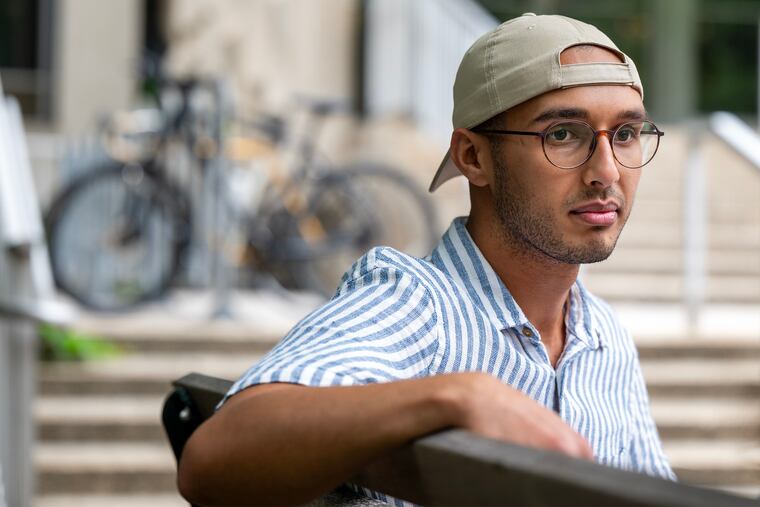
Othman Alotaibi has enjoyed much about studying for his master’s degree in chemical engineering at the University of Pennsylvania: the supportive professors, the kind Philadelphians, and the challenging academic environment.
But Alotaibi, a native of Kuwait who plans to graduate next year, said he won’t stay in the United States for his doctoral degree as he had planned.
Given President Donald Trump’s policies toward international students, including delays in visa processing, deportations, travel bans, and vows to “aggressively” scrutinize Chinese students, he said, he doesn’t feel safe going home to see his family or friends. He spent the summer in Philadelphia, and he said he won’t leave for the winter holidays, either.
» READ MORE: Tensions rise on local campuses as Trump targets international students
“I feel like I’m trapped,” said Alotaibi, 25, who got his undergraduate degree in the United Kingdom. “I’m considering going back to the U.K. [for a doctoral degree] because I know the place. They would never deport me for any silly reason.”
His experience is not unlike some other international students who also have remained in the country over vacation periods for fear they could not return.
“A big concern is confusion and lack of clarity,” said Lorena Grundy, a practice assistant professor in chemical engineering at Penn and vice president of the school’s Chapter of the American Association of University Professors. “Students don’t know what could and couldn’t affect their immigration status. There’s a lot of fear because of that.”
International enrollments at U.S. colleges are projected to drop this fall, the first new school year since Trump began his second term. As much as a 30% to 40% decline in new international students is forecast, according to NAFSA: Association of International Educators. Overall international enrollment could slide by 15%, the group said, meaning a loss of $7 billion in revenue.
The Common App, which many students use to apply to college, reported Wednesday that applications from international students had declined by 1% after steady growth since 2020-21.
Philadelphia-area colleges are helping students problem-shoot.
“We are in constant communication with our international students via Zoom calls and email,” said Cheryl Lynn Horsey, Bryn Mawr College’s vice president for enrollment. “We seek to assure them that they are welcome at Bryn Mawr and that we will do all that we can to ensure that they have a smooth transition.”
» READ MORE: Three Penn students have had their immigration statuses terminated
The college expects 54 new international students this fall, up from 45 last year. Fifty-nine were admitted, but five have been unable to get visa interviews, the school said.
“We are hearing from international students regarding their uncertainty about getting visa interviews and whether America is a safe place for them to attend school, given the current climate in this country,” Horsey said.
Pennsylvania State University anticipates a decrease in international students, though the school cautioned that final counts will not be available until after the school year begins, and it declined to provide preliminary numbers. The University of Pennsylvania and Drexel University also declined to provide projections, while others said they anticipated small drops, similar numbers to last year, or — in the case of Rutgers and Temple Universities — an increase.
Impact at Philly-area colleges
Colleges said they are offering myriad supports to students, including pre-arrival and transition programs, online advising sessions, and opportunities to defer admission to a later semester if unable to obtain visas.
Haverford offered free summer housing to international students unable to return home. Penn extended the date for students to request a gap year until the first day of classes. Temple offered students the option of studying at its campuses in Japan, which is growing rapidly, and Rome, or beginning classes online if available in students’ degree areas, said Temple spokesperson Steve Orbanek.
Haverford College said it projects a five-student, or 14%, decline in new international students and about a 5% decline in overall international enrollment. Haverford cautioned that its numbers do not include U.S. citizens living abroad.
“We had nine first-year international students withdraw or defer their enrollment for the fall, slightly more than usual for Haverford,” said spokesperson Chris Mills. “Among returning students, there’s been a small increase in leaves of absence and transfers, but overall our numbers have remained relatively stable.”
Swarthmore College reports that five to seven students have been unable to obtain visas this year, compared with one or two in prior years. But the school anticipates 14% of its incoming class will be international this fall; the school’s overall international enrollment last year was 14%.
Rutgers, New Jersey’s flagship state university, which enrolled more than 6,300 international students across its campuses last year, anticipates a 10% to 12% increase this year in overall international enrollment.
As of Aug. 3, Temple University’s overall international enrollment, including undergraduates, master’s, and doctoral students, stood at 1,831, up 4.9% from 1,745 last year. While first-year undergraduate and transfer students dropped, incoming graduate students increased substantially.
Seventy percent of international students who were scheduled to return have enrolled, slightly more than in each of the last two years, the school said.
‘We are here to do good and live good’
Alotaibi, whose education is funded by the Kuwait Ministry of Higher Education, got his undergraduate degree at Swansea University in Wales. The son of a retired engineer and schoolteacher, he came to the United States in August 2024.
Over the spring semester, he watched as the Trump administration threatened to deport students involved in pro-Palestinian protests and paused student visa interviews for several weeks. He was disturbed by reports of student arrests and deportations, particularly that of a Tufts University doctoral student from Turkey who had a visa but was plucked off the streets in March by immigration agents who accused her of supporting Hamas. A federal judge ordered her release in May.
“This is not the United States I’ve seen in movies or read about in books,” he thought.
He remembers the unease he felt when Penn cautioned international students from countries on red and orange lists to avoid any unnecessary travel. Kuwait is not on those lists.
Too terrified to buy a plane ticket and travel home, Alotaibi remained in Philadelphia this summer and worked in a lab at Penn. His father visited last month, he said.
Alotaibi said he has not participated in protests, has followed the rules, and has a visa that runs through next summer, when he is due to get his degree. But he still felt unnerved because he is Arab and worried that could make him a target.
“When they targeted the postdoc student at Tufts University, that scared us,” he said.
The fear is spreading, he said. Abdullah AlShayji, a professor of political science at Kuwait University, who is a friend of Alotaibi’s, is urging students to look at countries besides the United States for study, Alotaibi said. AlShayji studied in the United States decades ago and always used to talk positively about it until recently, Alotaibi said.
When some other international students heard Alotaibi agreed to talk to The Inquirer, they warned him against it, Alotaibi said.
“I said ‘I’m doing this for the right reason,’” he said. “We need to be seen in the right way. By the right way, I mean we are here to do good and live good.”
Earlier this year, he joined Grundy, his professor, and a group of other students at Tacony Creek Park to help clear an illegal tire dump site.
Grundy read to the class the announcement seeking volunteers and asked if anyone wanted to accompany her.
“Four students immediately said they wanted to come,” she said. “Three of them were international. They volunteered to spend a rainy Saturday morning, getting covered in mud, carrying tires out of Tacony Park.“
Alotaibi and his class partner did their final class project on creating solutions to tire waste, she said.
“That’s what we lose,” she said, “if we prevent international students from coming to the United States.”