Philly school officials want to close Lankenau High and give it to the city. A 1970s legal agreement may snarl that deal.
The Schuylkill Center for Environmental Education opposes Lankenau High's closure, but if the district does go ahead with plans to close the magnet, it wants to buy the school back.
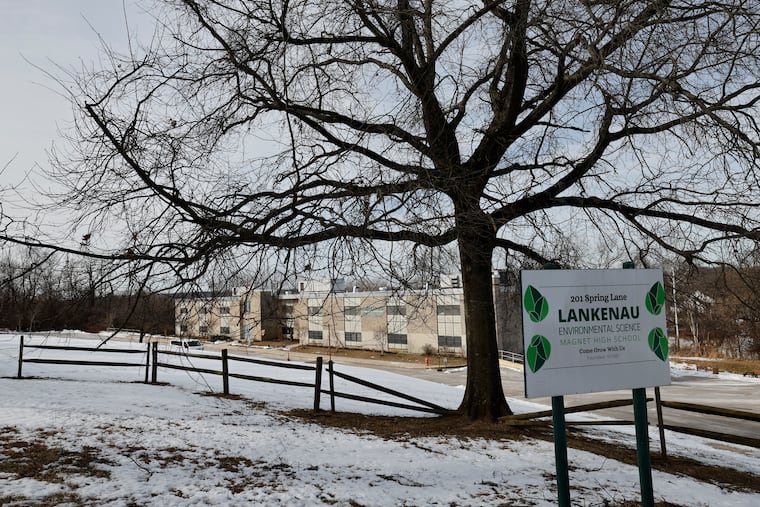
Could a 1973 legal agreement help save Lankenau High?
The Schuylkill Center for Environmental Education hopes so.
The Philadelphia School District has proposed closing Lankenau, the city’s environmental science magnet school, and giving it to the city to help further Mayor Cherelle L. Parker’s affordable-housing goals, or for job creation.
But the Schuylkill Center, Lankenau’s neighbor, believes it’s prohibited from doing so, and just notified Superintendent Tony B. Watlington Sr.
The Schuylkill Center “holds a right to repurchase the property in the event that it is transferred or conveyed or used for any purpose other than school purposes, pursuant to a restriction in the October 4, 1973 deed by which [the Schuylkill Center] conveyed the property to the Lankenau School,” a lawyer for the environmental center wrote in a letter sent to the district Monday.
If the district is “considering a sale of the property or using the property for any purposes other than continued use as a school, this letter serves as written notice of [the Schuylkill Center’s] right to repurchase,” lawyer Sean T. O’Neill wrote to Watlington, “The school district must provide [the Schuylkill Center] with reasonable advance notice of any potential conveyance or change in use and allow [the Schuylkill Center] the opportunity to exercise its right to repurchase.”
The center, which touts itself as “one of the first urban environmental education centers in the country,” was founded in 1965. It has trails and a visitors’ center and runs educational programs and a wildlife clinic.
District officials had no immediate comment.
Lankenau’s history
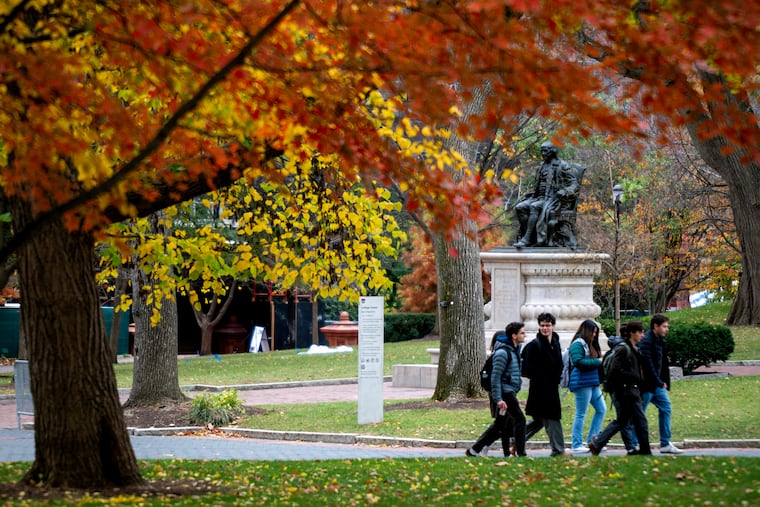
Lankenau sits amid 400 wooded acres adjacent to the Schuylkill Center. The 17-acre parcel Lankenau High now sits on was originally the site of the private Lankenau School for Girls; after that school closed, the Philadelphia School District purchased the land.
What is now Lankenau High was first a program of Saul High and then Germantown High, but in 2005, it became a standalone school as part of then-CEO Paul Vallas’ small schools initiative.
» READ MORE: Philly’s building plan would close this high-performing magnet. Lankenau is fighting back.
Since then, Lankenau has soared as a diverse, hands-on magnet with a 100% graduation rate in a location like no other.
News that Lankenau landed on the district’s closure list infuriated students, parents, community members, and elected officials, who have mounted a robust campaign to fight plans to shut the school and relocate it as an honors program inside Roxborough High.
They’re particularly alarmed that Lankenau’s small size, used to justify its closing, came as enrollment shrank after the school system ordered changes to its special-admissions policy.
The Schuylkill Center’s first priority is for Lankenau to remain as it is, said Erin Mooney, executive director of the 60-year-old organization, which now partners closely with Lankenau.
“We are in opposition to Lankenau’s closing,” said Mooney, “but should something change with Lankenau, we want to ensure that the site continues to be used to teach people about nature.”
Mooney, who has been public in the Schuylkill Center’s support for the school, discovered the language giving the Schuylkill Center right of first refusal if the property ever ceases being a school in the 1973 agreement.
Watlington is scheduled to present his sweeping facilities plan — which as of January included 20 closures, six co-locations and 159 modernizations — at a school board meeting Thursday.
But the superintendent has said what he presents to the board may include some tweaks to his initial recommendations.
Mooney hopes the information the Schuylkill’s lawyers sent Monday helps Lankenau come off the closing list.
“We want Lankenau to stay,” she said, “and I wanted the school board to have this information as part of its decision-making.”
Watlington’s recommendations are just that; the school board has ultimate say. It has not given a date for the final vote on school closings, but said no vote will happen Thursday.