Climate scientist Michael Mann steps down from administrative role at Penn
Mann had faced criticism over his social media posts about the killing of Charlie Kirk, but he said that it was his choice to step down from an administrative role. He will remain a professor at Penn.
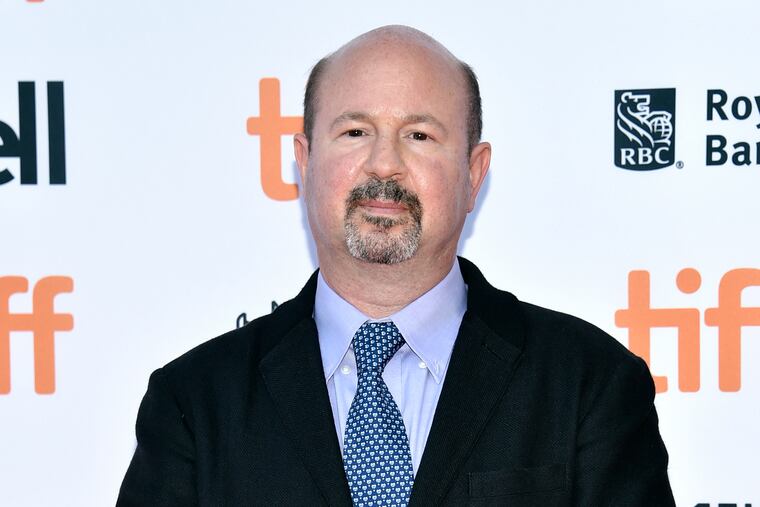
Climate scientist Michael Mann is stepping down from his administrative role at the University of Pennsylvania, and wrote in a blog post Monday that his work “at times feels in conflict with the nonpartisan role demanded of me as an administrator at a university with an established institutional neutrality policy.”
Mann, a high-profile scientist who has continuously drawn criticism from the right wing, will remain at Penn as a professor and director of the Penn Center for Science, Sustainability and the Media, both Mann and a university spokesperson said. Penn will continue the climate work and name a successor for the position of vice provost for climate science, policy, and action, the spokesperson said.
The announcement comes after Mann faced pushback over posts about conservative activist Charlie Kirk, who was shot to death while speaking at a Utah university this month. Sen. David McCormick (R., Pa.) was among Mann’s critics, calling for “UPenn to take immediate, decisive action.”
Reached by email Tuesday and asked whether there was pressure from the university to step down, Mann said it was his choice.
» READ MORE: High-profile Penn State climate scientist to join Penn
Mann did not mention the Kirk comments in the blog post announcing his position change. He specifically cited work on his new book Science Under Siege with vaccine scientist Peter Hotez. Climate science and vaccines have become two of the biggest flashpoints under President Donald Trump’s administration, which has targeted those areas for the withdrawal of federal research funding.
“Particularly at this moment in time, I don’t feel that I can forsake the public scholarship and advocacy that I am doing and have thus decided to step down from the VPC role,” Mann said in a post on his website.
Penn a year ago established its institutional neutrality policy, noting the school would limit statements on local and global events “except for those which have direct and significant bearing on University functions.”
It came nearly a year after Penn, like many other universities, found itself embroiled in conflict after Hamas’ October 2023 attack on Israel and Israel’s subsequent military response in Gaza. In what was perhaps the biggest leadership upheaval in Penn’s history, former Penn President Liz Magill resigned in December 2023 after a bipartisan backlash over her congressional testimony about antisemitism complaints on campus. Scott L. Bok, former chair of the board of trustees, resigned at the same time.
Penn, like other elite universities, has been targeted by the Trump administration’s policies. The administration earlier this year withheld $175 million in federal funding from the university over the past participation of a trans athlete on the women’s swim team, but Penn struck an agreement with the administration in July. The university also stands to lose $250 million in federal research funding if a proposed reduction in the cap on indirect reimbursements from the National Institutes of Health funding is adopted; that proposal is currently under a court injunction.
Mann’s work in climate science
After 16 years at Penn State, Mann came to Penn three years ago to lead the Penn Center for Science, Sustainability and the Media, as well as serve as a presidential distinguished professor in the Department of Earth and Environmental Science. He also got a secondary appointment in the Annenberg School for Communication.
A native of Amherst, Mass., Mann, with his colleagues, in 1999 created a reconstruction of temperature changes over the last thousand years that showed how humans were affecting the climate. It became known as the “hockey stick” graph because it showed global temperatures taking a sharp upturn. That work served as a lightning rod for those skeptical of climate change.
Penn State received a flood of complaints after some of Mann’s emails were part of a larger leak in 2009 that became known as “climategate,” but the school cleared Mann of any wrongdoing the following year. Mann received death threats during that time. He is also cofounder of the website RealClimate.org.
“Michael Mann has done groundbreaking work on the attribution of extreme weather to climate change and many other aspects of climate science that are of central importance to climate policy,” said Steven J. Fluharty, Penn’s former dean of the School of Arts & Sciences, when Mann joined Penn. “He is also a gifted and fearless communicator, providing patient, clear, and informed explanations even in the most hostile media environments.”
» READ MORE: An acclaimed Penn scientist won a $1 million verdict in a defamation case. Now he’s facing court sanctions.
Mann, whose father, grandfather, and uncle all have Penn degrees, said in 2022 that he was attracted to Penn’s strong academic record across all disciplines and that he welcomed the chance to become a part of Annenberg and focus on the communication part of his job.
Mann last year won a $1 million defamation case against two right-wing bloggers who alleged he falsified data about global warming. But in March a Superior Court judge said in an opinion that Mann and his attorneys misrepresented data on the amount of grant money that he lost as a result of the bloggers’ comments, sanctioned him and ordered him to pay legal fees. That meant Mann owed the people he sued more than half a million dollars.