As Trump attacks DEI, college diversity officers from across the country gather in Philly to find a path forward
While Trump declared his administration “ended DEI” during his recent State of the Union address, the president of the association begged to differ. "What's happening is the work is being reshaped."
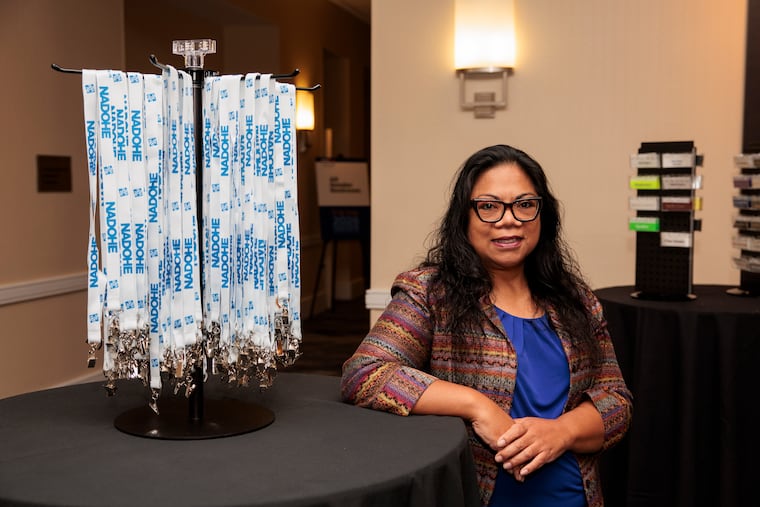
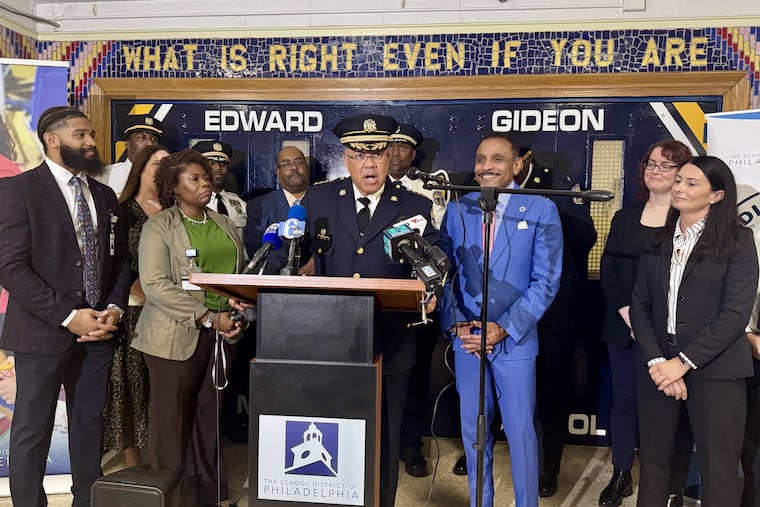
Hundreds of college diversity officers opened their national conference Thursday in Philadelphia with a moment of silence for those who had been forced out of their jobs and for offices and programs that had been shut amid President Donald Trump’s orders for colleges to halt DEI efforts.
“This isn’t the first time higher education and other sectors have faced backlash when expanding access and opportunities,” Emelyn A. dela Peña, president of the National Association of Diversity Officers in Higher Education, told the professionals gathered at the Marriott in Center City. “Our field has always evolved in response to external pressure. The question isn’t whether the work continues, but how it continues with clarity and integrity.”
The group of about 800 diversity officers, including several from Philadelphia-area colleges, planned to work at their conference this week on plotting a path forward in the face of ongoing federal scrutiny.
The conference, “Reclaiming ‘We the People’: Democracy and the Renewal of Higher Education,” is aimed at giving higher education diversity officers tools to do their work amid the chaos and uncertainty they’ve faced since Trump took office and sought to end diversity, equity, and inclusion programs, dela Peña said.
While Trump declared his administration “ended DEI” during his State of the Union last month, dela Peña begged to differ.
“What’s happening is the work is being reshaped and integrated into core institutional strategy,” she said.
While the courts haven’t allowed Trump’s ban on diversity in higher education to proceed, threats loom and schools have ended or reshaped programs that previously were focused on DEI. That includes the University of Pennsylvania, which in February 2025 was one of the first schools locally to scrub diversity, equity, and inclusion from its websites and begin to change some of its programming in response to Trump’s executive order threatening funding to schools that employ diversity efforts.
Raquel Arredondo, who had been the assistant dean for diversity, equity, and inclusion at Penn’s Graduate School of Education, said her title was changed to assistant dean of climate and community. She left Penn last July, and is attending the conference in Philadelphia this week.
She said her website was the last one taken down.
“It can be damaging to all of a sudden have your life’s work removed, devalued,” she said.
She said she was inside some of those conversations at Penn after Trump took office.
“It felt as though decisions were being made more so as a result of external pressures rather than internal commitment,” she said.
Penn said at the time that while names and sites may have changed, the commitment to the work continued. And Penn president J. Larry Jameson in a message to campus last week reiterated the school’s commitment to “access and inclusion.”
“There was an attempt to continue doing that work,” Arredondo said. “But there’s a reason why I left.”
Arredondo, who previously worked 10 years at Drexel, now runs her own consulting firm, Thrive Strategy Partners.
The association and its conference, she said, provide an invaluable support network for professionals doing work that can make them feel “very isolated.”
A profession shifting in today’s political climate
Nationally, dela Peña said she’s not sure if there are fewer people working in higher education diversity than before Trump took office. She has received emails from colleagues who report their position or entire division was eliminated. Some colleagues, she said, have shifted or expanded roles, but still have the same or similar focus.
Others have left on their own because it’s been hard, she said.
“Our profession has shifted from primarily programmatic and culture-focused to work that I think is increasingly shaped by legal interpretations and risk management and policy alignment,” she said. “So we’re trying to respond really thoughtfully to all of that.”
The group’s new guide, Rooted in Mission and Values, describes how diversity work can’t be left to one office or officer but must be shared across the system, from leadership to every office.
Catherine Taipe, program assistant at Bryn Mawr College’s Impact Center for Community, Equity and Understanding, said she was eager to learn from the conference.
“I’m really looking forward to getting tools for my tool box,” she said. “There is a lot to learn about what are the best practices for inclusive excellence on a college campus.”
It’s helpful to share best practices and ways of navigating challenges, said Akilah Rosado, vice president for inclusion and belonging at Barnard College in New York City.
Barnard is across the street from Columbia University, which has been in the crosshairs of the Trump administration in its crackdown on pro-Palestinian protests and antisemitism.
“A lot of institutions have moved toward being more compliance oriented, which I understand,” Rosado said.
But, Rosado said, “it creates a divide in the dialogue that we can have now. People are afraid to talk.
“We’re all trying to figure out what is the path forward while ensuring that we’re meeting the needs of our students, and remaining in compliance with what the government is saying.”
‘Air that has gone out of the balloon’
Lenore Pearlstein, publisher of Insight into Academia magazine, said she changed its name last year; it used to be called Insight into Diversity.
“Everybody was changing their names on their campuses and so we thought we had to make the change as well because people couldn’t do business with us,” she said. “They said ‘don’t send us an invoice with Insight to Diversity.’”
Derrick Crim, who co-leads a faculty of color mentorship program at Metro State University in St. Paul, Minn., has felt the impact, too. Grants are either gone or stakeholders aren’t as likely to offer help, he said.
“There’s air that has gone out of the balloon in regard to the specific mission,” he said.
Add to that the recent crackdown by ICE in Minnesota.
“We have a lot of immigrant students,” he said. “We were prepped on not letting ICE in our classrooms and making sure immigrants in our school knew their rights.”
The presence of ICE also had an impact on the conference.
Some members of the association who were concerned about safety decided not to attend the conference after learning that ICE agents were deployed to the Philadelphia airport, dela Peña told attendees at the conference opening.
Archie Ervin, who cofounded the association 20 years ago, said the Trump administration has done a lot of damage to DEI.
But the worst is done by institutions that retreat from diversity because of federal pressure, he said.
“That’s the biggest damage that’s been done in this country — running away from it,” he said.