Penn State board committee votes to raise tuition, room and board 2.5% for in-state University Park students in 2027-28
The full board will vote Friday.
A Pennsylvania State University board of trustees committee on Thursday voted to recommend a 2.5% tuition and room and board increase for undergraduates on the University Park campus in 2027-28.
That’s a larger increase than the 2% tuition hike already approved for 2026-27. Penn State sets its costs a year ahead of time; rates for 2026-27 were set last year.
Meanwhile, in-state undergraduates at the Commonwealth campuses would see no tuition increase for the fifth consecutive year and smaller increases for room and board than those at University Park.
» READ MORE: The state system that runs West Chester and 9 other Pa. colleges votes to raise tuition 4.3%
The full board will vote on the proposed rates on Friday.
Under the plan, undergraduate freshmen and sophomores at University Park would pay $21,400 in annual tuition for 2027-28, up $522 over last year.
For those out-of-state, the annual tuition rate would rise 4% to $46,356, up $1,782.
Room and board for both would rise 2.5% to $15,896 annually, which the university said was its lowest increase in the last nine years.
The proposed tuition increases will raise $59 million in additional revenue, said Sara Thorndike, senior vice president for finance and business.
While the proposal was passed unanimously by the committee, several board members raised questions.
“I’m going to reluctantly support the tuition increase,” said board member Brandon Short. “We’re dealing with an existential crisis, and it’s not unique to Penn State that the cost of education is increasing at a … faster rate than what people think the value of a college diploma is … We all hold our noses and vote for the increase, but at some point, it’s not an easy answer, but we’ve got to come together and figure it out.”
The university needs to make tough decisions and engage in “outside-the-box” thinking, he said.
“Doing the same thing over and over again and expecting different results is the definition of insanity,” he said.
Thorndike said the university has been cutting costs and continues to look for more efficiencies as it maintains a balanced budget.
“We’re doing individual unit budget cuts,” she said. “We’re doing budget cuts associated with inflation, finding new revenues, and then asking for a modest tuition increase, so it’s a combination of all of those things to get to this point.”
New board member Joseph S. DeRenzo questioned if in-state tuition increases could be kept lower at the expense of larger hikes for out-of-state students, or if larger increases could be charged for high-demand degrees in business and engineering.
“Our out-of-state rates are actually very similar or high compared to our peers, and we’re already seeing an impact again on how much they’re discounting compared to what we’re discounting and how that’s affecting enrollments,” Thorndike said. “If we start to see a decline in out-of-state enrollments, that will not help us be able to keep our in-state rates low. It will actually have the opposite effect.”
Thorndike also said that tuition revenue is projected to be $37 million under budget this year because of lower enrollment at the Commonwealth campuses, as well as international and graduate enrollments.
Other local colleges also are raising tuition. The Pennsylvania State System of Higher Education, which oversees 10 universities including West Chester and Cheyney, last week raised tuition 4.3% — the largest percentage increase in a decade. Also last week, Rutgers University increased tuition 3% for in-state and out-of-state students, which the school touted as its lowest increase in four years. Meals and housing on average were increased 4%.
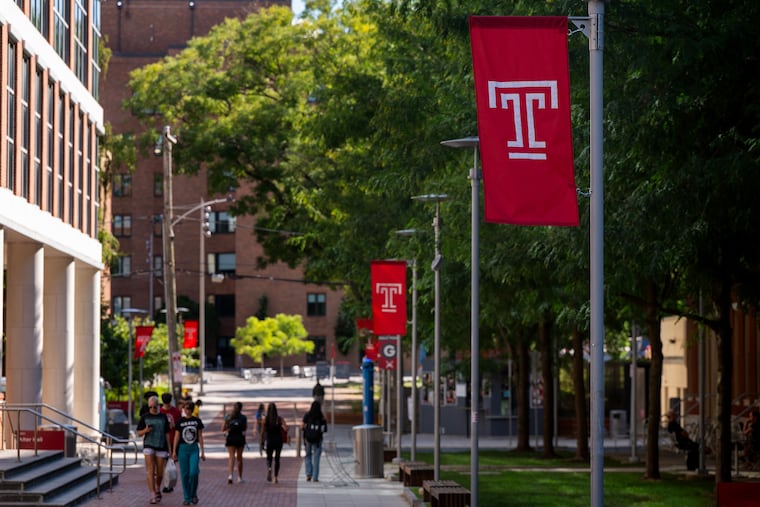
And Temple University voted to raise tuition an average 3.4% for both in-state and out-of-state students.
» READ MORE: Temple University will lay off employees and raise tuition for the second consecutive year
Earlier this year, the University of Pennsylvania increased its total costs by 3.8% for 2026-27.
The 2027-28 budget includes a 3% pool for merit-based salary increases for employees and 4% for graduate assistant stipends, the university said.
Undergraduate tuition for students from out of state would increase by 4% at University Park and 1% at the Commonwealth campuses.
As for graduate students, those in-state at Commonwealth campuses would pay a 1% increase in tuition and 2% for those out of state. At University Park, in-state students will see a 2% hike and out-of-state students 4%.