Philly principals, working without a contract for months, demand action: school board roundup
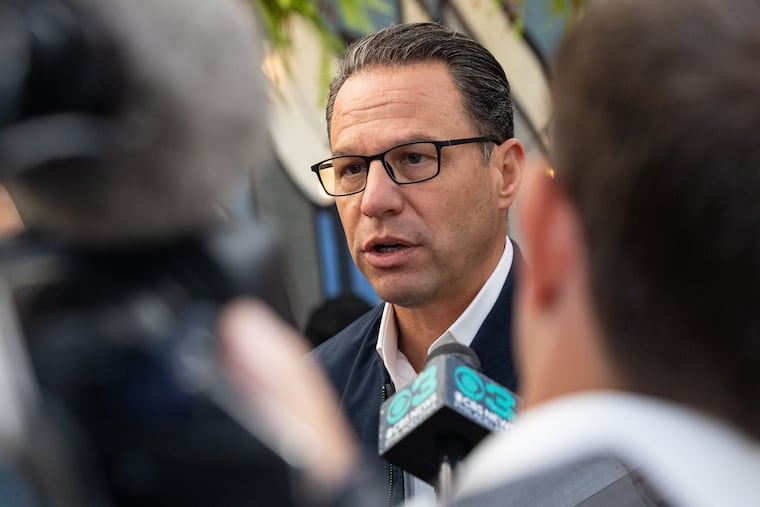
Superintendent Tony B. Watlington told the school board he needed more time to present a facilities plan. "We’re committed to not fumbling the football on the 2-yard line,” he said.
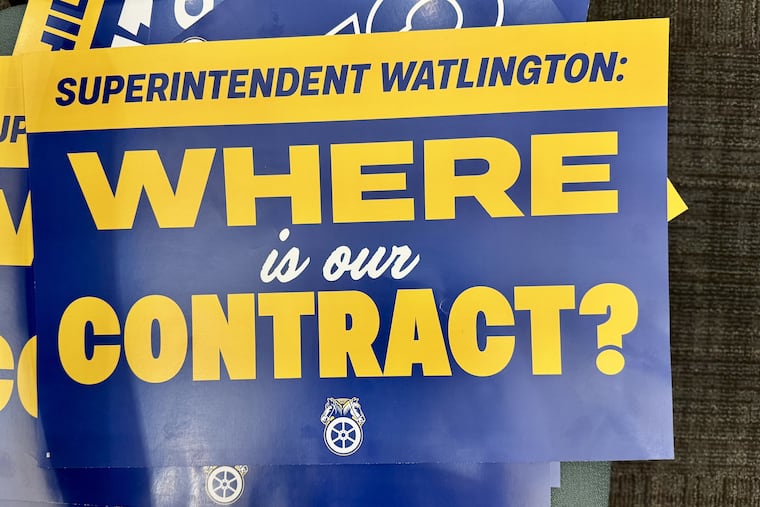
City principals — working without a contract for nearly three months — showed up in force Thursday night to urge the Philadelphia School District to take their demands more seriously.
Dozens of administrators waved signs and chanted as their union president addressed the school board.
“When is it time for the district to give back to those who consistently have your front and back?” asked Robin Cooper, president of the principals union. “We get pushed to the background with no mention of our blood, our sweat, and tears in the ongoing transformation of our beloved district.”
Cooper said the district was “negotiating in bad faith.”
CASA — the Commonwealth Association of School Administrators, Teamsters Local 502 — represents just under 1,000 principals, assistant principals, climate managers, and other workers.
The union can’t strike, but Cooper and CASA members have ratcheted up public pressure. On Tuesday, many union representatives attended a City Council hearing, prompting Council members to ask Superintendent Tony B. Watlington Sr. why CASA still has no contract.
Watlington and board president Reginald Streater both said they cannot comment on negotiations in public.
“You are valued, and we’re going to get this done,” Watlington told Cooper and members of CASA.
But Cooper was clearly frustrated, and skeptical. At the last negotiating session, held this week, CASA presented multiple proposals, but the district countered with the same offer it put on the table previously.
CASA’s current contract expired Aug. 31, as did pacts with the Philadelphia Federation of Teachers and School Police Association of Philadelphia — but those two unions reached deals that included raises.
The main sticking points for CASA, Cooper said in an interview, include issues related to wages.
“First-year people are making what senior people make,” said Cooper.
The union also takes issue with the fact that some workers have to take pay cuts to become administrators — the district’s senior career teachers earn more than assistant principals are paid.
“You can’t have a promotion and make less,” said Cooper, who said she believes that after agreeing to PFT and school police deals, the district “came to the table with whatever was left over.” She also takes issue with the school board paying millions to outside contractors but not settling with CASA.
Her members will continue to show up to work, Cooper said, but CASA isn’t finished showing its muscle.
“I’m not one to be bullied,” said Cooper.
No facilities master plan, but community pushback over what’s to come
In other school board happenings, officials did not present a facilities master plan — expected to include school closings — this month, as originally planned.
» READ MORE: School closings are coming to Philly. Here are four themes that are emerging as leaders come closer to decisions.
Watlington said earlier this week he was extending the timeline to gather more public input around four emerging themes: strengthening K-8 schools, reinvesting in neighborhood high schools, reducing school transitions, and expanding access to 5-12 criteria-based schools.
“We’re committed to not fumbling the football on the 2-yard line,” Watlington told the board Thursday night.
Still, members of the public said they wanted no school closings at all.
“Public education is not a business,” said Deborah Grill, a retired district educator and member of the Alliance for Philadelphia Public Schools. “It is a civic obligation. The school district is not a business to be rightsized.”
The school system has 70,000 excess seats, a large number of old buildings in poor condition, and some schools that are overcrowded. Officials have said they will close schools — but also order colocations and other repurposing, as well as new construction and major renovations — not to save money, but to offer students citywide a more equitable and better education.
Paul Brown, a psychologist in the district, said schools are still dealing with the fallout of mass building closures in 2013.
“We need to keep our schools open,” Brown said. “The goals of efficiency should not come at the expense of our most vulnerable.”
Seeking a better wellness policy
The board also heard impassioned testimony about its wellness policy, which was to be considered at Thursday’s meeting, but was temporarily withdrawn.
A grassroots parents group — supported by several members of City Council — is pushing for officials to guarantee students bathroom and water breaks and 20 minutes to eat their lunches.
Watlington has said he agrees that children should be able to use the bathroom, but said policy shouldn’t dictate it, that it should be left to schools to work out how best to handle things. At a board hearing earlier this month, he also pushed back on parents’ statements that some children wear diapers to school because they fear having accidents without guaranteed bathroom access.
Inella Ray, a Lift Every Voice board member, told the board and Watlington that “we do not want our stories dismissed as lies. Girls wear Depends because they cannot always change their pads. And we must believe them.”
Parents will not “scapegoat, report or target teachers,” Ray said.
“When harm occurs across dozens of schools, it is a policy and leadership issue, not a teacher problem,” Ray said.