Philly is nearing a decision on closing some schools. Here’s a look inside the process.
Addressing “enrollment trends that have created financial and operational inefficiencies” at Philly schools is imperative, Superintendent Tony B. Watlington Sr. said.
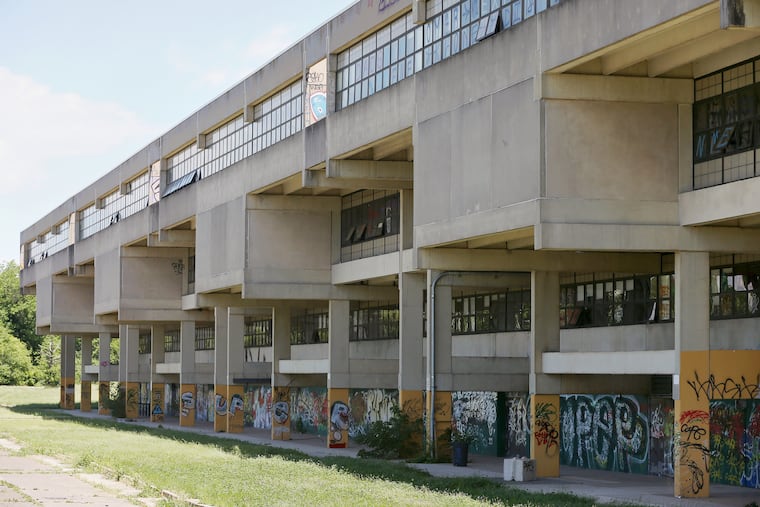
Philadelphia is just months away from what is likely to be a significant reshaping of its education system — an official proposal to close some of the school district’s 300 buildings, to colocate other schools, and to renovate, build new, or change grades elsewhere.
The final phase of the facilities master planning process has been a slow-moving operation, as officials convene panels, gather data, and learn from past processes, including 30 school closures in 2012 and 2013, which resulted in negligible savings and worse outcomes for students at closed and receiving schools.
Much hangs in the balance.
The school board has said it will sign off on decisions by the end of the year, with recommendations expected from Superintendent Tony B. Watlington Sr. this fall.
Last week, officials revealed the four criteria that will be evaluated in deciding what happens to each district building.
Each will receive a school building score, based on whether schools are safe, are accessible, have modern technology, and meet environmental standards; a program evaluation score, based on whether they can offer prekindergarten, career and technical education, physical education, arts, special education, and Advanced Placement courses; a capacity/utilization score, dividing the total building enrollment by the total capacity; and a neighborhood vulnerability score, taking into consideration if the community surrounding a school has experienced past school closures, and whether the neighborhood has factors including poverty, language barriers, or a lack of transportation.
The neighborhood vulnerability score was particularly important, Watlington said — a “factor a lot of other school districts do not” examine, “but we think it’s appropriate to do this in Philadelphia.”
The district is likely to reduce the number of middle schools that have only grades six through eight, Watlington said, and reduce the number of different grade configurations at various schools.
Watlington underscored the district’s desire to increase “access to high-quality academics and high-quality extracurricular programs across all neighborhoods in the city of Philadelphia,” recognizing that the district has a stock of “aging and unequal facilities,” some with hundreds of empty seats and some with overcrowding.
Addressing “enrollment trends that have created financial and operational inefficiencies” is imperative, Watlington said.
Some members of advisory groups working on the recommendations, meanwhile, have expressed concern about the process, including that they haven’t had enough meetings.
Next up: the district wants to hear from members of the public at community engagement sessions scheduled at sites around the city — and online — through July 24.
A comprehensive data warehouse was promised by officials by the end of June to help the public examine school particulars citywide, but that has not yet been made public.
Fewer grade spans, fewer middle schools, career and technical consolidations
Watlington gave something of a preview of a few of his administration’s recommendations, expected in the late fall, at last week’s school board meeting. (The board has promised to take feedback, then vote on schools’ fate by the end of the year.)
“We can tell you, with a great deal of confidence at this point in the process, that we are going to move in a direction to recommend that we reduce significantly the number of grades and grade bands that currently exist,” Watlington said.
He was referencing the 13 different configurations of school spans in the district now, from K-8 and K-5 to 5-8 and 7-12. The superintendent wants to reduce the number to just six different unspecified grade bands.
“We’ve got some tough decisions to make in terms of how we more efficiently use our resources so that we can drive a higher quality of academic and extracurricular opportunities across all neighborhoods in the city,” Watlington said.
Making this pivot, Watlington said, will mean less unused space in city schools, fewer students stuck in classes without permanent teachers, more students having access to arts, algebra in eighth grade, AP courses in high schools, and more.
Watlington indicated the plan was to “consolidate and strengthen some of our career and technical education programs.”
Expect the number of traditional middle schools, with grades six, seven, and eight, to shrink, Watlington said, “because our very detailed research and study of the data over a number of years in Philadelphia as well as outside of Philadelphia indicates that students perform better with fewer transitions as they matriculate through their education.”
That will likely mean giving students who attend K-8 schools more autonomy in those grades, such as the ability to change classes or walk to the cafeteria independently.
“Right now, there are huge disparities based on where you live,“ Watlington said. ”The disparities are real, and they are stark, and we’ve got to bite the bullet and do something about it.”
Changes will not happen all at once, Watlington said: “This will be a multiyear, phase-in process.”
Which schools would you close?
While the data warehouse has not yet been made public, the district made some data points available to members of its nine advisory panels, asking them to gather at district headquarters to work through planning scenarios. The Inquirer sat in on one such session in June.
Gathered in small groups, members pored over data, which officials said was not yet ready for wide release. It was broken up by the district‘s geographic learning network and color coded — blue for excellent building scores and other criteria, green for good, yellow for fair, pink for poor, red for unsatisfactory.
“This process was not driven by saving money,” said Oz Hill, the deputy superintendent for operations, stressing that the North Star was better academic and extracurricular experiences. “It would be premature to talk about money associated with this.”
At a table toward the back of Room 1070, a group of community members, teachers, and parents looked at a map of Learning Network 5, covering schools in parts of North and Northwest Philadelphia.
There are no easy answers, people agreed. The network has a significant number of underutilized schools, many in poor condition. But it has also had prior closures.
Learning Network 3, in West Philadelphia, has lots of underutilized schools with high neighborhood vulnerability, and plenty of low program alignment scores.
“What opportunities exist to create richer educational experiences for kids?” Joe Hejlek, the district’s director of strategic planning, asked the group.
“If you were to look at this map and say, ‘Where and how should the district invest resources?,’ what would you say?” Hejlek said.
Tamir Harper, a former district student, teacher, and climate manager who now works in communications for a nonprofit, said it felt “disingenuous” to answer that question without more data.
“There are too many unknowns — how much money do you have? And if you add students to a building, would that bring program quality down?” Harper said.
Harper was thinking especially carefully about the issues. He was a student at Tilden Middle School, in Southwest Philadelphia, when the district closed Pepper Middle School in 2013. It was a tough transition, he said.
“They had a gang issue that nobody took into consideration,” Harper said. “If you crossed Elmwood Avenue, you better be ready to fight or run, and no one thought of that.”
The groups dived into the exercise. What about one North Philly school that was fairly empty, with fair program alignment and school building score, but a very high vulnerability score? How about a Northwest Philadelphia school that is nearly three-quarters full, with fair program alignment, unsatisfactory building conditions, and a very low-risk vulnerability score?
Adam Blyweiss, a district teacher, parent, and alumnus, later said it felt like a chicken-and-egg problem.
“Are the schools under-enrolled because they have problems, or do the schools have problems because they’re under-enrolled?” he said.
Frustrations with the process
Some members of the advisory groups have expressed frustration with the work they have been allowed to do, calling out “serious shortcomings” in the process, including too few meetings and questions that rarely go anywhere.
As someone who attended schools in the Northeast as a student and now teaches in North Philadelphia and has a child who attends a Center City school, Blyweiss said, he knows those communities and feels like he has meaningful contributions to make about what happens to those buildings. But asking someone who doesn’t live in South or West Philadelphia to make decisions about that neighborhood’s schools feels off to him, he said.
“I hope some of the stuff from the public meetings gets lifted up to a point where we’re going to come up with good ideas that preserve and improve education and educational spaces, but I feel like there’s a part of me that they’re putting the hatchet in our hands,” Blyweiss said.
Akira Drake Rodriguez, a member of the community and education partners advisory group, and a University of Pennsylvania assistant professor who studies city planning, sounded an alarm at a May school board hearing.
Multiple members of the planning groups have concerns, she said, and “we believe that without addressing these concerns now, we will have a facilities plan that will only intensify the harmful conditions of school facilities and impact on our students, staff, caregivers, and community members.”
Rodriguez asked for a halt to the process, an extended timeline, and the release of all planning data. She said the district ought to pour millions into basic building maintenance and repairs.
“You need to remove any and all closure options, including repurposing and colocation, from the plan recommendations,” she said. “We believe that maintaining buildings needs to be the utmost priority of the district, not closures.”
Watlington said the district was launching “an aggressive communications” strategy “to make sure that everybody hears about [the July community meetings]. Our goal is for you to have to live under a rock or sleep 24 hours a day in order not to know about these engagement sessions, and the opportunity to make your voices heard.”