Philly students are posting their best math performance in years
A quarter of Philadelphia third through eighth graders passed Pennsylvania math assessments. There has been steady improvement since the pandemic.
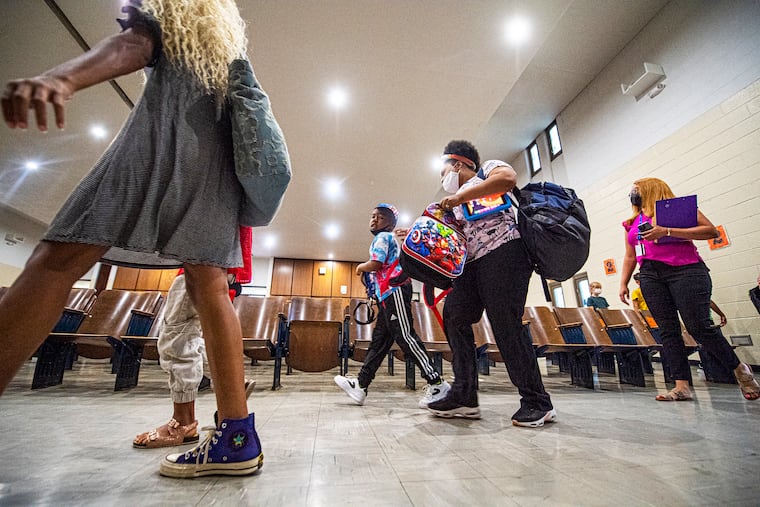
Philadelphia students are performing the best they have in math in years, showing steady improvement since the pandemic.
Still, just a quarter of city third through eighth graders passed Pennsylvania math assessments, with 25.1% of students scoring proficient or advanced on the 2024-25 exam, up from a 22% pass rate the prior year and 18.9% in 2016-17.
That means the district surpassed the school board’s goal of a 22.2% pass rate for last school year — but fell well below the 2029-30 target of 52% proficiency.
Philadelphia students still lag Pennsylvania averages considerably, though — for the 2024-25 year, 41.7% of students in grades three through eight statewide passed math tests.
Scores are slightly stronger in the lower grades. Overall, 33.7% of Philadelphia third graders passed the state test, compared to 27.4% the prior year. The board’s third-grade target is 57.5% for 2029-30; it was 28% last year, a nod to prior performance.
Officials said the jumps are due in part to the new math curriculum the district adopted in 2023-24.
The school board devoted its full Thursday night progress monitoring session to examining math goals. The highlighted findings include:
Attendance correlates with math scores
Students’ attendance generally correlates to their math performance. Of pupils who attended school 90% of the time or more, the highest percentage of students were at or above benchmark (29%) and the lowest percentage needed the most intense interventions (24%).
The reverse is true for students who are considered “chronically absent” — those who attend school less than 80% of the time. In that category, more than half of students — 52% — needed intense interventions, and just 7% scored proficient or above.
Improvements for students learning English
English language learners’ math skills are improving, as measured by Star tests, which the district gives periodically throughout the school year to measure student learning.
The math proficiency of third grade English learners, for example, was up year-over-year as marked by the winter Star exam. This school year, 23% of English learners passed the test, compared with 18% at the same point in 2024-25.
Slight improvements for students with disabilities
Students with disabilities scored lower. Overall, 11% of students with disabilities passed the winter Star exam, up slightly from 10% last year.
Focus on early math skills
Officials said gains were made in part because of a focus on building foundational math skills.
Students in kindergarten and first and second grades all saw jumps from fall to winter in mastering skills such as numeral recognition, addition to 10, and subtraction to 10, as measured by Star tests. The district showed significant gains in third grade performance this year.