Biden-era SAVE student loan repayment plan has officially ended. Here’s what you need to know.
Switch repayment plans or you’ll automatically be enrolled in one.
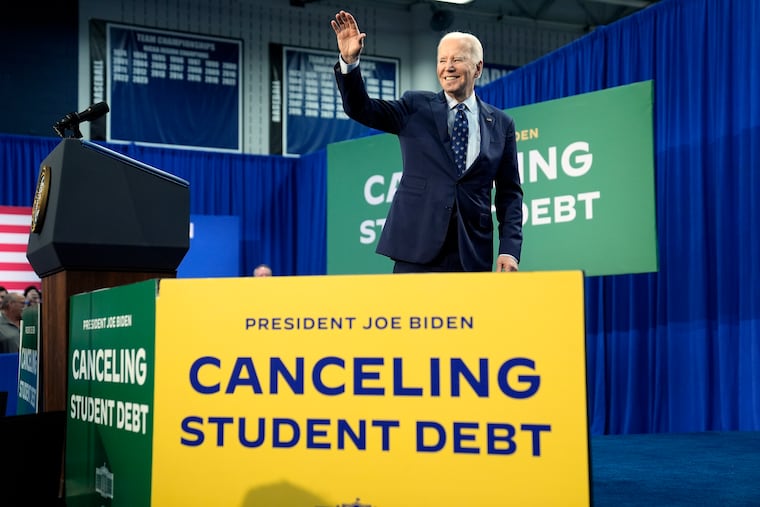
The Saving on a Valuable Education repayment plan has officially ended, and millions of student-loan borrowers will now need to find a new plan.
The U.S. Department of Education recently announced that the 7.5 million borrowers enrolled in SAVE must switch repayment plans following a federal court settlement in December that effectively ended the program.
Borrowers will have a 90-day grace period, starting July 1, to switch plans before they will be automatically enrolled in the Standard Repayment Plan or the new Tiered Standard Repayment Plan, according to the Department of Education.
Since President Joe Biden introduced the SAVE Plan in 2023, Republican-led states have tried suing the federal government to end the program on the ground that Biden did not have the authority to create it.
The SAVE program was paused in July 2024 amid the legal battle, and enrollees have been in forbearance since then, not required to make monthly payments. However, interest began accruing on those loans on Aug. 1, 2025.
While the Biden administration attempted to protect the repayment plan, once President Donald Trump took office in 2025, the Department of Education stopped contesting many of the lawsuits regarding SAVE, according to the National Consumer Law Center. Under a settlement reached Dec. 9, the department agreed to cease new enrollments, deny pending SAVE applications, and move current SAVE borrowers into other repayment plans.
Allowing the SAVE program to end was a deliberate choice by the Trump administration, said Amy Czulada, senior adviser for outreach and engagement at Protect Borrowers, the national advocacy organization formerly known as the Student Borrower Protection Bureau.
“It was a political choice on the part of the Trump administration to not fight for borrowers,” Czulada said. “That December settlement means more borrowers will be pushed into more expensive plans moving forward.”
A subsequent ruling on March 10 upheld the earlier decision, officially killing the Biden-era repayment plan.
SAVE was the most affordable student loan repayment plan created by the Department of Education to date, Czulada said, offering lower payments and help with tackling interest, while providing $0 monthly payments or immediate debt cancellation for those with lower incomes. However, it was created as an executive order, not a bill passed through Congress, leaving it more vulnerable to legal challenges.
Since Congress gave the Department of Education the ability to create income-driven repayment plans in 1993, the department has created four income-driven plans, including SAVE, according to Protect Borrowers.
Now, SAVE borrowers will have to choose another plan with higher monthly payments, slower progress toward loan forgiveness, and less help with tackling interest, Czulada said.
Next steps for SAVE enrollees
SAVE enrollees can start switching plans now, or stay in the SAVE forbearance until they are automatically switched over to the standard repayment plans, said Community Legal Services consumer rights attorney Tamar Hoffman.
“If the borrower does nothing, they will automatically be placed in the standard plan, which is often significantly more expensive for borrowers,” Hoffman said. “If the court’s March 2026 order ending SAVE remains in place, SAVE borrowers should apply for a different income-driven repayment plan before the 90-day deadline to keep payments as affordable as possible.”
That 90-day deadline before enrollees are automatically switched to standard plans begins whenever a borrower receives the notice from a loan servicer, which is scheduled to be sent July 1. However, Czulada noted that the Department of Education had a backlog of more than 500,000 income-driven repayment applications as of February, with the department and servicers clearing around 250,000 applications per month.
Now, as more than 7 million SAVE borrowers start applying for other plans, that backlog will skyrocket, Adam Minsky, an attorney and student loan expert, wrote in a recent Forbes article. Minsky estimated that the added 7 million borrowers could take the Department of Education up to 25 months to process.
Despite likely processing delays, borrowers who are ready to switch plans can do so now. Every borrower’s situation is different, whether they want to pay off loans faster, qualify for public service loan forgiveness, or get help with interest.
It’s best to consult the Department of Education’s online loan simulator tool to estimate monthly payments, determine loan forgiveness eligibility, and see repayment timelines for other plans.
“If you are feeling confused about the dramatic, sweeping changes to federal student loans, you are not alone! Free, trustworthy help is available,” Hoffman said.
Free student loan help
National Consumer Law Center provides free resources for borrowers and a student loan tool kit at studentloanborrowerassistance.org.
Education Debt Consumer Assistance Program offers online guides to navigating student loan repayment at edcapny.org. While the program is based in New York, much of its guidance applies to Philadelphia and across the country.
Community Legal Services in Philadelphia can help low-income student loan borrowers navigate repayment, especially who have defaulted on their loans or need assistance resolving disputes with loan servicers. Get help at clsphila.org/services/student-loans.
Apply for a new income-driven repayment plan
Switch income-driven repayment plans by using the online application, the same one used to sign up for the SAVE plan. Visit studentaid.gov/idr to get started.
As a borrower already enrolled in an income-driven repayment plan, choose the option for “Returning IDR Borrowers.” Here, it should take about 10 minutes to fill out the application and choose a new plan.
However, keep in mind that there will likely be processing delays as applications start rolling in.

Federal student loan borrowers will be paired with a loan servicer that works with the U.S. Department of Education to collect payments on your loan and provide customer service.
If you're unsure who your loan servicer is, log in to your account on studentaid.gov to find out.
Federal student loan servicers:
Edfinancial: 1-855-337-6884, edfinancial.studentaid.gov
MOHELA: 1-888-866-4352, mohela.com
Aidvantage: 1-800-722-1300, aidvantage.studentaid.gov
Nelnet: 1-888-486-4722, nelnet.studentaid.gov
ECSI: 1-866-313-3797, borrowerefpls.ed.gov
CRI: 1-833-355-4311, cri.studentaid.gov
Default Resolution Group: 1-800-621-3115, myeddebt.ed.gov
The most up-to-date information about how the settlement agreement will affect SAVE borrowers is available at StudentAid.gov/courtactions.