Trump administration cuts funding to minority-serving colleges. What does this mean for Philly-area schools?
The U.S. Department of Education announced it would reallocate funding to programs that “do not include discriminatory racial and ethnic quotas and that advance Administration priorities."
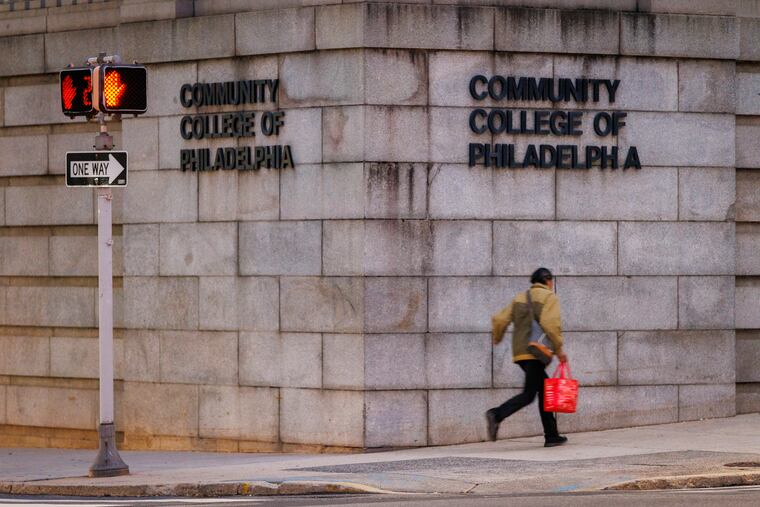
Community College of Philadelphia and Rutgers-Camden are among local schools that are likely to be affected by the U.S. Department of Education’s decision to cut discretionary funding to minority-serving institutions.
The Education Department announced Wednesday it would reallocate about $350 million in funding to programs that “do not include discriminatory racial and ethnic quotas and that advance Administration priorities.” The move is expected to affect hundreds of colleges that serve large numbers of students from underrepresented racial and ethnic groups, according to the Chronicle of Higher Education.
Marybeth Gasman, executive director of the Rutgers University Center for Minority Serving Institutions, said the decision shows “an utter lack of understanding of why these programs were set up” and of their importance in helping to address the history of racism in the United States.
Minority-serving institutions in the past have received bipartisan support, she said, hoping that Republicans will stand up for them again.
“People understood that not everyone was starting out at the same point,” she said. “Minority-serving institutions have been insuring equity, and you’ve got the Trump administration trying to chip away at equity. Trying to erase the fact that there are differences people experience based on race in this country is ludicrous.”
The move by the Trump administration is the latest effort to eliminate diversity, equity, and inclusion programs from the nation’s college campuses.
» READ MORE: Penn scrubs diversity initiatives from its website to comply with Trump order
Historically Black colleges and universities, including Cheyney and Lincoln Universities in Philadelphia’s suburban counties, are not affected by Wednesday’s decision. Gasman, however, said she worries that at some point they, too, could be targeted.
But several local colleges stand to lose some funding, including CCP.
“As a minority-serving institution, the college will need to assess how today’s announcement might affect operations and programming opportunities for students,” interim CCP president Alycia Marshall said in a statement. “The college remains committed to serving its diverse student body, of whom 67% are minority students.”
The college did not provide an estimate of how much funding it has received through the program.
Rutgers-Camden had a three-year grant for $1.9 million and was in the third year, said spokesperson Sherrie Madia.
“We had $1.1 million remaining that has been halted,” she said.
Rowan College of South Jersey, a community college, said in a statement that while it is designated as a Hispanic-serving institution, the school’s current grant, which is set to end Dec. 31, is not affected.
“However, future opportunities are in question,” said spokesperson Susan Nardelli.
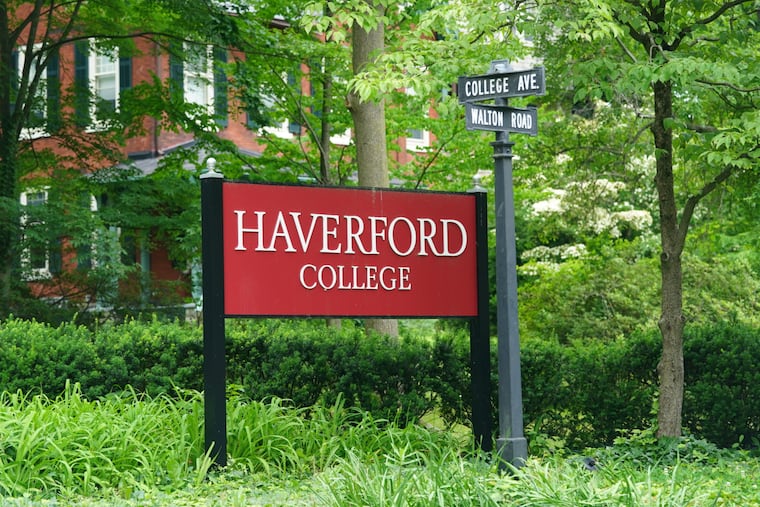
Haverford College, a small, private liberal arts college on the Main Line, also is listed as a minority-serving institution because at least 10% of its Asian American, Native American, and Pacific Islander students come from low-income families, Gasman said. Haverford did not immediately respond to a request for comment.
The federal Department of Education maintained that the grant programs were discriminatory by doling out funds based on racial quotas.
“Diversity is not merely the presence of skin color,” Education Secretary Linda McMahon said in a statement. “Stereotyping an individual based on immutable characteristics diminishes the full picture of that person’s life and contributions, including their character, resiliency, and merit.”
She said the department wants to steer funding toward programs that “serve under-prepared or underresourced students without relying on race quotas.”
Gasman said minority-serving institutions enroll diverse populations who all benefit from the funding. She said she is worried that the loss of funding could really hurt regional public universities and small private schools.
“This is a lot of money to them,” she said.