Penn announces new partnership to expand admissions access to military veterans and service members
Penn is partnering with the nonporift Service to School and its VetLink program, which helps match veterans with colleges that best meet their goals and needs.
The University of Pennsylvania is aiming to expand undergraduate admissions access to military veterans and service members through a new initiative announced this week.
Penn is partnering with the national nonprofit Service to School and its VetLink program, which offers free application counseling, mentoring, and networking for service members and veterans. The organization helps match veterans with colleges that best meet their goals and needs.
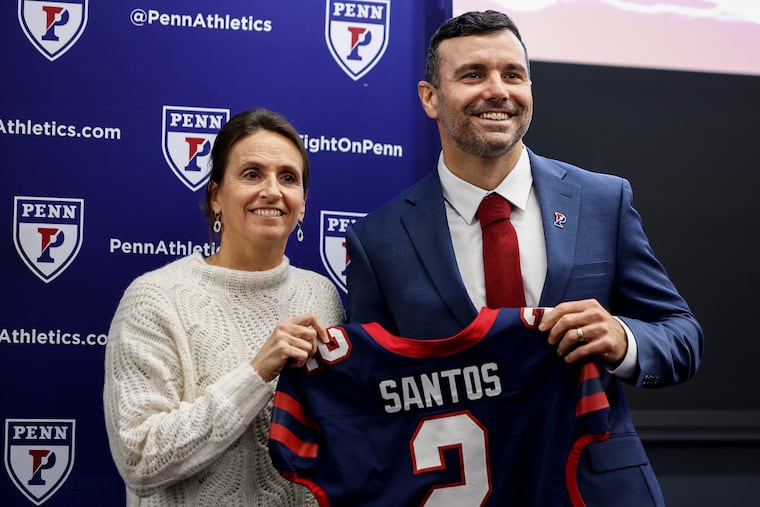
“We understand that veterans not only bring unique perspectives to our undergraduate population, but also that they face unique challenges in navigating the college application process,” said Penn admissions dean Whitney Soule, noting that they may have different perspectives if they went straight to the military from high school. “We want them to hear loud and clear that Penn could be an option for them.”
» READ MORE: Penn admitted 4.9% of applicants, its most selective year in its history
The VetLink participants generally will apply as part of the traditional, highly competitive undergraduate admissions cycle as first-year students, Soule said. Penn accepted just 4.9% of applicants for its fall 2025 class. But Soule noted that each candidate is evaluated “within the context of their life circumstances.
“Veterans have a unique opportunity to demonstrate leadership, achievement, and community engagement through the lens of their service,” Soule said.
While the partnership has been in the works for about the last six months, its announcement comes shortly after Penn got off a list of schools that the Pentagon planned to cut from its tuition assistance program for military officers applying to graduate programs. Defense Secretary Pete Hegseth earlier this month announced a list of 22 schools where members of the military would be banned from using the defense department’s tuition assistance.
» READ MORE: Trump administration cuts off tuition assistance for Army officers at 22 schools, but Penn isn’t among them
Penn was on an initial list. Princeton, Yale, and Carnegie Mellon University in Pittsburgh are among schools where that tuition assistance is no longer offered.
Soule said the partnership with Service to School “is fully unrelated” to the Pentagon announcement.
“We hope that, regardless of whatever is happening in the news cycle, the partnership can signal to veterans that Penn is eager to read their applications and welcome them to campus,” she said.
‘A meaningful way’ to reach veterans
Service to School was founded in 2011 by three veterans and an admissions professional and now counts seven of the eight Ivy League universities, including Penn, among its partners. Locally, Villanova University also has been a partner for nearly five years.
“It has been a meaningful way for us to connect with veterans across the country who may not have otherwise realized Villanova could be an option for them,” said Mike Brown, Villanova’s director of the Office of Veterans and Military Service Members.
Several veterans have enrolled and completed degrees; others are currently on campus, Brown said.
While Service to School helps veterans and service members apply to any school they choose, the organization specifically partners with schools that have at least a 70% six-year graduation rate, said Sydney Matthes, its CEO. Partner schools’ current average rate is 92%, she said. The organization also asks private school partners to participate in the Yellow Ribbon program, which bridges tuition and fee costs not covered by the GI bill; Penn expanded its participation in Yellow Ribbon in 2024-25 to offer unlimited funding for eligible undergraduate students.
And, it asks schools to help veterans in other ways.
Villanova, for example, funds a study abroad program for veterans because that opportunity is not typically covered by the GI bill, Matthes said. Others provide funded summer research opportunities and allow student veterans to live in graduate housing; they typically are older, with the average age between 24 to 27.
“We just want to ensure that when we are encouraging a veteran or active duty service member to invest their time at an institution, ...there’s an ROI [return on investment] on their time, their effort, and their energy and potentially their hard-earned benefits from their time in service,” Matthes said.
The organization also hosts quarterly calls among partnership schools and a virtual college career fair with about 300 active-duty service members and veterans looking to attend college.
The organization helps about 1,600 veterans annually, she said.
While the specific partnership with Penn has been in the works since the fall, discussions have gone on longer, Matthes said. Some of the group’s staff members are Penn alumni.
“We’ve had students go to the admissions office and encourage admissions to reach out to us,” Matthes added.
While veterans certainly have applied to Penn in the past, the new partnership, she said, “unlocks so many more opportunities” for students to connect with the admissions office, and it helps our staff understand what the admissions office is looking for, so then we can better counsel our students.”
Penn’s existing work with veterans
Penn has had longstanding programs to help veterans, including clubs and a student veteran network.
The university currently has 268 student veterans using veterans’ educational benefits, said Lynn Manuel, who became Penn’s inaugural associate director of veteran and military engagement five years ago.
But the vast majority are graduate students. Soule said there are five veterans enrolled in the traditional undergraduate program and 12 currently using VA benefits in Penn’s College of Liberal and Professional Studies undergraduate program.
The actual population of veterans is larger, Manuel said, because some are not using veterans’ educational benefits.
Both Soule and Manuel expect veteran numbers to grow with the new partnership.
“Some service members and veterans ...may not consider an Ivy League or elite institution,” Manuel said. “That’s what Service to School does so well, helps them understand, ‘Aim as high as you possibly can,’ because it is a possibility for you.”