‘Riverbend,’ the lost 1989 film that was brought back to life in Norristown
The genre film set in a small Southern town, "different from nearly all American films,” was restored in the Philadelphia region, where it never played in its initial release.
In the 1990s, before Michael Dennis was a filmmaker, screening host, or archivist, he worked at the Video Library, the fabled video store in Mount Airy. He remembers the 1989 film Riverbend being on the shelves, but he had never watched it.
Dennis, who founded the Philadelphia-based production company Reelblack in 1999, finally got around to watching the film in 2019. Charles Woods, Dennis’ mentor and podcast cohost, had asked him to transfer a VHS copy of the film to digital. He wanted to post the film on Reelblack TV’s YouTube channel.
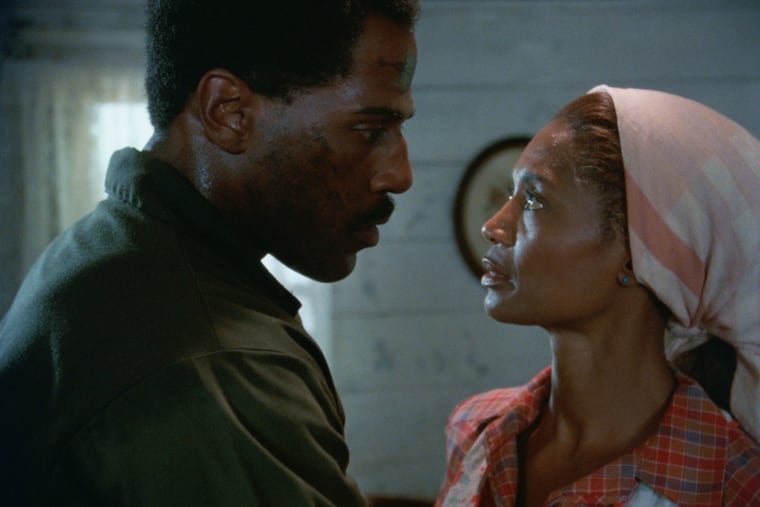
Riverbend, directed by Sam Firstenberg, is set in 1966 and tells the story of a group of Black Vietnam veterans who lead an uprising against a racist sheriff in a small Southern town. It’s an action-adventure film, in the tradition of the Rambo and Missing in Action series, firmly rooted in the B-movie style of the late 1980s — complete with a synthesizer-heavy musical score — but with much more of a social message than was typical of that time.
The film had only a perfunctory theatrical release and was released on VHS in 1990. In its brief run, the film opened only in New York, Texas, and Florida. But now, it has gotten an unlikely revival in Philadelphia, a city where it was never shown.
“The film itself is very revolutionary in some respects,” Dennis said. “I mean, it’s a genre picture, of course, but the theme is very revolutionary … and I was interested to talk to Sam about how the movie actually got made because it’s so different from most American films, nearly all American films.”
A few months after he posted the film on YouTube, Dennis received an email from Firstenberg, a B-movie stalwart whose credits also include American Ninja, American Samurai, and Breakin’ 2: Electric Boogaloo.
“I thought it was going to be a cease-and-desist letter, but instead he said, ‘No, you’re doing this movie a great service because it’s an orphan film and it was financed independently, and it’s basically lost,’” said Dennis, who teaches a course on race and ethnicity in American Cinema in Temple’s Film and Media Arts Department.
During the COVID-19 lockdown, Dennis saw a 35 mm print of Riverbend being sold on eBay by a seller in South Africa. He put in a winning bid for the print that’d take months to reach him.
Dennis considers himself an archivist, although he hadn’t previously mounted a full-scale restoration of a film before. But in keeping with Reelblack’s long-stated mission of encouraging the appreciation of Black film, especially rarer ones, he sought to restore Riverbend.
The eBay print, he said, had “every scratch known to mankind on it.” It was also missing seven minutes of material. Replacing the missing scenes with materials from the VHS, calling it a “sort of grindhouse cut,” Dennis gave the film its first public screening in decades at the Denton Black Film Festival in Texas in 2024. There, he met Valerie Vance, the widow of the film’s screenwriter and producer, Sam Vance.
“We were trying to find out where [Riverbend’s] negative was,” Dennis said, “And we had no luck because all the labs had closed and have become different companies.”
He got in touch with Dennis Doros, who runs the Missing Movies Instagram account and Milestone Films, a company known for rescuing “lost films.” Within days, the film assets were located at the film lab FotoKem, with Amazon/MGM paying the bills to host it.
Missing Movies, Vance, and Realblack worked out a deal to acquire the film’s negative and other assets.
The film then traveled to Norristown, where it was restored at Reel Revival, a company that provides scanning services. Austin Squitieri, its proprietor, started by scanning and digitizing the Riverbend negative. What followed was a painstaking process of digital repair, which included dirt removal, some Photoshopping, and final assembly of the edited footage.
Squitieri had not seen the film before working on the restoration, although he had heard of it.
“It’s a fun title,” he said. “It tackles something serious, and you can tell it was made passionately, as some of the more niche films tend to be.”
After premiering at the American Cinematheque Aero Theater in Los Angeles last October, the restored version of Riverbend is now headed to Philadelphia. The film will screen at Film Society East on Thursday and will be released on Blu-ray on June 27, through a new label called Reelblack Renaissance.
“There’s so many great Black independent films that are in danger of being lost or forgotten,” Dennis said. Reelblack Renaissance’s mission is “to restore them, reclaim them, and represent them in the Blu-ray and streaming market.”
Firstenberg, 76, will be on hand for the Philadelphia premiere.
“He tours the country supporting his body of work. And, this is like rescuing a lost child for him,” Dennis said.
“Riverbend” will be shown at 7 p.m. Thursday at Film Society East, 125 S. Second St. Information: filmadelphia.org/movies/riverbend/