Vivien Leigh’s little-known Philly romance is becoming a movie
A new independent film, Vivien & The Florist, explores Oscar winner Vivien Leigh’s little-known relationship with a Philadelphia florist during her 1966 stay in the city.
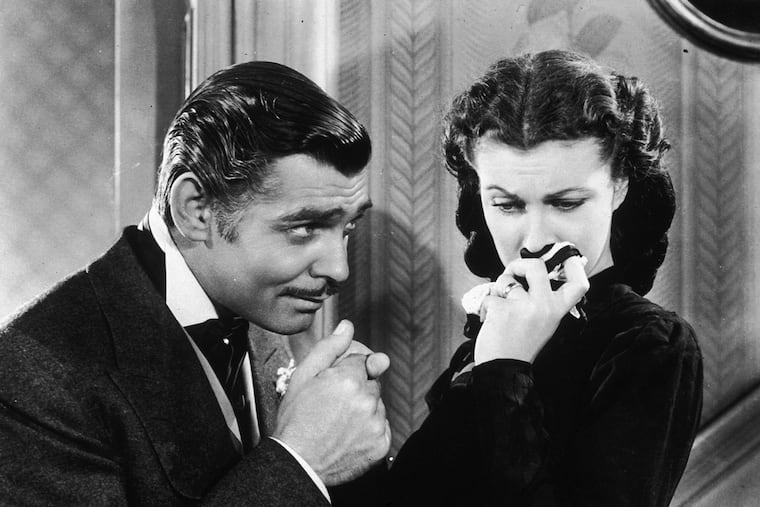
The forthcoming biopic about Hollywood star Vivien Leigh, titled Vivien & The Florist, focuses on her brief time in Philadelphia, toward the end of her glamorous yet tumultuous life.
The Oscar-winning actor from A Streetcar Named Desire and Gone With the Wind came to the city to perform in a pre-Broadway tryout of the Chekhov play Ivanov at the Forrest Theatre in the winter of 1966. By that point, she had privately struggled with what is now known as bipolar disorder for years, and was receiving electroconvulsive therapy at a local hospital.
After each visit, her famous ex-husband Laurence Olivier sent her flowers. That’s how Leigh met Joseph DellaPenna, aka Penn, a quiet, unassuming Philadelphia florist who designed and delivered each bouquet. The two began writing intimate letters to each other and quickly formed a meaningful relationship.
The true story of that secret love affair serves as the basis for the independent film, directed by actor/director Nick Sandow, which was shot in and around Philadelphia earlier this year. The producers hope to premiere Vivien & The Florist at a major film festival in late 2026, followed by a wider release in early 2027.
Actor Carla Gugino, who has appeared in Spy Kids, Sin City, and the more recent horror series The Fall of the House of Usher, stars as Leigh opposite Oppenheimer actor Matthew Modine, who plays Penn.
Their history might never have come to light, though, if it weren’t for a fateful conversation at a kid’s party in Brooklyn about 13 years ago.
Actor/writer Jayce Bartok was casually chatting about Leigh’s legacy with his friend David Kelly, who revealed a somewhat random connection: Kelly’s sister was DellaPenna’s daughter-in-law, and he often saw the late florist at family parties.
Once, Kelly brought a girlfriend to one of those events, and DellaPenna’s widow, Pasquale Marone, noted that she looked like Vivien Leigh; she proceeded to tell them about the time her husband delivered flowers to the celebrity.
She even brought out a shoebox full of love letters that DellaPenna had received from the movie star. Kelly spent the rest of that night at the kitchen table, reading through what he later described to Bartok as Leigh’s “candid and emotional” letters.
Bartok remembers thinking immediately that their relationship “would make an absolutely amazing movie,” he said. “For about 10 years, every few months [when] the kids would get together, Dave and I would talk about what the opening of this cool movie would look like, and what the end of it would look like.”
During the COVID-19 lockdown in 2020, Bartok and Kelly began working on the script together. By that point the letters had been lost, but Kelly remembered them well enough for them to serve as a starting point. (Plus, Bartok noted, quoting from Leigh’s letters would’ve required permission from her estate, which may have proven costly for the low-budget production.)
Kelly later stepped away from the writing process as Bartok took the lead, interviewing Kelly’s relatives to learn more about DellaPenna — a reclusive and talented florist who counted Frank Sinatra as a client — and researching 1960s Philadelphia to flesh out Leigh’s life in the city.
“I thought, ‘Isn’t that interesting that Vivien would choose to correspond with this gentleman, that was the polar opposite of her?’ What a fascinating basis for a love story of sorts, and a love story that didn’t appear to me — not to give anything away — that wasn’t very passionate and physical, [but] was more of what you could call an emotional affair… so that was dramatic license that we took,” Bartok said.
Given the sensitivity around Leigh’s mental health struggles, Bartok recognized that he was capturing a vulnerable and painful time for the actress; a cinematic retelling “could border on salacious,” he said, but he wanted to avoid sensationalizing the story.
“They connect over flowers, and she sees him for who he is, and vice versa. He doesn’t want anything from her, so it was a unique relationship for her in the course of her life,” Bartok said.
After three years of development, the production began filming in early 2026. The DellaPenna family visited the film set a few times and many of them had no idea about his connection to Leigh, said producer Lauren Hale Rieckhoff.
“It’s a lovely family story, and now it’s like a story for the world,” she said. “The look on Penn’s son’s face was the greatest thing ever, like ‘This is a movie about my dad.’... On the flip side, we had heard independently from Vivien Leigh’s extended family, grandchildren, and great-grandchildren, that they were really excited for the film as well.”
They shot the film in historic locations in the area, using Glen Foerd mansion in Northeast Philly as a stand-in for Leigh’s fancy hotel and her English estate, while Lancaster County’s Greystone Manor served as a site where Leigh received medical treatment. The production couldn’t afford to film at the Forrest Theatre, where Leigh actually performed in Ivanov, so instead they recreated the venue at the Media Theatre in Delaware County.
Other shooting locations included Old City Flowers, the Drake, Independence Park, Laurel Hill Cemetery, and St. James School.
The nearly $3 million production received about $500,000 in tax credits from the Pennsylvania Film Office because they shot primarily in-state; of their 80 crew members, 60 were local hires. Rieckhoff was grateful to the film office for being incredibly helpful and supportive of their production. While they considered shooting in New York, where Bartok and Rieckhoff are based, Philadelphia’s historic character became an essential part of the storytelling.
“In this little part of Philadelphia, far away from home, unexpectedly, [Leigh] meets this man and he settles her …the world she inhabits is much more frenetic than many of us, and Penn is her stability,” said Rieckhoff. “She really does fall for him. I’d like to think that they didn’t consummate anything, because Penn was married, and his widow, Peg, was very enthusiastic about the letters. It seems to me like he said, ‘We can’t cross that line,’ but I think it’s just so beautiful … his calm strength was what she needed.”
While those letters have potentially disappeared, Vivien & The Florist aims to ensure their love story won’t be forgotten.