After a billion-plus Spotify streams, Ali Sethi is bringing his ‘Trojan horse’ of a show to Philly
The Pakistani singer behind the viral "Pasoori" is back with a new album and a tour that promises subversion and transcendence.
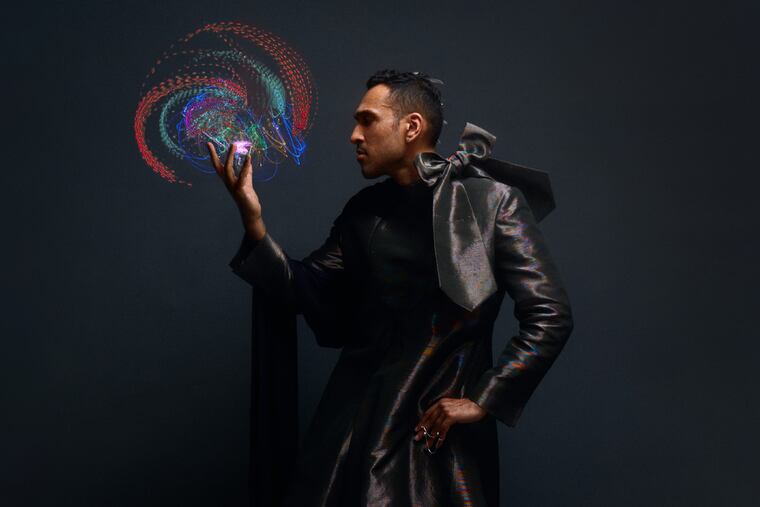
Ali Sethi is arguably Pakistan’s biggest cultural export in recent times.
Curiously, through both his training and his music, he has become one of the most popular ambassadors and boldest experimenters of North Indian classical music, as well.
A tradition often labeled “Indian classical,” it predates the modern borders of India and Pakistan by centuries.
The two nations, which engaged in armed conflict as recently as May, have both attacked Sethi. India has banned his social media accounts and all his music, and Pakistan has condemned him for his queerness.
You would, however, be hard-pressed to attend a wedding in either of these countries without listening to the notes of “Pasoori,” the first song Sethi ever wrote.
The 2022 Urdu song was recorded for Pakistan’s TV music show Coke Studio. Sung with Shae Gill, it has been played more than a billion times on Spotify. Downloaded using VPNs, shared among friends, recorded on phones by cousins abroad, shared on WhatsApp — Sethi’s voice reaches places where his body is policed and banned.
It makes his heart soar, he said on a recent Zoom call, “but then I feel so sad because I know our reality. That’s what it is, a daily cascade,” said the singer who lives in New York, and is bringing his North American tour to Philadelphia’s Theatre of Living Arts on Thursday.
“Governments ban musicians because they realize that, despite the wars and narratives of exclusion and of otherness, the one thing that keeps a connection going is music,” Sethi said.
“Musicians like me pose the biggest challenge to their narratives. Battles can be won and lost in a matter of days. But to undo this shared ancestral language is much harder work.”
“Pasoori,” he said, showed the world what it looks like when South Asians, despite borders, turn up “as a cultural bloc.” That, he said, “is so much bigger than this story of India, Pakistan, Bangladesh. That’s an epic tale of 2 billion people.”
His new album, Love Language, released in August, is “a diary of displacement.”
Since “Pasoori,” Sethi has played at Coachella and toured the world while navigating the hate and threats that have come his way from the Indian and Pakistani right wings. He has met people from across the world — “a bass player who plays flamenco guitar but also knows ghazals, someone who was born in Pakistan but grew up in America, and now makes dance music in LA.”
All those diasporic encounters, he said, make their way into the new album.
“The music in Love Language is about me moving through this diasporic tunnel, this kind of placeless zone in the night,” he said. It is the music that emerges when making sense of the world from a sense of home rooted not in geography but in the poetry of the Pakistani revolutionary poet, Faiz Ahmad Faiz, and Rabindranath Tagore, India’s first Nobel laureate for literature.
He is also inspired by his place in the world — “by the way that I would if I go to a rave in a feather boa, brushing dangers, kissing strangers. But also thinking of Hindu folklore of women jumping into the river to swim across and meet her beloved, in the wilderness at night.”
Love Language, like most things in diasporic lives, “is about venturing forth into the unknown while also holding on to your passion, your love, without letting go of the promise of union, while embracing the dangers and the risks of your quest,” Sethi said.
What emerges is 39 minutes and 41 seconds of Hindustani ragas colliding with reggaeton, childhood rhymes giving way to lusty lyrics full of double entendres, tablas matched against bass guitar, love confronting resistance.
Like the Sufi mystics who came before him, and who inspire him, Sethi’s lyrics walk the line between lust, love, and devotion — tangled in the search for ecstatic release, sometimes at the expense of the body, that eternal cage of the soul.
Don’t call it fusion. “There’s a word for it. It’s syncretic. A space that simultaneously honors multiple traditions and multiple times,” he said. Sethi is not fusing disparate things to create something new and alien. But bringing together worlds and mystiques that already coexist.
But this mystique isn’t without a political bite.
“O Balama (Censored Love Song),” the first track, is a lover’s paean whose words get swallowed by radio static and barrage of whirs. Rumors of Sethi’s secret marriage to his artist partner Salman Toor resulted in vicious homophobic trolling in Pakistan, where homosexuality is illegal.
The love in Love Language, therefore, is at times a feverish obsession, a plea, a demand, but, ultimately, also a deviance.
In “Bridegroom,” Sethi, again in the spirit of South Asian mystics, swaps gender roles and sings as a bride pleading the world not to ask questions about her bridegroom. In “Villain,” he becomes the antihero for “my trolls who send me hateful messages and people who refuse to give me visas.”
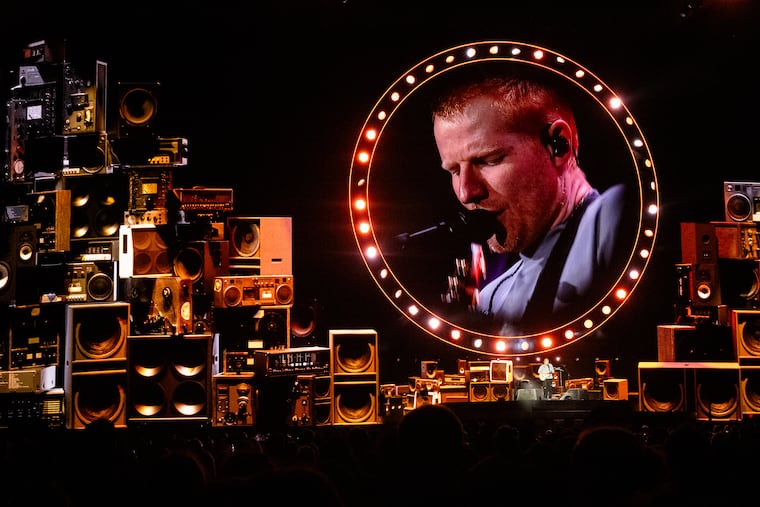
“Trojan horse” is an adjective Sethi uses to describe his music and his shows. “It arrives as music with the promise of entertainment. But then inside it, there is a lot of subversive knowledge transmission. … Music is a way for me to bring all of my interests in one holistic experience,” said the singer who grew up in Lahore with journalist parents, writing a best-selling book called The Wish Maker before ever writing a song.
Music, he says, is a miracle — “a tunnel that you can go into for a little while and free yourself of all the cages you put yourself into.” Sure, we go back to our lives after the stage lights go off, to deal with the bureaucracies that guide us.
“But at least we have the memory of what we’ve experienced together,” he said. “I think that transcendence is what I aspire to.”
“Ali Sethi North American Tour” on Thursday at 8 p.m. at Theatre of Living Arts, 334 South St., Philadelphia. Information: tlaphilly.com, 215-922-1011.