A CD swap got a Bala Cynwyd teenager a Red Hot Chili Peppers album. It has now led to a Netflix blockbuster.
In a new documentary, filmmaker Ben Feldman tells the tale of Hillel Slovak, the band’s beloved guitarist who died before RHCP reached its commercial peak
When Ben Feldman was growing up in Bala Cynwyd in the 1990s, he made a fateful trade.
The preteen music fan — “I would have been 12 or 13,” he said — gave up his copy of Led Zeppelin II to a friend of his older sister’s. The scratched CD case he got in return contained Blood Sugar Sex Magik, the 1991 album by the Red Hot Chili Peppers.
That album turned the Chili Peppers into one of the biggest bands of the 1990s and made Feldman a lifelong fan. It also sent him on an indirect path that, three decades later, led to The Rise of the Red Hot Chili Peppers: Our Brother Hillel, his affectionate and heartbreaking made-in-Philly documentary that premiered at the SXSW Film Festival this month and is now streaming on Netflix.
In between, Feldman worked as a lawyer for a decade before an abrupt career change. He became a filmmaker to tell the story of 7,000 crawly creatures being stolen from the Philadelphia Insectarium and Butterfly Pavilion in 2018.
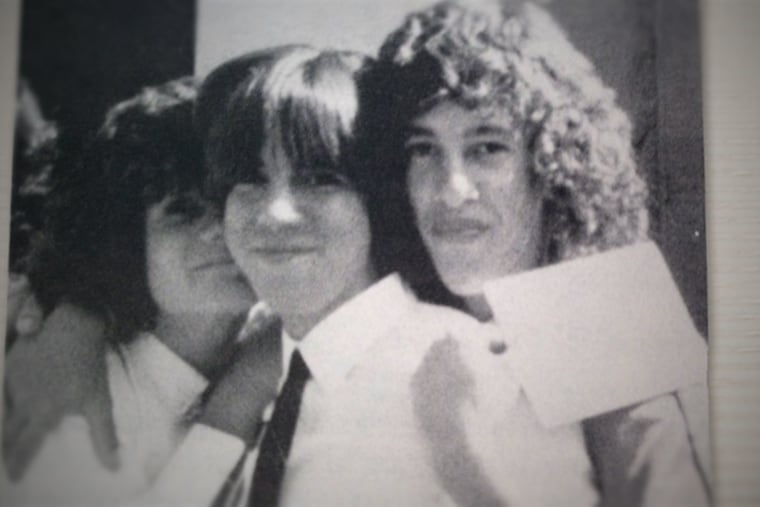
More about that in a minute. Feldman’s Chili Peppers documentary focuses on the friendship between RHCP frontman Anthony Kiedis, bassist Flea, and Hillel Slovak, the guitar player who was an inspirational music guru to his bandmates. He died of a heroin overdose in 1988 before the band reached its commercial peak.
The film includes in-depth interviews with Kiedis and Flea. The latter tears up talking about his upbringing in a violent home as a trumpet-playing jazz nerd — a side that comes out on his album Honora, out this week. Flea says he might have never picked up the bass had Slovak not invited him to join his pre-Chili Peppers teenage band, What Is This.
Feldman talked to funkmaster George Clinton, who produced the Chili Peppers’ 1985 album, Freaky Styley, in Miami, and interviewed What Is This singer Alain Johannes at the Bok Building in South Philadelphia.
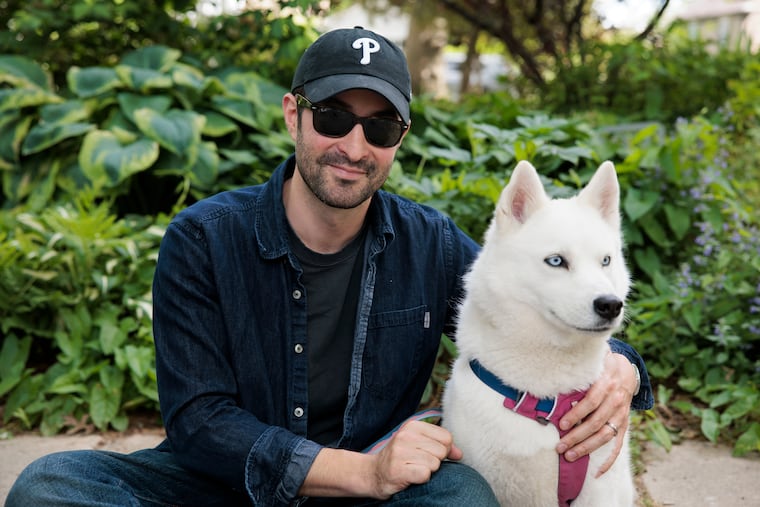
All preproduction and postproduction work was done at his Asta Entertainment offices in Fairmount. “I’m a big Dashiell Hammett fan,” says the filmmaker, 41, who lives in Roxborough, referring to the American writer famous for his detective novels and short stories.
So, yes, his production company is named after Nick and Nora Charles’ scene-stealing dog in the Thin Man movies.
Feldman graduated from Friends Central in Wynnewood before going on to study urban planning at New York University. As an undergrad, he made a short doc about the High Line, the elevated park on the west side of Manhattan then under construction.
Then he went to law school in New Orleans, where he worked as an attorney before returning to Philly to first work at the Fox Rothschild law firm, and then the nonprofit Legal Clinic for the Disabled.
“I didn’t really enjoy being a lawyer very much,” he said, in a video chat from Asta’s offices. “I knew I wanted to try something else. My criteria was: What was something I worked really hard on, and enjoyed working really hard on?”
The High Line doc was the answer. “So I was like: I’m going to give it a shot at the documentary film thing.”
Then in his mid-30s, he met the head of the Philadelphia Insectarium through a friend of his wife. “And then one day, my wife came home and said: ‘The Insectarium got robbed! Somebody stole all their bugs!’”
Feldman had found his subject.
His investigation turned into Bug Out, a four-part series shown on Amazon-owned streamer IMDbTV. It used the story of the theft of 7,000 insects and lizards worth $70,000 to dig in to the shadowy subculture of black market bug dealing and Machiavellian scheming.
» READ MORE: BUGS, EDUCATION, AND A $40,000 HEIST
Feldman followed Bug Out — not currently available to stream — with two 2024 episodes of the true crime series Rich & Shameless, about bad behavior in boxing and baseball.
The idea for a Chili Peppers movie arrived after seeing Wham!, Chris Smith’s 2023 doc that used archival footage of late pop star George Michael and new interviews with bandmate Andrew Ridgely to create a dialogue.
Feldman went to the Chili Peppers with the idea to focus on the friendship that flourished between Slovak — born in Israel to Holocaust survivor parents, who later moved to L.A. — and Kiedis and Flea, whose given name is Michael Balzary.
“The pitch was that the film was going to be about Hillel and their connection and the importance of the bonds that were formed,” Feldman said. “I also think I was able to earn their trust because about five years ago, I lost my best friend to an overdose. They wanted to make sure that this story was handled with care.”
For musical assistance, Feldman called on his old friend Zack Djanikian, who grew up with him in Lower Merion. The musician now plays guitar, bass, and drums with Graham Nash, who opens his 2026 tour at Lansdowne Theater on April 4.
After a 2024 Nash show at the Scottish Rite Auditorium, Feldman asked Djanikian and bandmate Adam Minkoff to score the film.
They “absolutely crushed it. I’ve got tons of people DMing me asking me if the score is available somewhere to stream,” he said.
The film sweetly captures the knuckleheaded days of the funk-rock trio’s youthful friendship, when Slovak was a more sophisticated musician than his friends. He also had a more stable family life than Flea or Kiedis, with an art-loving mother, Esther, who was a nurturing presence for the trio of musical miscreants.
In the Netflix ecosystem, the movie is a hit, ranking among the top 10 most-watched shows on the streaming service in 19 countries, including the U.S.
It has no bigger fan than actor Jamie Lee Curtis. “THIS IS MIND BLOWING!” she wrote in an effusive Instagram post this week. “Am stunned at the depth of these friendships … Also the pain and suffering of addiction, the miracle of recovery and mostly the PUNK FUNK ROCK OF BEING ALIVE!
Feldman had access to a trove of archival material. Slovak’s brother James is an executive producer. “I knew Hillel was a prolific journaller,” Feldman said. He also discovered hours of recordings of Slovak’s voice, thanks to a Dutch TV crew who followed the band on its 1988 European tour.
In the film, those tapes are used to digitally recreate Slovak’s voice, to ghostly effect. Some reviewers have criticized the technique, but Feldman believes it benefits the story.
“With the blessing of the family, we decided to use AI because we really wanted to bring him to life as a character and make him feel alive.”
When Netflix announced the movie in January, Slovak’s name was not in the title. It was simply The Rise of the Red Hot Chili Peppers.
Though they were cooperative interview subjects, the band spoke up on social media: “This documentary is now being advertised as a Red Hot Chili Peppers documentary, which it is not. We had nothing to do with it creatively.” The words “Our Brother Hillel” were then added to the title.
Feldman says his aim, from the beginning, was to tell of Slovak’s central place in the band’s rise.
“The focus was always going to be on the early years and Hillel’s role in that, which is a lesser-known part of the story,” he said.
“The hardcore fans know who Hillel is, but a lot of people don’t. My intention was to help people get to know him and love him. Just as I did making this film.”