‘Genius’ Tyshawn Sorey doesn’t care for labels of jazz or classical, but continues to make exquisite music
The MacArthur Fellow and Pulitzer Prize winner recently finished a Philadelphia Orchestra commission and is about to release his new album inspired by Max Roach’s 'Members, Don’t Git Weary.'
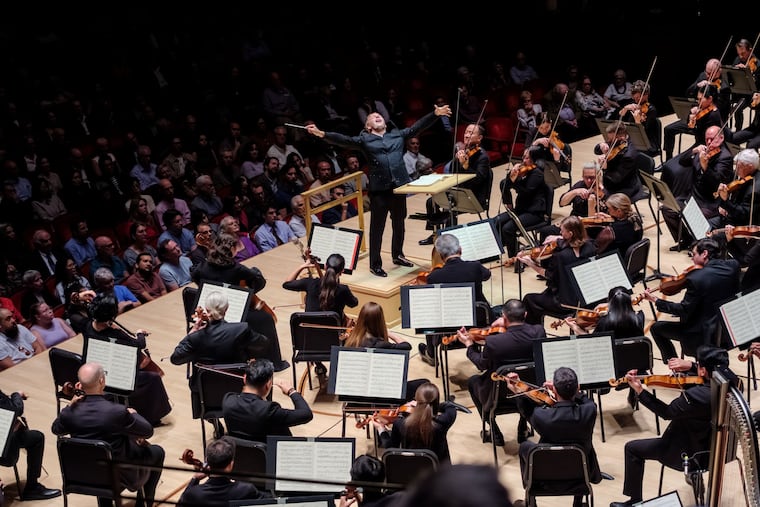
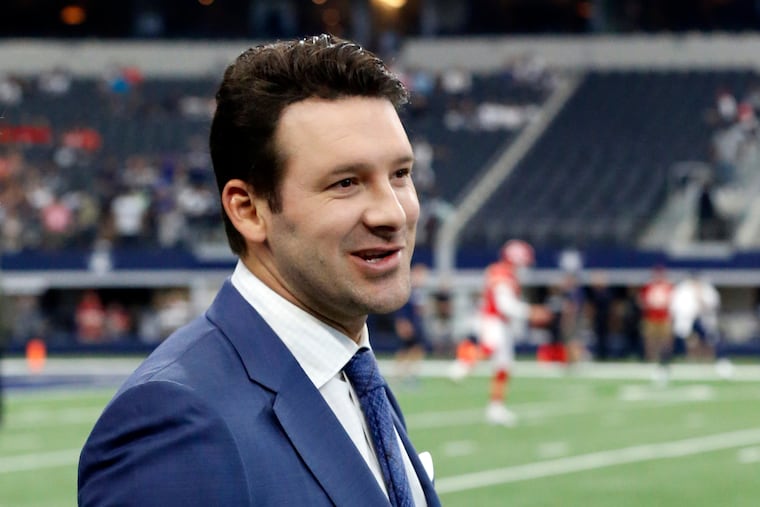
Introducing the world premiere of For Marilyn Crispell earlier this month, conductor Yannick Nézet-Séguin referred to Tyshawn Sorey’s new work for piano and orchestra as “one of the most singular pieces that we’ve ever performed. … It is, I would say, a work of genius.”
It was hardly the first time that the “G” word has been applied to Sorey, who has been based in the Philly suburbs for the past five years after joining the faculty of the University of Pennsylvania in 2020. In 2017 he was named a MacArthur Fellow, the award commonly known as the “Genius Grant.” He won the Pulitzer Prize for music in 2024 for his Adagio (for Wadada Leo Smith), and his albums as a drummer, composer, and bandleader are routinely hailed as among the most innovative and exploratory in modern jazz.
Referring to one aspect of Sorey’s work as jazz, opposed to a classical strain, is where things get complicated.
He has been commissioned by the Philadelphia Orchestra, spent three years as composer in residence with Opera Philadelphia, and composed the much-acclaimed Monochromatic Light (Afterlife), inspired by Houston’s Rothko Chapel and the music of Morton Feldman.
But, Sorey remains unburdened by stylistic boundaries, and his expansive vision bleeds over from one tradition to another and inevitably transforms all.
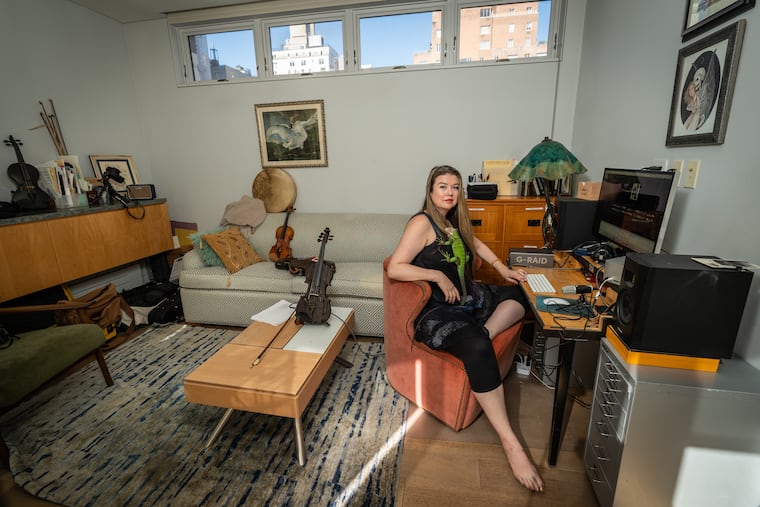
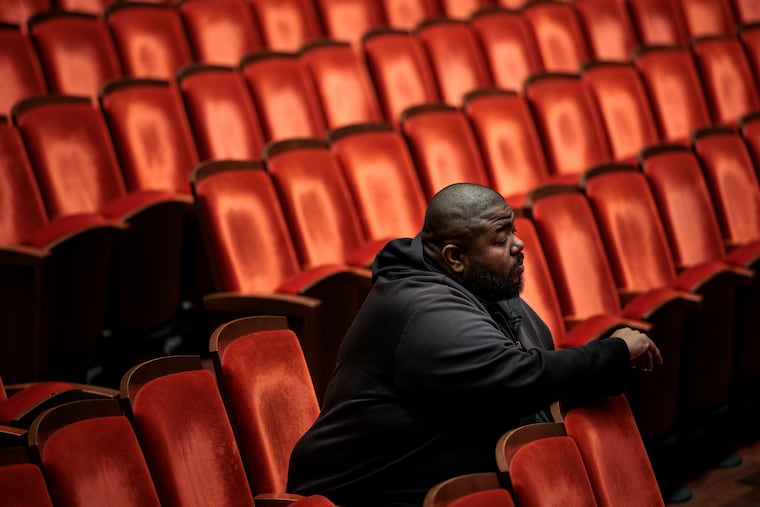
“We’re at a time now where we’re doing away with such a dichotomy [between classical and jazz],” Sorey said while reclining on a couch at the Kimmel Center following a rehearsal of For Marilyn Crispell. “I’m looking for an artistic cross-pollination of those ideals. Ultimately my goal is to create an ensemble music, not one that necessarily carries interpretational baggage but one that’s about purely engaging on a level where you’re interacting as a musician with other musicians.”
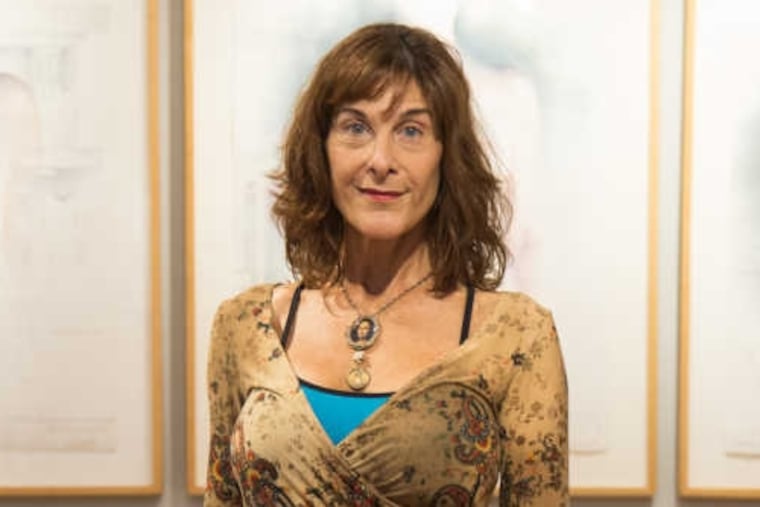
Dedicated to the Philadelphia-born pianist Crispell, who was named an NEA Jazz Master in 2025, Sorey’s piece for piano and orchestra lives up to Nézet-Séguin’s exultant praise.
The 30-minute work is as exquisite as it is demanding, unfolding with painstaking slowness and ethereally soft hues, insisting that the orchestra and guest pianist Aaron Diehl breathe together as one instrument, almost as one organism.
The breadth of Sorey’s artistry is evidenced by contrasting the mesmerizing stillness of For Marilyn Crispell with the last time the composer was featured on a Philly stage. In February, Sorey and his sextet performed at the Annenberg Center, previewing his forthcoming album Members … Don’t! (which will be released by Pi Recordings on Friday).
The concert featured Sorey’s reimagining of the music from Max Roach’s fervent 1968 album Members, Don’t Git Weary. It was a compelling investigation, refraction, and explosion of the politically charged source material.
The two boldly distinct works raised the idea of interpretation — one requiring a pianist and orchestra to unite in interpreting Sorey’s unconventional compositional ideas; the other, a daring reinterpretation of a landmark album in jazz history.
“The quality of interpretation matters more than anything else,” Sorey explained. “Whatever musical situation I’m put in front of — blues songs, gospel, so-called jazz, or hip-hop — I try to be as authentically myself as possible in every situation.”
For Diehl, engaging with Sorey’s musical language has been vitally transformative. The pianist joined Sorey’s trio in 2021, since then releasing four albums with either Matt Brewer or Harish Raghavan on bass, one of them supplemented by the alto saxophonist Greg Osby. All atypically showcase the drummer’s take on standard repertoire and pop songs, but in Sorey’s hands these familiar tunes inevitably become fodder for lengthy contemplation and deep inquiry.
“Playing with Tyshawn has changed my perception of performing and the necessity and impact of patience,” Diehl said. “A piece like For Marilyn Crispell becomes about how you perceive time, both in its more metaphysical aspects, but also the literal perception of time in the music. It can be incredibly challenging and taxing, much more so than if I were playing something that was hyper flashy and virtuosic.”
“We live a life where everyone is in a hurry for something else to happen,” Sorey said. “Sometimes it’s good to sit in a moment for a longer period of time so that you can get more depth out of that experience. I think we need more opportunities to bask in everything that’s going on and look at it in granular detail.”
For Marilyn Crispell demanded that Diehl demonstrate an otherworldly patience and an achingly delicate touch; at the Annenberg, Sorey was having none of that. As Lex Korten segued between two songs with a few minutes of gossamer solo piano, Sorey suddenly hurled his drumstick onto the floor, a theatrical moment of musical punctuation as well as a cue to move things along.
Urgency is central to Sorey’s passion for Members, Don’t Git Weary.
He recalls his visceral reaction to hearing Roach’s bracing drum solo on Gary Bartz’s “Libra” as a teenager, describing it as sounding like, “Max is literally yelling at you, ‘Get your sh— together, America!’”
With Members … Don’t! Sorey seizes the opportunity to shout at the America of his own time.
“I relate to Members, Don‘t Git Weary on so many levels historically, not only as an American but as a Black American,” he said. “All the tumult that was happening in 1968 is still very relevant now. But I think that everything I do is a direct response to the times that we’re in.”