Rocky was the Bicentennial hero Americans needed in 1976
The 250th is a mess. So was the 200th.
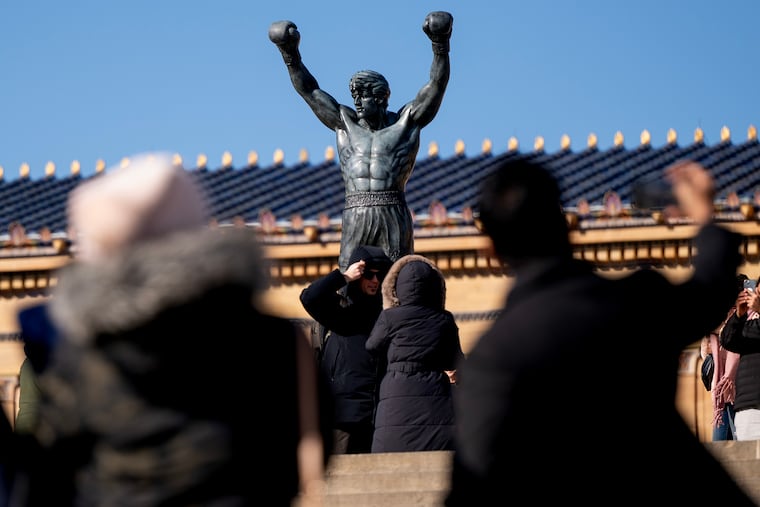
Rocky is not only a Philadelphia film, but a Bicentennial film. Writer and actor Sylvester Stallone invokes Bicentennial themes through characters like Apollo Creed, a heavyweight champion eager to represent the American Dream in a showcase match. He chooses down-on-his luck Rocky Balboa, the “Italian Stallion,” as his opponent to highlight the United States as a nation of underdogs only in need of a chance. As reviewer Arthur Knight wrote at the time, “For the course of its two hours we learn that…America is still a place where a man can haul himself up by his own bootstraps provided he believes in himself and has the will to do so.”
The underdog theme in Rocky resonated with American audiences in 1976 as they were thinking about the 200th anniversary of the United States, which had been born as a long shot fighting for independence from the mighty British Empire. The Revolutionary War was won by American underdogs setting the course for a new nation dedicated to liberty. But the fight for liberty became an ongoing struggle for many Americans over the centuries.
Rocky was among the many messengers of that theme during the Bicentennial. Few if any characters in the film expect Rocky to win the exhibition fight, but he works hard and refuses to give up, going the distance against the best in the world, and losing on a technicality. He also inspires a nation. Rocky became a sleeper hit that helped awaken Americans from their self-doubts during the dark times of the 1970s.
The Bicentennial celebration in 1976 was mired in debates over how to mark the milestone. Today, plans for celebrating the 250th anniversary of American independence in July 2026 are also fraught with controversy as two separate organizations, the official America250 group authorized by Congress and the President Trump-themed Freedom 250, compete for control of national events and the national narrative. But as the ordeal of the Bicentennial reveals, battles over how to commemorate America’s birthday are nothing new.
Though the United States had 200 years of history to celebrate, the Bicentennial in 1976 was shrouded by the recent past. The Vietnam War, protests, political violence, scandals, and economic uncertainty compelled reassessments of the nation’s identity and its founding ideals. In the aftermath of the civil rights revolution, more Americans than ever in the 1970s sought to contribute to the story—making a simple, patriotic interpretation of US exceptionalism difficult to promote.
At first, the official American Revolution Bicentennial Administration (ARBA), funded by the federal government, tried to present a triumphalist version of the nation’s past, focused upon democracy and liberty as mainstays of American identity. The Commission immediately met with resistance. Some critics questioned the need to spend money on the extravagance of U.S. pride.
Others denounced the commercialism of a Bicentennial sold to consumers through commemorative trinkets as well as the inherent racism of a whitewashed US history that marginalized the experiences of Black Americans. Corporate power was a prime target of protests. The Boston Oil Party of 1973, for instance, dumped oil barrels, not tea, into the harbor and hung an effigy of President Richard Nixon.
Instead of a centralized, unified series of events organized at the top, the Bicentennial became a grassroots effort by multiple groups and communities mining the American past to bolster their political viewpoints. The People’s Bicentennial Commission, a New Left rival to the official committee, emphasized the revolutionary tradition that had secured independence and established the republic. Jeremy Rifkin, director of the group, wrote “Red, White, and Blue Left,” an essay that encouraged activists to embrace American radicalism rather than follow Lenin, Mao, or Castro. “For the American left to develop a strategy that can win popular support for programs that answer present grievances,” he argued, “it must first gain a clear understanding of the role which the American heritage plays in the formation of American people’s political attitudes and behavior.”
Though leftists faced an entrenched capitalist system, Rifkin enlisted the rebels of the 1770s as models for a “second American revolution” for economic equality in the 1970s, drawing upon their dark horse determination to overcome power. Like Rocky, Rifkin projected an underdog endurance that he believed defined American greatness.
Race and class issues were prominent during the Bicentennial, as Black Americans spoke about the unfinished revolution of 1776 and the uncritical patriotism of 1976 that treated them as collateral damage. Comedian Richard Pryor’s caustic Bicentennial-themed act won best comedy album Grammy of the year and Gil Scott-Heron’s spoken-word poem “The Bicentennial Blues” framed America as “home of the blues.” The blues, the lyrics explained, had been “born on the slave man’s auction block” and “grew up a slave.” For over 200 years, Scott-Heron reminded, the blues expressed the pain of second-class citizens “ripped off” and “violated by commercial corporations.” The poem dismissed the Bicentennial as another “blues year” marked by “halfway justice, halfway liberty, halfway equality, it’s a half-ass year.”
Protest parades for July 4, 1976, took place in Philadelphia and D.C. as a coalition of Black Americans, Native Americans, Puerto Ricans, and various dissenters made their voices heard.
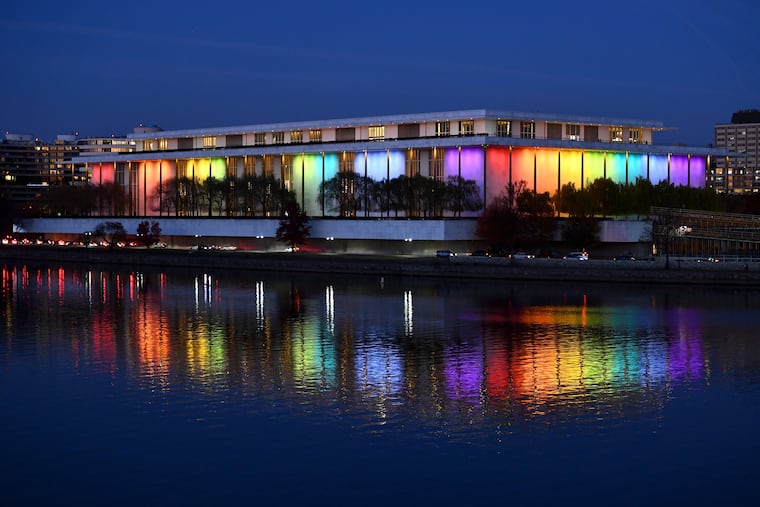
Despite waves of disillusionment, the Bicentennial provided an ocean of opportunity for Americans to recover from the Vietnam War and reassess patriotism. Millions focused on the bright side of U.S. history, celebrating American virtues. Red, white, and blue floodlights illuminated the top of the Empire State Building, starting a tradition of using colored lighting patterns to mark special occasions. Little Liberty Bells and coins were popular items, while Queen Elizabeth II sent the city of Philadelphia the “Bicentennial Bell,” a full-size replica of the Liberty Bell from the same London foundry that created the original. Speechwriters for President Gerald Ford encouraged him to put the meaning of America in terms of an ongoing “experiment” that still represented the world’s best hope for freedom. “Rebirth” and “renewal” were stated themes of administrators trying to lift the gloom and shift the mood of the nation.
Ford declared that Americans needed to uphold liberty and democracy, not only for U.S. citizens but all humanity. For a nation chastened by recent war, Ford’s words were balanced between humility and hope, the same notes that Rocky hit.
In 2026, like in 1976, the American people continue to debate the meaning of America and whether the country’s founding values are still viable or ever were. Celebrating the anniversary of U.S. independence, therefore, is always as much about hope for the future and the mood of the present as it is about pride in our past. Like Rocky and his underdog spirit, Americans keep fighting the good fight for the liberties that have remained insecure since 1776.
Vaneesa Cook is a PhD historian and the author of Empire & Liberty: The Tied Histories of Two American Landmarks (Beacon Press, 2026), from which this essay is adapted.
Made by History takes readers beyond the headlines with articles written and edited by professional historians. Opinions expressed do not necessarily reflect the views of The Inquirer.