‘The Secret Lives of Mormon Wives’ shines a light on the complex history of Mormon women
Mormon women are having a moment in U.S. pop culture. There's more to their history than meets the eye.
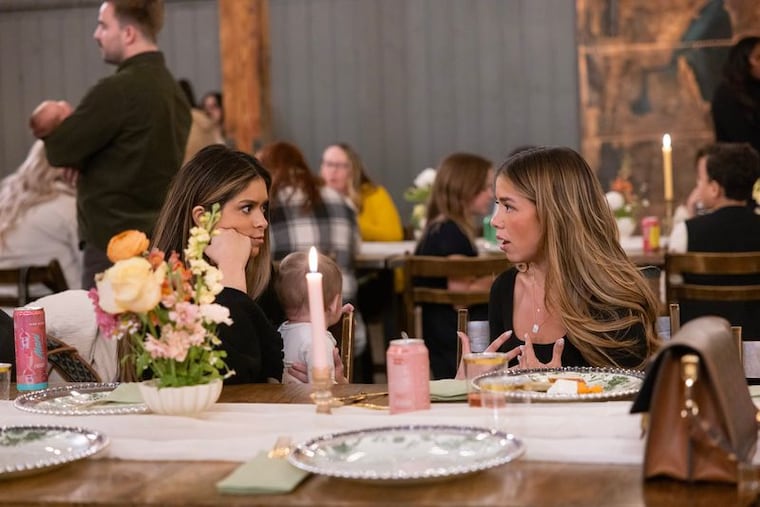
To the surprise of many, Hulu’s The Secret Lives of Mormon Wives (SLOMW) has met raging success, with Season 5 being filmed for release this fall. ABC cast SLOMW star Taylor Frankie Paul as the most recent lead of The Bachelorette, and two castmembers of Mormon Wives in its recent, widely viewed season of Dancing with the Stars. SLOMW’s Whitney Leavitt also headlined a record-breaking run in a Broadway production of Chicago.
To a degree not seen since Mitt Romney’s presidential bid, or the smash hit musical The Book of Mormon, it seems like Mormons are having a moment. But notably, this moment belongs to Mormon women.
Most Americans know very little about Mormon women, and what is known is often based on sensational stories about narrowly circumscribed gender roles and stereotypes about polygamy. The women of Secret Lives of Mormon Wives challenge these assumptions, projecting an image of influence, ambition, and agency that sits uneasily alongside popular assumptions about Mormon womanhood. As SLOMW reflects, there have been times in Mormon history when women have exercised substantial power and influence, often drawing on core doctrines that emphasize equality. Yet, Mormon women have also seen their opportunities revoked or diminished in tandem with political and cultural moments in the U.S. at large.
Members of the faith credit Joseph Smith, Jr. as the prophet who formally established the Church of Jesus Christ of Latter-day Saints—commonly known as the Mormon Church—in 1830. At this time, the rights of women in the U.S. were broadly restricted. In most cases, women could not vote or run for political office, and married women were legally barred from owning property or keeping their own wages.
Early Mormon history suggests possible openings for women’s power in the church and in doctrine. For one, the LDS Church recognized a feminine divine, taught about by Joseph Smith in the 1830s and 1840s. Some scholars have suggested that in the 1840s when Smith developed temple liturgies in LDS temples, he incorporated “elements that suggest he viewed women as holders of a form of priesthood.” This vision of ordained women was not realized, yet they held spiritual roles: women prophesied, performed blessings, and participated in their own rituals of “washing and anointing” before giving birth.
In 1842, Smith’s first wife Emma Smith and others established the Relief Society, a women-only organization to “seek out and relieve the distressed.” It provided a platform for women to serve in church leadership capacities, fundraise and manage their own budgets, and publicly speak about religion. The confidence and community organizing skills Mormon women gained through the Relief Society set the stage for their entry into national political life.
At the turn of the 20th century, Mormon women carried that same organizational energy into the women’s suffrage movement. White women in Utah were the first in the nation to vote in 1870, 50 years before the passage of the 19th Amendment. Initially, women’s suffrage in Utah was directly tied to the common practice of plural marriage—Mormon women believed they could use their vote to support polygamy and show that they were not “oppressed, helpless, and enslaved” as anti-polygamists claimed. Relief Society leaders developed education programs about the political process and civic engagement and sent Utah delegates to represent them at national suffrage conventions.
The Relief Society that had been first established in the early 19th century became a key source of Mormon women’s activism, especially around voting rights, operating independently and managing its own funds. Emmeline B. Wells, one of Utah’s national suffrage delegates, served as Relief Society president and simultaneously edited the Relief Society magazine the Woman’s Exponent. Writing in a Relief Society handbook, Wells argued that “woman must be instrumental in bringing about the restoration of the equality which existed when the world was created.”
However, Wells’ release from service as Relief Society president in 1921, “marked the beginnings of decades of declining institutional power for Mormon women,” as scholars of Mormon feminism have argued. Facing suspicion from other Christians, LDS church leaders emphasized alignment with conservative American values at mid-century, defining women primarily as mothers and homemakers rather than as independent spiritual practitioners as they had been in the early years of the church.
Revised Church policies reflected this shift. Women’s blessings that began in Joseph Smith’s time ended in 1946. In 1954, motherhood was redefined as the counterpart to men’s priesthood, validating women’s exclusion from the priesthood. By 1967, women were no longer allowed to pray in weekly congregational Sacrament Meetings. And in 1970, the Relief Society lost financial independence to the male-run Church under the Priesthood Correlation program.
Efforts to constrain women in narrowly defined roles grew in tandem with postwar national trends. Following World War II, cultural pressures mounted for working women to return to domestic life, with marriage, motherhood, and homemaking recast as women’s primary obligations—a retrenchment that would spur new feminist movements in the 1960s and 1970s.
By the early 1970s, when Congress moved to pass the Equal Rights Amendment—which would have upheld equality regardless of sex—the Mormon Church funded an effort to ensure its defeat. It organized speakers and published oppositions to it in official LDS communications. Many women supported the Church’s anti-ERA stance, concerned that the amendment might expand abortion access and LGTBQ rights—policies that in their view went against LDS principles.
Alternatively, some Mormon women believed the church’s progressive doctrine regarding women and their own advocacy for women’s educational and political advancements were closely aligned with the aims of the ERA. Sonia Johnson, a fifth generation Mormon and feminist activist, formed the “Mormons for ERA” group. They protested the church‘s anti-ERA position, notably chaining themselves to the gates of the Seattle Temple Open House in 1980, while urging Americans to bar missionaries from their homes until the church changed course.
Johnson testified to a Senate subcommittee regarding Mormon theology and the ERA. But she was officially excommunicated from the church in 1979 for “spreading false doctrine and working against both the teachings of the Church of Jesus Christ of Latter-day Saints and its leaders.”
The church and its membership continue to battle between changing with the times and hewing to traditionalism, with advancements and setbacks on both fronts.
For example, the priesthood and temple ban on members with African ancestry was lifted in 1978, the BYU’s Women Research Institute began organizing a women’s conference in 1984, temple marriage ceremony language changed for women from “obeying their husbands” to “hearkening their husbands” in 1990, and Chieko Okazaki became the first woman of color appointed to the General Relief Society Presidency also in 1990.
Yet, the church also deepened its commitment to rigid gender hierarchy. In 1995, President Gordon B. Hinckley declared that God’s commandment to “multiply and replenish the earth remains in force,” sex should explicitly be between a lawfully wedded man and woman, children are entitled to be born “within the bonds of matrimony,” and that God divinely wants fathers to “preside over” their families and mothers are “primarily responsible” for nurturing their children. Hinckley’s declaration provided religious justification to keep women out of formal employment, focusing instead on maternal, homemaking, child-rearing responsibilities.
In a surprising move, the Church lowered the missionary age for women from 21 to 19 in 2012, more than doubling the number of women serving missions. While service remains optional for women, the policy change gave young women more access to similar spiritual training and church leadership opportunities predominantly accessed by men while serving a full-time mission before fulfilling their duties as wives and mothers. That a single policy change could so dramatically reshape women’s participation reveals just how much institutional gatekeeping, rather than women’s desire or capacity, had long determined the boundaries of their religious lives.
Although discredited by Church officials,The Secret Lives of Mormon Wives may be expressing a form of power and independence that Mormon doctrine claims to support—but which the institution struggles to grant in practice. Mormon women are not flat, oppressed, one-dimensional characters. SLOMW highlights this dichotomy for global audiences—with messaging coming directly from the women themselves rather than from the patriarchal and tightly controlled organization.
Mallory Hutchings-Tryon is an educator and historian at the University of Washington whose work sits at the intersection of gender equality, education policy, and religious autonomy.
Made by History takes readers beyond the headlines with articles written and edited by professional historians. Opinions expressed do not necessarily reflect the views of The Inquirer.