Stephen Colbert’s departure recalls the path blazed by another of CBS’s presidential provocateurs, Norman Lear
Stephen Colbert was following the path charted by Norman Lear, whose legacy continues to influence TV comedy. His replacement misunderstands what made the legendary producer's shows so popular.
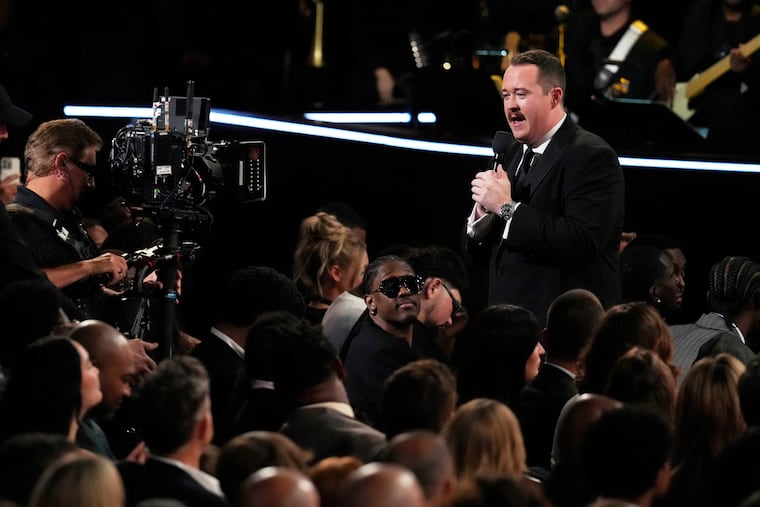
Last week, Stephen Colbert bid farewell to the Ed Sullivan Theatre, The Late Show and the airwaves after 11 years as the host of CBS’s late-night entertainment program.
The comedian’s exit was not exactly voluntary. CBS announced his cancellation last summer after owner Paramount secured a multibillion-dollar merger with movie studio Skydance under the leadership of billionaire David Ellison. Some speculated that the move was an attempt to appease President Donald Trump — a frequent Colbert target — to ensure regulatory approval of the merger. “I absolutely love that Colbert got fired,” Trump declared. According to CBS officials, however, the move was a purely financial decision.
To fill Colbert’s time slot, CBS is selling the time to media mogul Byron Allen to air his show Comics Unleashed. The format features a monologue by Allen and a panel of comedians. Allen, who at 18 made his television debut on The Tonight Show Starring Johnny Carson back in 1979, is promising something different from Colbert’s sharp jabs. “We don’t talk about politics, we don’t talk about anything that’s topical,” Allen told CNN’s Michael Smerconish ahead of the debut in his new time slot. The goal according to Allen? To emulate legendary television producer Norman Lear. “He used comedy to bring us together,” Allen claimed.
Yet, invoking Lear as a justification for avoiding political and topical comedy rewrites history and fundamentally misunderstands Lear’s vision of television comedy. Lear became the king of the genre in the 1970s with the success of iconic situation comedies including All in the Family, Sanford and Son, Maude, Good Times and The Jeffersons. His recipe for that success? The exact opposite of what Allen is prescribing today.
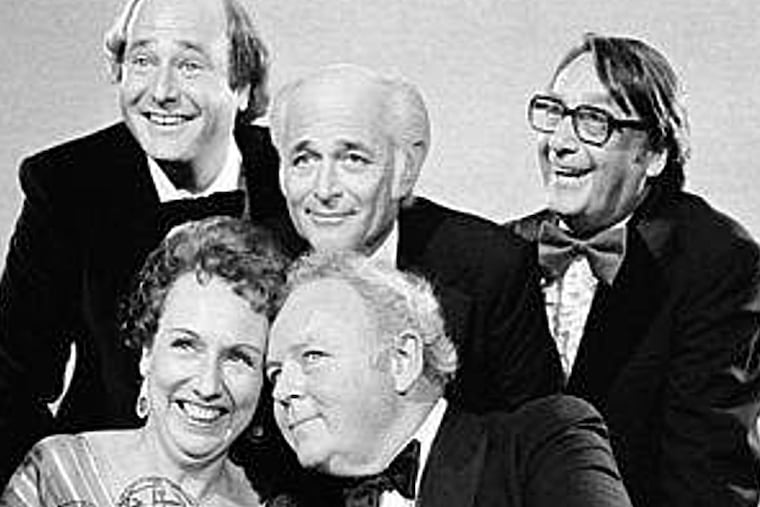
For much of the 1970s, the Lear-produced All in the Family was the No. 1 show on television. It was a domestic situation comedy telling the story of a reactionary bigot: Archie Bunker (Carroll O’Connor). The goal was to portray real life with all of its warts. Bunker got into heated arguments with his son-in-law Mike (Rob Reiner), daughter Gloria (Sally Struthers), wife Edith (Jean Stapleton) and various neighbors. These arguments weren’t trivial and they certainly weren’t apolitical — they were about civil rights, feminism, the war in Vietnam, President Richard Nixon, inflation, contraception, trans rights, antisemitism and everything else Americans were talking about at the moment.
These arguments reflected how Lear used his shows to charge headlong into the political fray. This was a bold gambit at a time when situation comedies tended to eschew controversy.
But it worked spectacularly. Audiences embraced the new shows with something to say. By the mid-1970s, Lear and his producing partner Bud Yorkin were behind half of the 10 most watched shows on the air. Among the other half, three were sitcoms following the same playbook of addressing topical and political issues. While exceptionally popular, however, the shows did not exactly bring Americans together.
Lear’s liberal point of view outraged conservatives who wrote fierce letters protesting his shows. Viewers expressed their disgust at the poor taste of the producers and condemned the show as anti-American, anti-establishment and anti-Nixon.
Additionally, activists and politicians around the country decried the depravity of Lear’s shows, describing his comedies as obscene and, in the words of Senator Bob Dole, “a threat to the fabric of our nation.” In the White House, Nixon ranted about the immorality of All in the Family and the power of television. Televangelist and conservative activist Jerry Falwell branded Lear “the number one enemy of the American family.” A conservative organization even awarded the producer their “shield of shame” for “assault[ing] the family’s basic sense of decency.”
Determined not to let political activists intimidate him, Lear framed the award and displayed it in his office.
After decades in the industry, he recognized that there was no such thing as nonpolitical comedy. Addressing criticism suggesting that situation comedies should avoid politics, Lear spoke about earlier shows in which the biggest problems were a ruined pot roast or a dented car. “I’d like to suggest that there was a great deal of social opinion in that,” Lear asserted. The message: “there was no urban crisis, there were no problems between the races, and Vietnam was a word made up by Walter Cronkite.” At least Lear’s shows were open about their politics.
In part thanks to the success experienced by Lear and his shows, the commitment to engaging with politics from the comedic perspective never went away. Over the ensuing decades, Saturday Night Live (which Lear hosted in 1976), South Park (which Lear wrote for in 2003) and The Daily Show (which Lear appeared on in 2014) thrived by challenging the powers that be.
And Lear himself never changed his philosophy of what made for good comedy. In 2017, he returned to the fray with a remake of One Day at a Time for Netflix. He remained eager to address the current moment. “I wanted to deal with the election cycle,” Lear remarked, though he conceded that the production schedule of a streaming show made it impossible. Still, he didn’t hesitate to be political or divisive. The show addressed themes such as racism, immigration, sexual violence, homosexuality and mental health. Even when cautioned by Netflix about a controversial joke, Lear insisted on keeping it. “Norman was like, ‘Let’s do it! Screw everyone!’” producer Gloria Calderón Kellett remembered.
Even in his last decade, Lear did not hesitate to speak his mind about politics or politicians. He called Trump “the middle finger of the American right hand” and admitted that his election in 2016 “scares the s—t out of me.” But that didn’t keep him from standing up for his values. When it was announced that Lear would receive a Kennedy Center Honor in 2017, he decided to boycott the White House reception with the president, which resulted in Trump skipping the ceremonies.
Lear passed away in 2023, at an age of 101, but his legacy continues to influence television comedy. Yet, Allen is wrong in claiming that Lear’s success offers a case for avoiding politics and offending no one. Instead, it’s comedians like Colbert, Jimmy Kimmel and Seth Meyers who are picking up the mantle from Lear by embedding their politics in their comedy. After all, what could be more in the Lear tradition than ending up on a president’s enemies list (in Lear’s case Nixon’s) and speaking truth to power?
To invoke Lear in defense of avoiding political and topical issues on the air distorts his legacy and threatens to take television comedy in a direction that Lear disdained.
Oscar Winberg is a postdoctoral fellow at the Turku Institute for Advanced Studies at the University of Turku in Finland and the author of Archie Bunker for President: How One Television Show Remade American Politics.
Made by History takes readers beyond the headlines with articles written and edited by professional historians. Opinions expressed do not necessarily reflect the views of The Inquirer.