The Flyers seized Game 1 from the Penguins. Here are three reasons for their success.
Using their speed and physicality, they kept the Pens on their heels all night. Owen Tippett delivered a big hit, Denver Barkey buzzed around the ice, and Travis Sanheim set the tone.
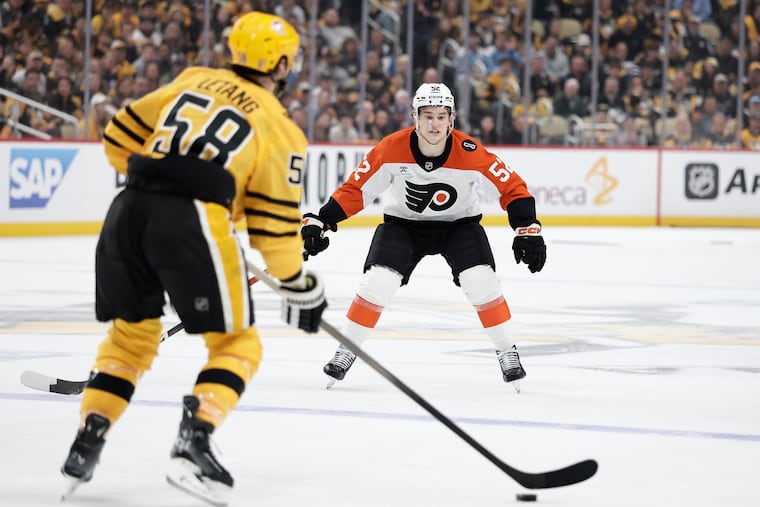
PITTSBURGH ― Travis Konecny has long spoken about the details of a hockey game.
Those small details and moments that maybe no one off the ice may notice really play a critical role in a win. The Flyers defeated the Pittsburgh Penguins on Saturday because of several big moments, like Porter Martone making a sleek, veteran-like curl in the offensive zone as his teammates were coming before ultimately scoring with a snipe.
But there were several details, some small and some more noticeable, that helped the Flyers take back home ice with a 3-2 win over the Pittsburgh Penguins in Game 1 of the Eastern Conference first round.
Kept them on their heels
Jamie Drysdale said there were nerves, but the leaders in the room gave the young Flyers a heads-up on what to expect in a postseason game. The youngsters took their words of wisdom and applied them with authority.
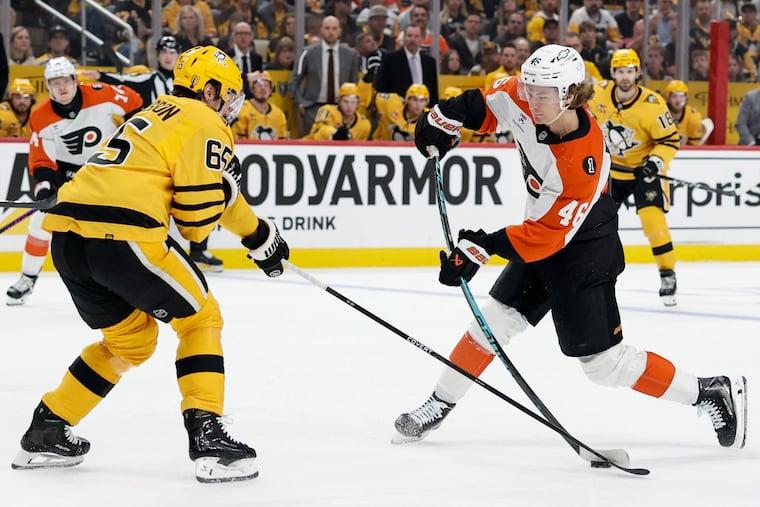
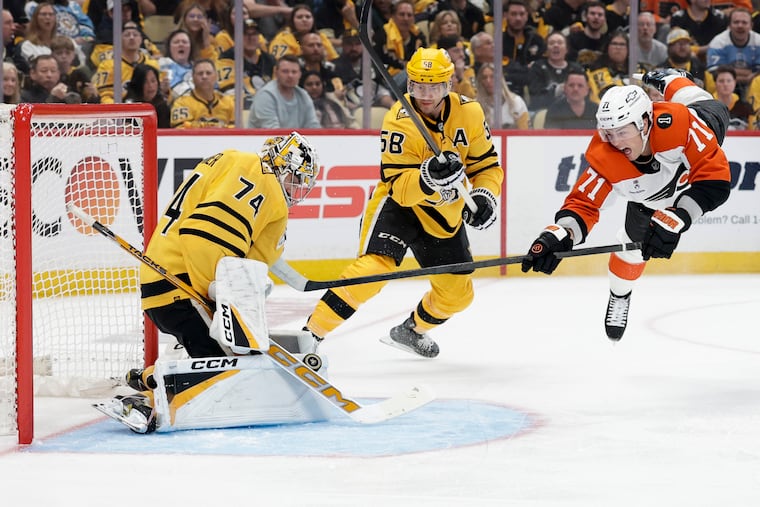
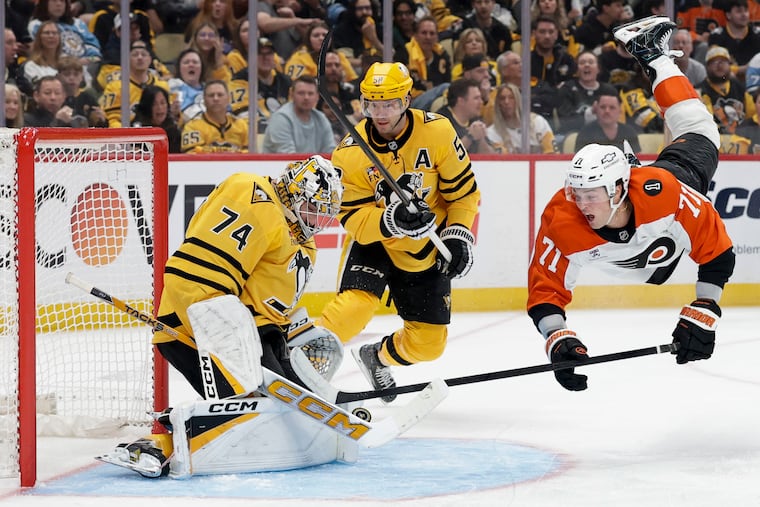
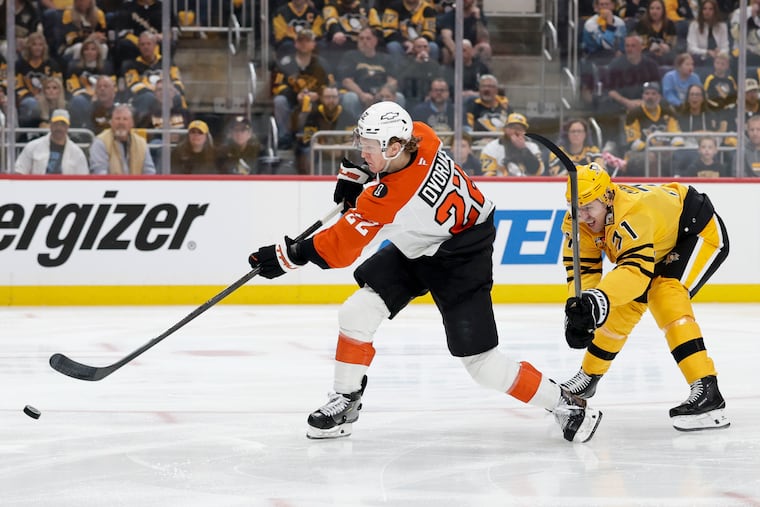
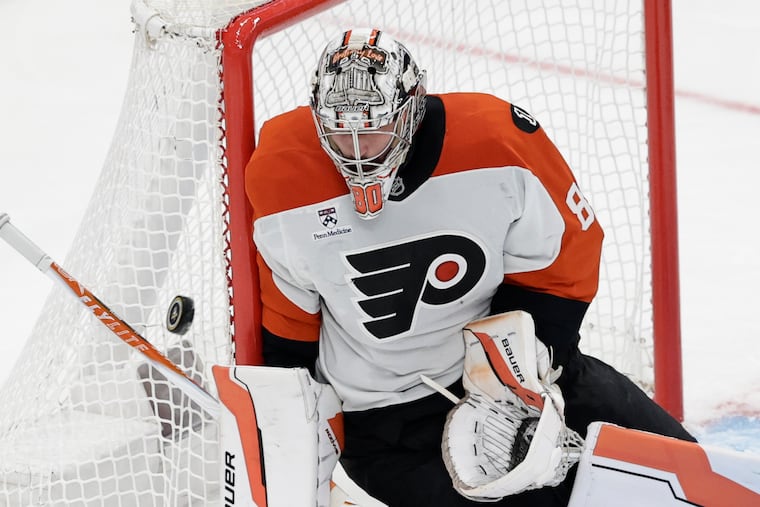
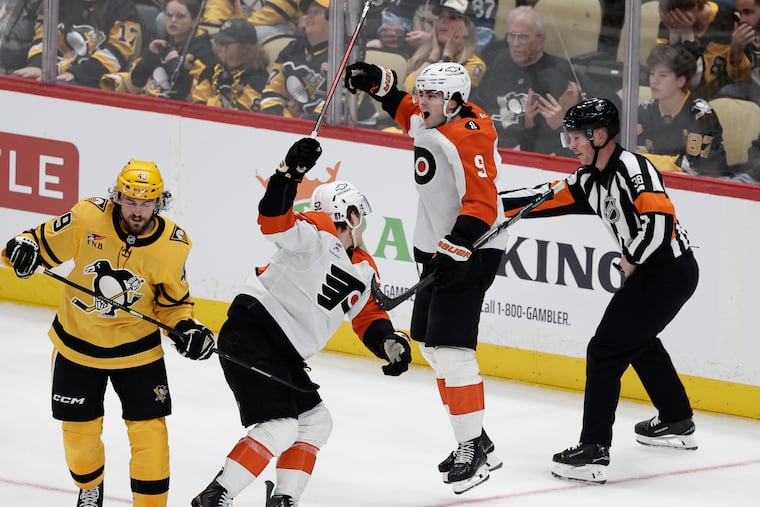
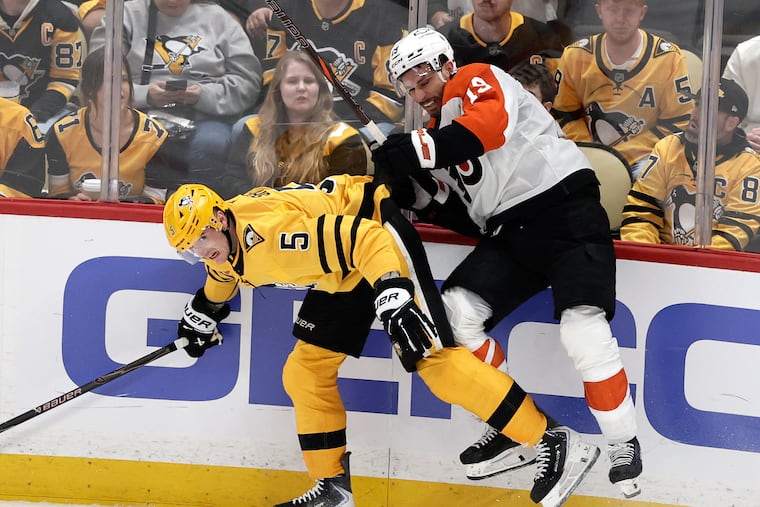
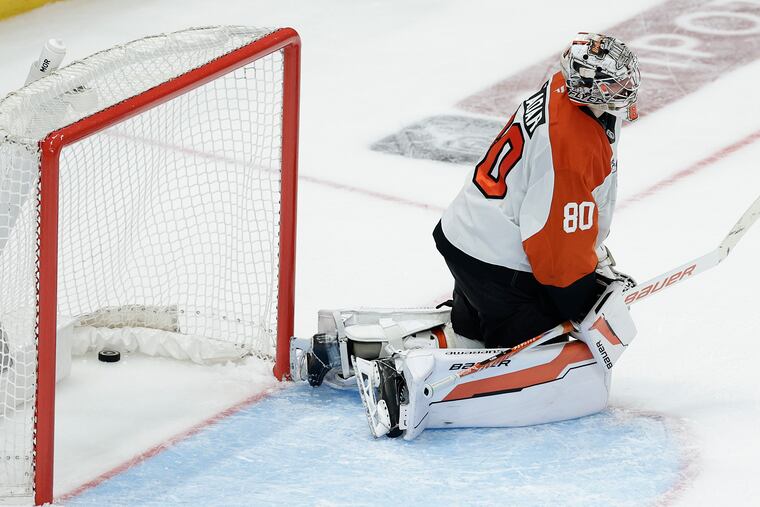
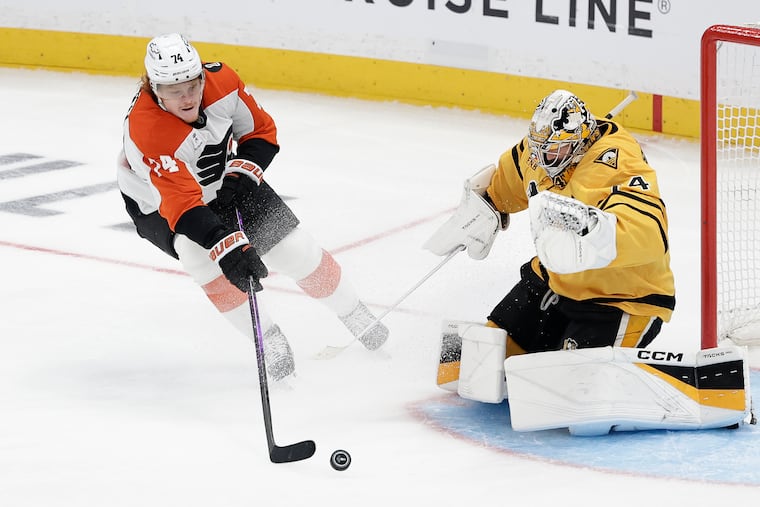
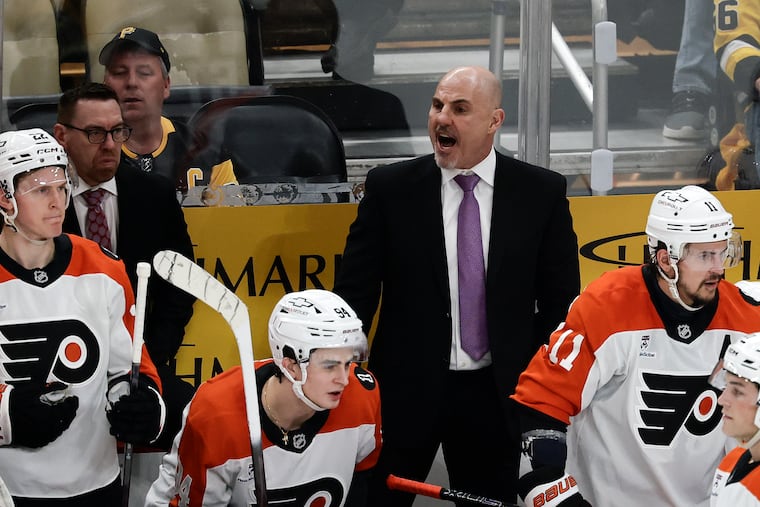
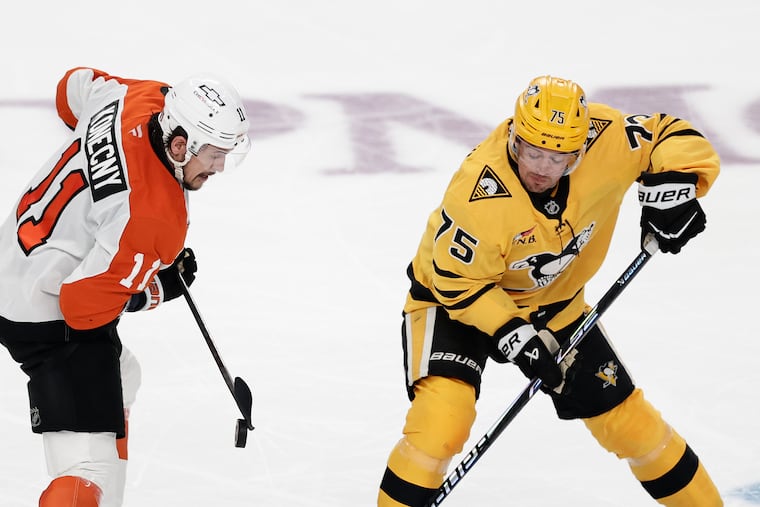
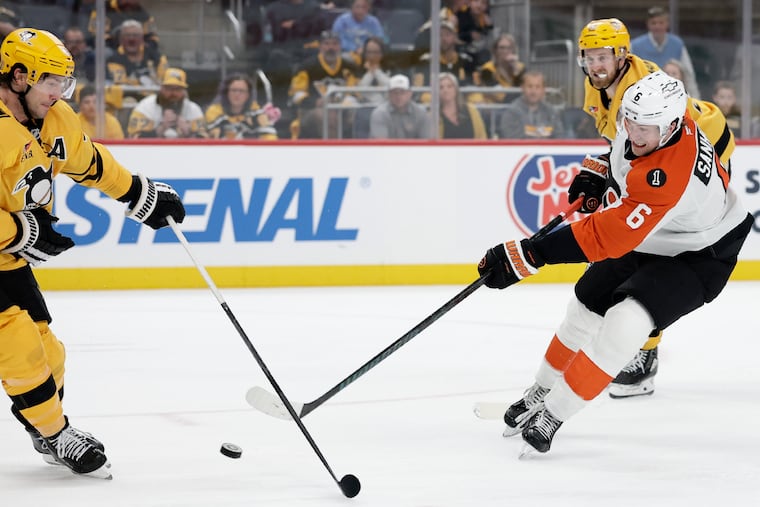
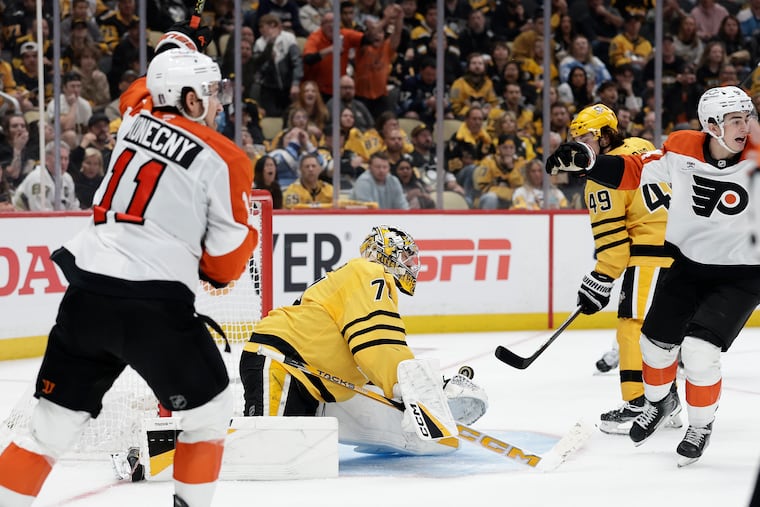
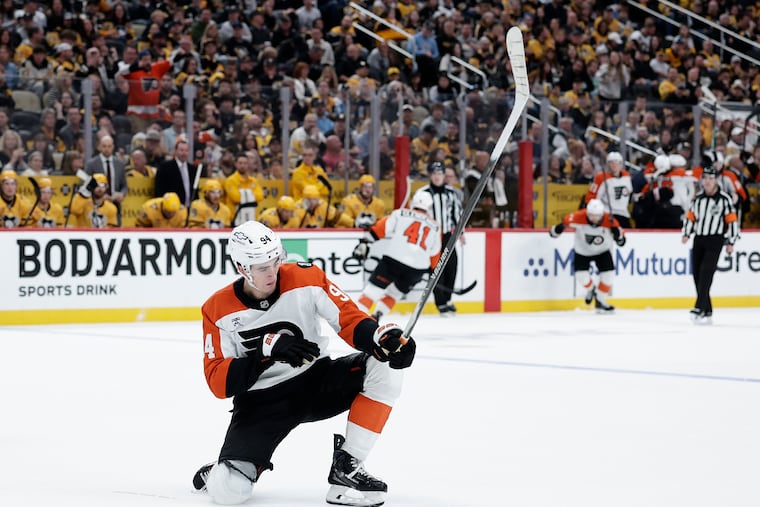
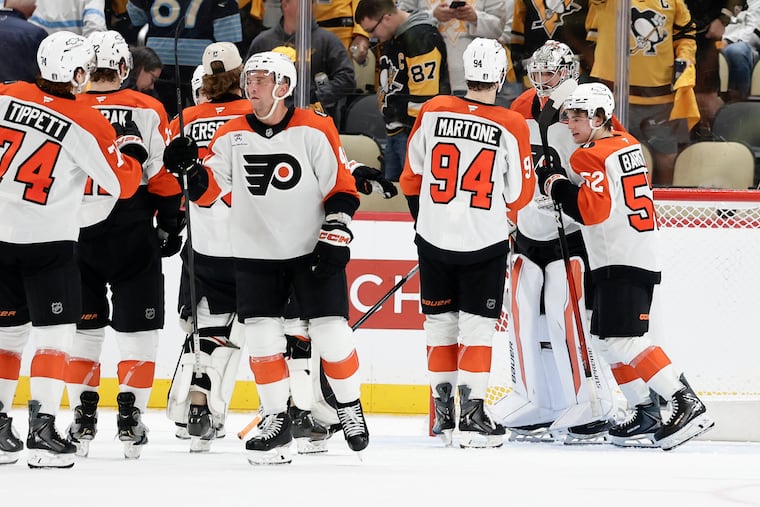
Using their speed and physicality — which are always amped up in the playoffs anyway — they kept the Penguins on their heels all night, forcing them to cave in at times as they were unsure of what the Flyers would bring.
It started early with Christian Dvorak getting inside, and off a pass from Martone, hitting the crossbar. Then Tyson Foerster picked the pocket of three-time Stanley Cup champion Kris Letang before almost scoring like Bobby Orr. Noah Cates created a turnover and broke out, putting a shot on goal, and Trevor Zegras sliced through the defense.
» READ MORE: Youthful Flyers show the moment isn’t too big, grab an impressive series-opening win in Pittsburgh
There were also the unexpected hits. Nick Seeler, who also got under the skin of Evgeni Malkin as the veteran forward tried to sell a cross-check from the defenseman to no avail, moved the puck deep into the Penguins’ zone and then bowled over Egor Chinakov. Sean Couturier also leveled Chinakov, one of his game-leading seven hits, before the captain almost scored on Stuart Skinner after beating defenseman Parker Wotherspoon down the boards.
Owen Tippett did what he does best, bringing the physicality and the speed as a power forward. Across more than 16 minutes of action, he had seven shot attempts, six shots, and was marked down for two hits, with one on Connor Dewar after he moved the puck that was not counted.
Tippett is someone who can make defenses think twice about stepping up or playing a close-gap game — maybe that played a part in why the Penguins gave Martone so much room for his game-winner — as he used his speed and a 360-degree move to get around Erik Karlsson for a shot on goal.
But it was Tippett’s hit on Blake Lizotte in the corner — making sure he was the one to get the puck and keeping the play alive in the offensive zone — that eventually led to Drysdale opening the scoring.
“I think especially versus a team like that, not a lot of space out there, you’ve got to use your body to make plays,” Zegras said of Tippett. “And he’s a big boy; he uses that frame very well, so it’s great play. I thought we had it going pretty good tonight.”
Denver Barkey’s motor
When Denver Barkey joined the team in late December, with Dvorak needing a day off as he was dealing with an injury, the thought was he’d come up for a game or two, get a taste of the NHL, and then head back to Lehigh Valley of the American Hockey League.
Forty-three regular-season games later, Barkey made an impact in Game 1.
“His feet were awesome,” Drysdale said. “He was buzzing all over the ice, making plays, driving the offense, and [it] didn’t look like he was too nervous out there at all, either.”
Joked his roommate Zegras, “I’ve been giving him some extra food at the house. Maybe that’s why he was flying tonight.”
Barkey was flying across his 11 minutes, 26 seconds of ice time. He almost set up Matvei Michkov for a goal late in the first period, but they just missed connecting. The 5-foot-10 winger played keep-away from 6-foot-8 forward Elmer Söderblom in the corner of the Penguins’ offensive zone late in the first period, later saying: “I’m not shying away from any guys, no matter how big they are.”
And he came off the bench, passed the puck to Zegras, and went right to the net, screening Skinner on Drysdale’s goal.
“I think that’s the big thing with playoff hockey, it’s not going to be tic-tac-toe goals,” Barkey said. “You’ve got to get to the front of the net and sometimes they’re just there, you’ve got to whack them; they’re greasy goals, we like to call them. So trying to just get myself to those situations where I can screen the goalie and help Drys get a shot through, or if there’s a rebound sitting there, be able to bang it in, too.”

Flyers win series 4-2
Game 1: Flyers 3, Penguins 2 | Sielski: Kids stand tall
Game 2: Flyers 3, Penguins 0 | Sielski: Stealing Pens' will
Game 3: Flyers 5, Penguins 2 | Sielski: Shades of glory days
Game 4: Penguins 4, Flyers 2 | Sielski: New test awaits
Game 5: Penguins 3, Flyers 2 | Hayes: Now what?
Game 6: Flyers 1, Penguins 0 (OT) | Sielski: Exceeding expectations
Sanheim set the tone
It’s funny — or maybe not funny — to think that almost three years ago, Travis Sanheim was almost dealt away. Long considered a top defenseman, as noted by Hockey Canada selecting him for the 4 Nations Face-Off and the Olympics, he stepped onto the game’s biggest stage with authority.
Skating on the top pair with Rasmus Ristolainen, who had two assists in his first career playoff appearance after 820 regular-season games, Sanheim had four shot attempts, three hits, and one takeaway while playing more than 23 minutes.
» READ MORE: The Flyers set the tone for a Game 1 win with their physicality, and their veterans led the way
His one shot on goal found the back of the net after he masterfully, from almost a complete standstill inside the blue line, cut through two Penguins before beating Skinner.
“Stud” is how Drysdale described Sanheim.
But it wasn’t just the goal that gave the Flyers a 2-1 lead in the third period. Sanheim closed out Lizotte in the first period as the Penguins were trying to build offense. He smothered a pass attempt off the rush early in the second, with none other than Flyers killer Sidney Crosby loading up to get the pass wide open in the middle. And he also got under the skin of the Penguins’ captain as they went at it toward the end of the game.
“I think I understand the level that’s needed to play in the playoffs,” Sanheim said, “and understand the challenge ahead and my job and playing against top guys and just trying to play them hard as best that I can and limit their time and space.”