Flyers couldn’t contain Hurricanes’ early surge, but an increased third-period pace gives optimism for Game 2
The Flyers put 10 shots on goal in the third period, one more than their total from the first two periods combined in Game 1. They hope to carry that momentum into Game 2 Monday night.
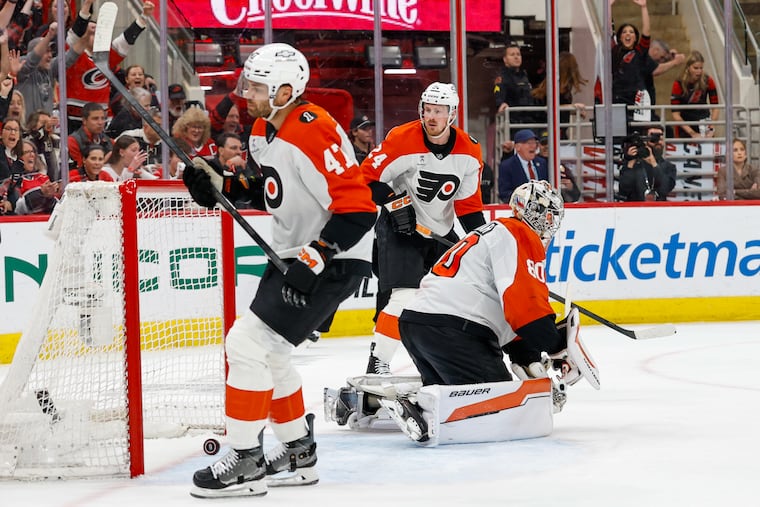
RALEIGH, N.C. ― The Flyers knew a storm front was coming, but they were unable to batten down the hatches and respond.
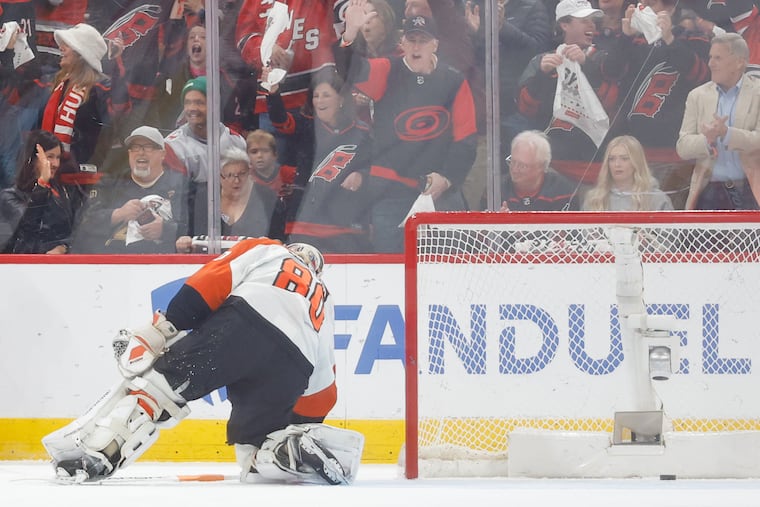
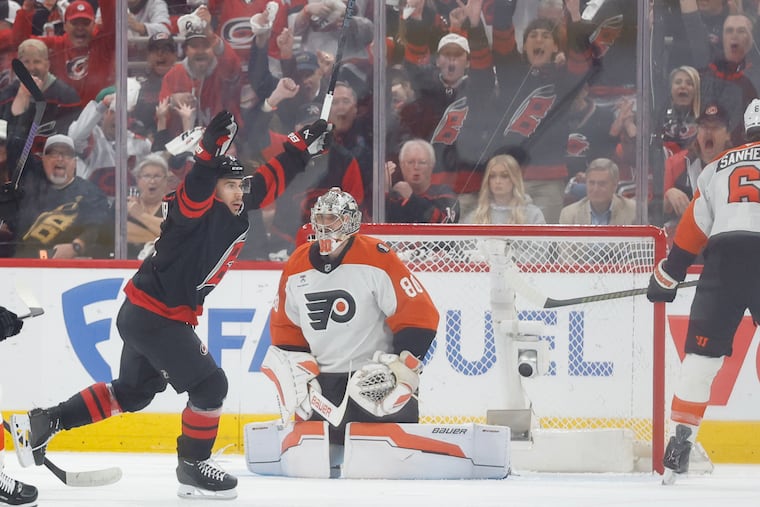
Facing a Carolina Hurricanes squad built for a Stanley Cup run, the Flyers got run over from the moment the puck dropped and faced a two-goal hole in the first 10 minutes before the home team eventually won 3-0.
In the regular season, the Flyers were shut out three times; however, twice they bounced back with victories — the lone time they didn’t rebound was after a 4-0 loss to the New York Islanders during their January swoon. It ranked as the fourth-fewest shutouts in the NHL.
» READ MORE: The Flyers think their mid-game adjustments vs. the Hurricanes can help ‘slow them down’ in Game 2
But this is the postseason, and in a best-of-seven series, every second until the final buzzer, when a team is eliminated, counts.
Here are two reasons why the uptick in the third period by the Flyers is a good thing heading into Game 2.
It plants a seed
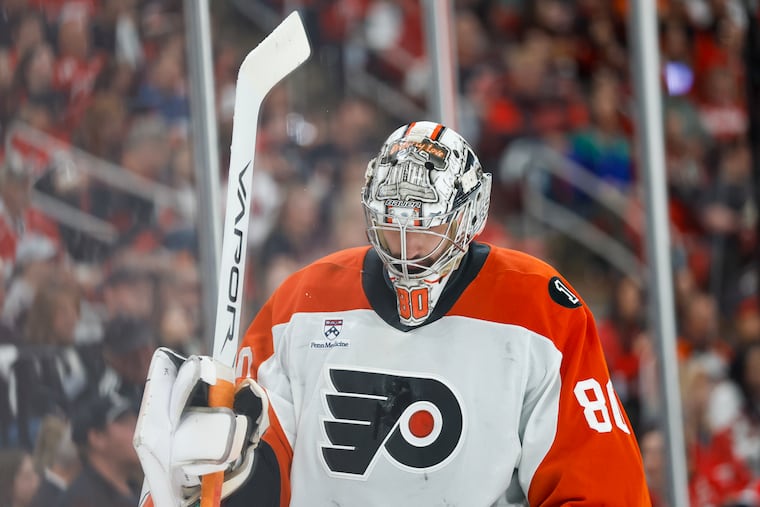
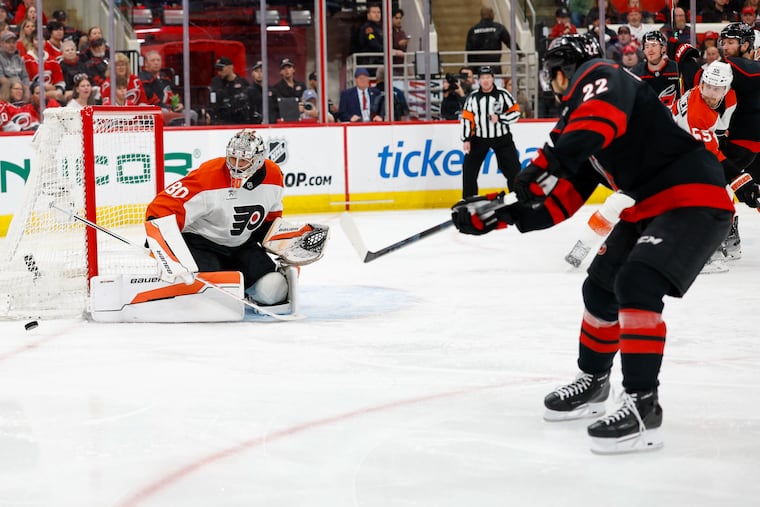
The good news is that although there are several not-so-easily fixable things — like line combinations and personnel decisions — there are a few correctable ones. Among them were the timing to quell the icings and offsides, the misread by Dan Vladař on Jackson Blake’s goal, getting more to the net in the offensive zone, and the turnovers that led to the Hurricanes’ first and third goals.
The turnovers were in the Flyers’ end, which also did not help the quick counterstrikes. Matvei Michkov had a blind pass that ended up in the net on a Logan Stankoven tip-in, and then Noah Juulsen tried to squeeze a pass through, but the puck hit Andrei Svechnikov’s skate and led to another Stankoven goal.
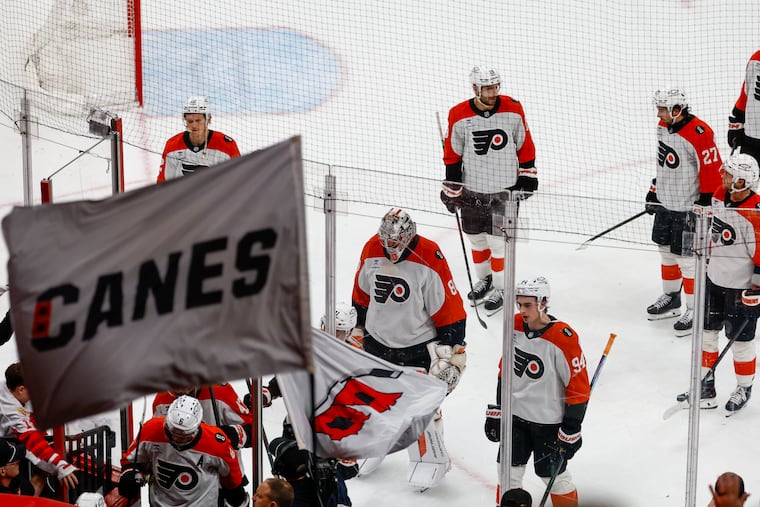
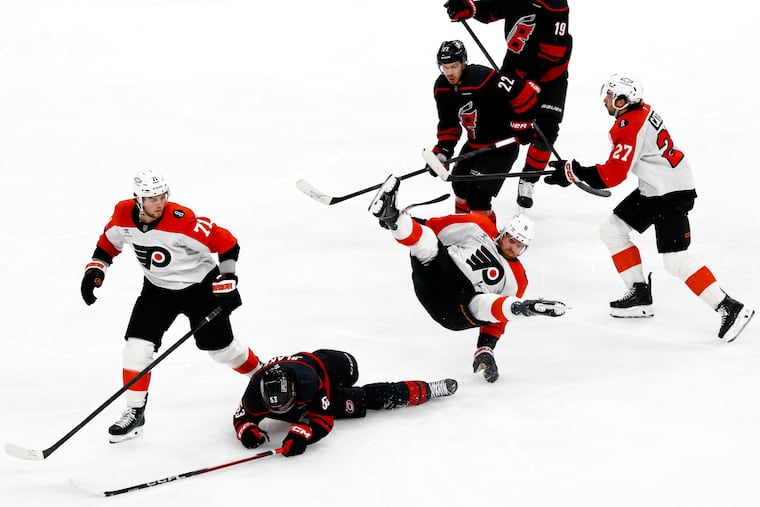
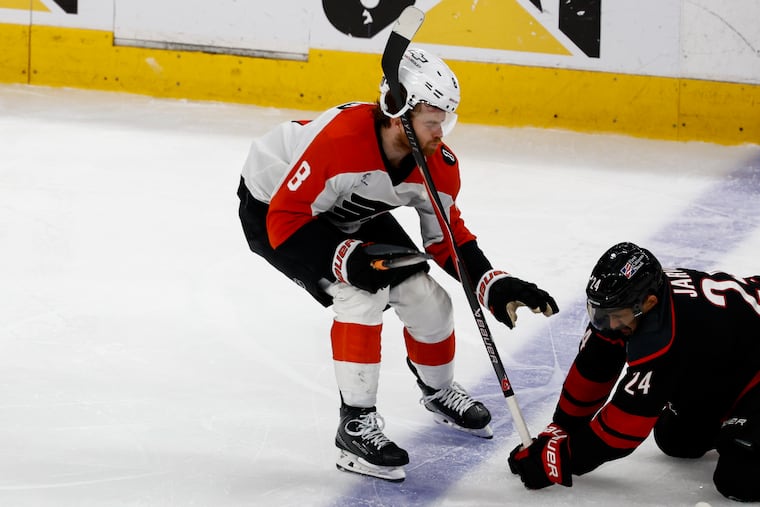
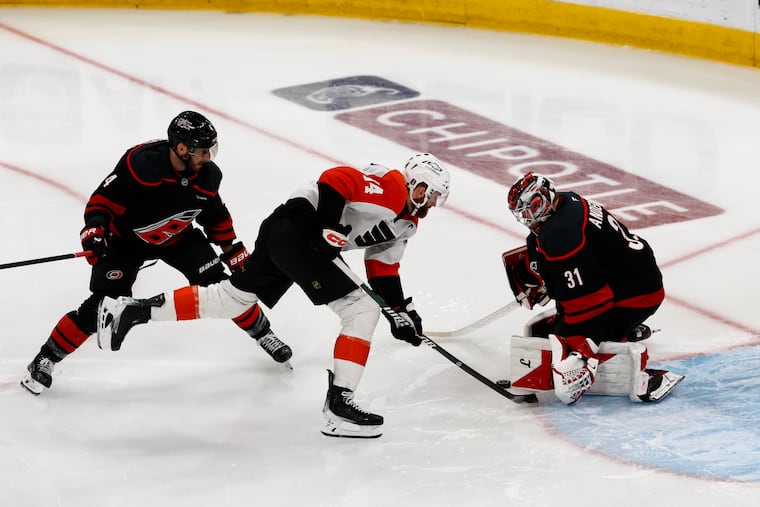
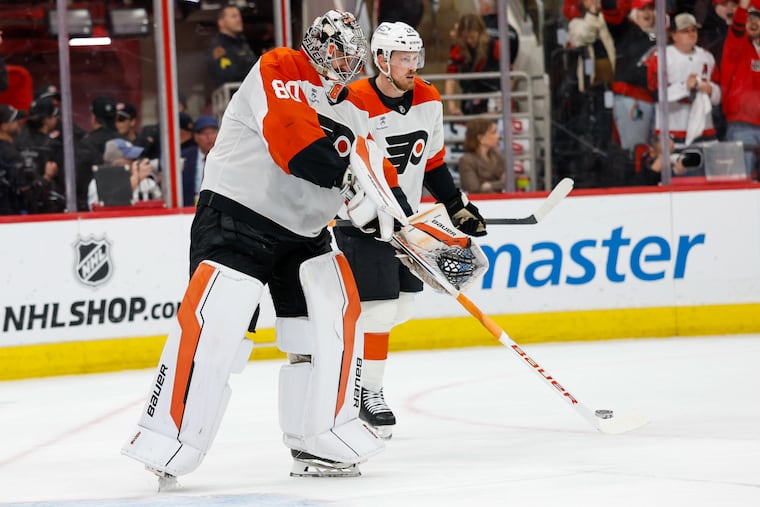
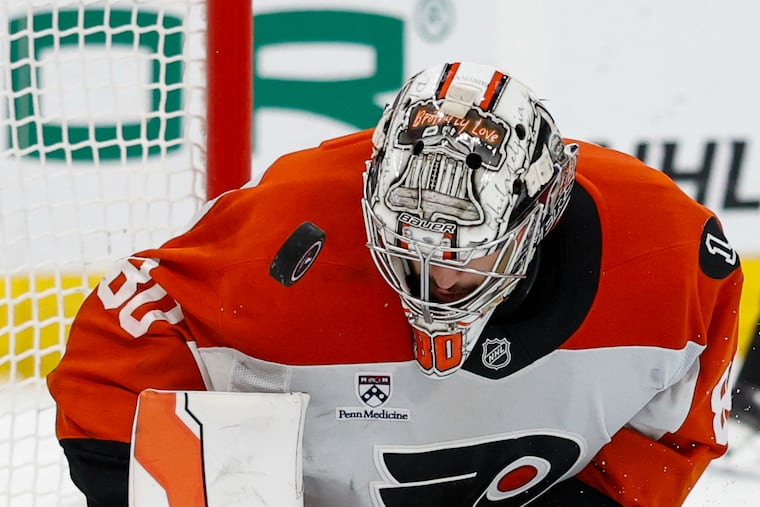
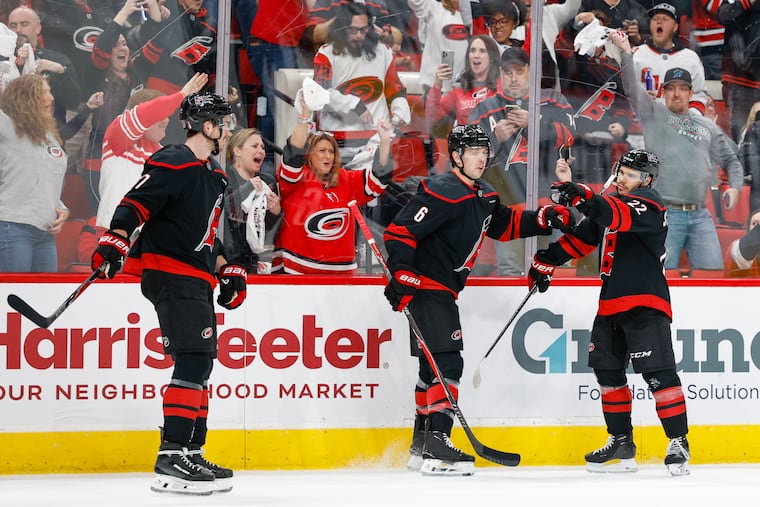
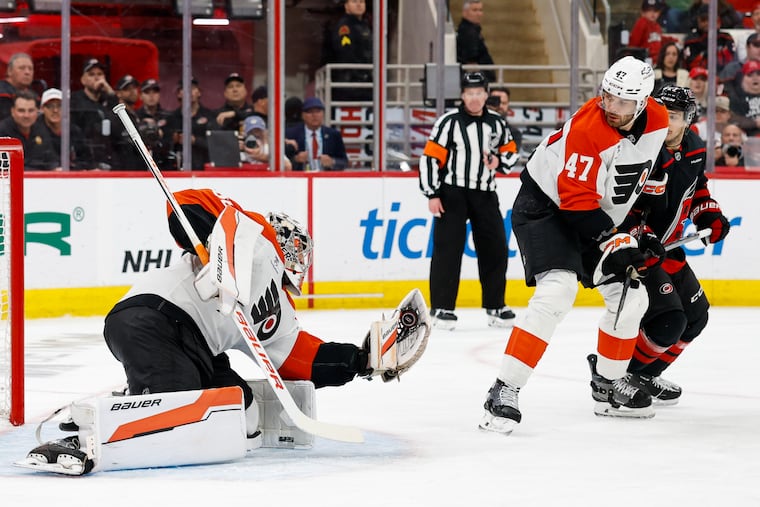
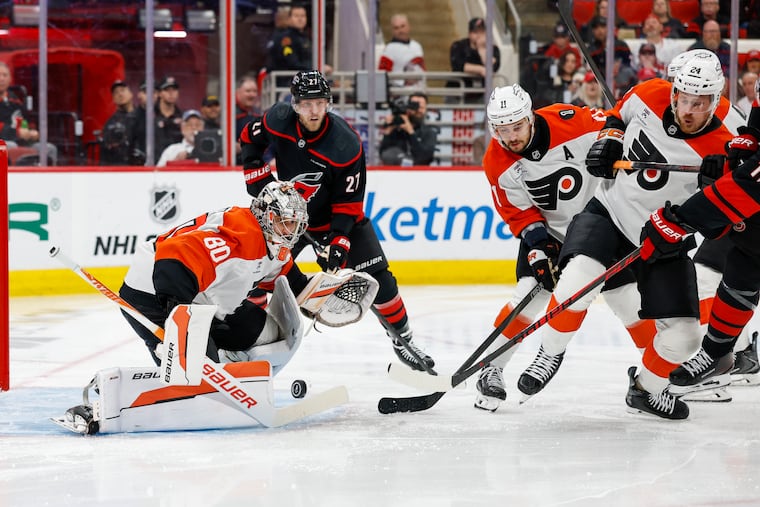
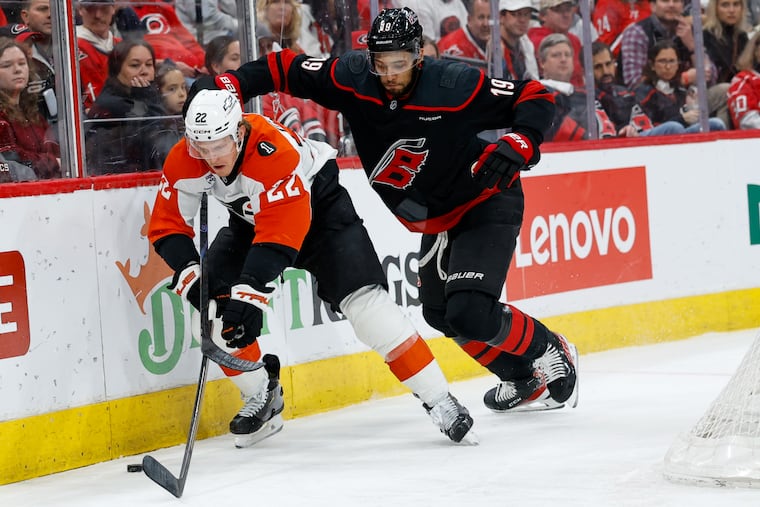
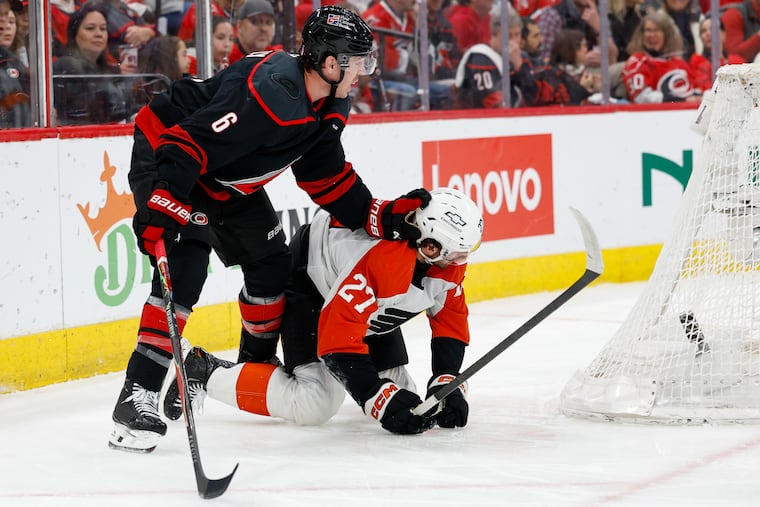
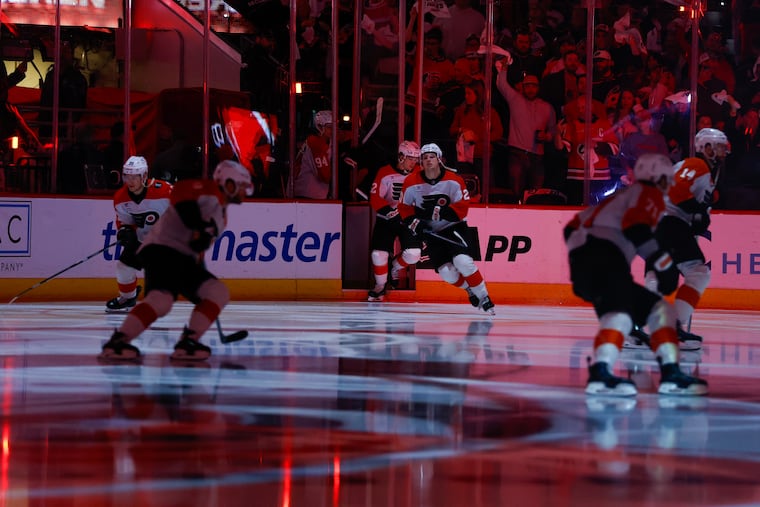
“We knew what to expect and stuff, but you get on the ice, and they’re flying, playing the way they play, it’s tough,” Noah Cates said. “We talked about it, we’ve got to be ready for the first five … but, it’s tough to give up a goal and for them to get a ton of momentum.”
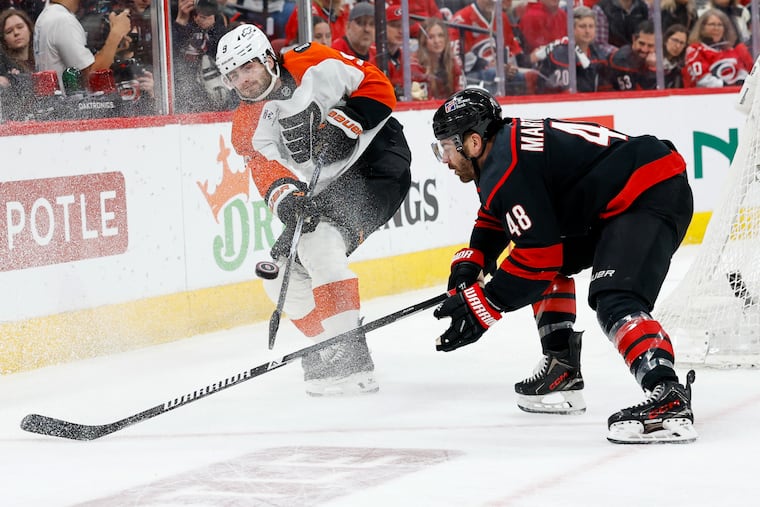
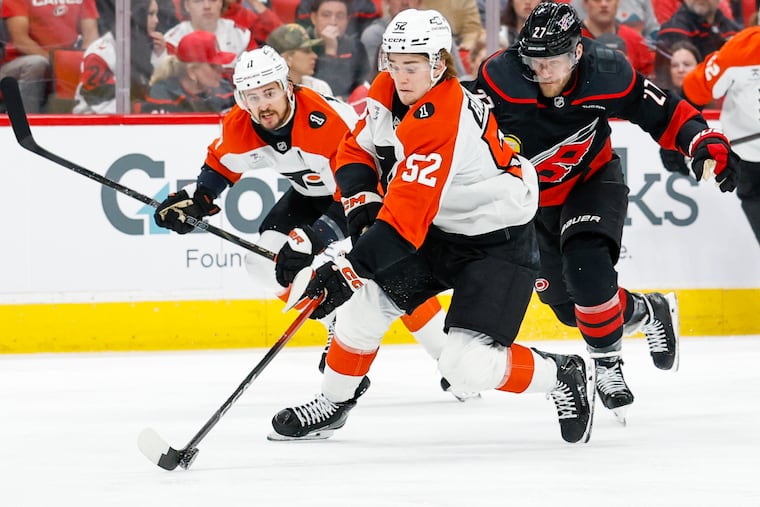
It felt like the Flyers needed some time to adjust to a team that plays much quicker than their opening round opponent, the Pittsburgh Penguins. So as the game wore on, especially in the third period, the Flyers were able to get through the neutral zone and into the offensive end a little bit easier.
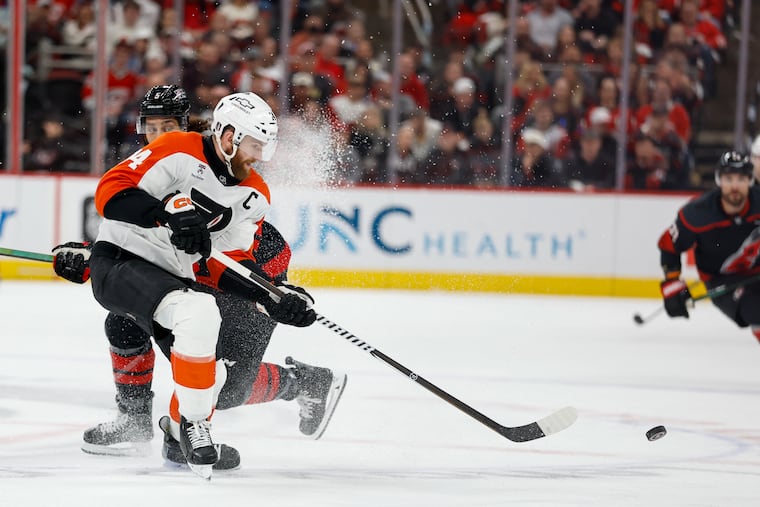
Over the last five minutes, partially thanks to a power play with 4 minutes, 48 seconds left, Philly put nine shot attempts and five shots on goal to just one for the Hurricanes, a shot by Bellmawr, N.J.,native Eric Robinson. The Flyers were able to not just counteract some of the Hurricanes’ speed game — “They like to fly around, and they don’t love stopping,” forward Travis Konecny said — but contain it more in the final 20 minutes.
» READ MORE: The Flyers need to find an answer for Carolina’s Hall-Stankoven-Blake line and fast
Coach Rick Tocchet has been praised for his in-game adjustments from when he served as an assistant coach under Jon Cooper for Canada at the 4 Nations Face-Off tournament last year and the Olympics this season. Those adjustments should give the Hurricanes some pause.
“It’s good all the way to the last shift,” Konecny said of playing all the way to the end. “It’s a long series. You know you’re going to be battling against these guys. So anytime you can just maybe get a bump on a guy, get an extra shot on the goalie, or whatever it is, just keep playing. Give him something to think about for the next game.”
It gives them confidence
It can be overwhelming when a team comes out as the Hurricanes did in Game 1. And, for the most part, the Flyers weathered the storm in their own end. Although captain Sean Couturier thought the Hurricanes solely focused on shutting them down in the third period, the Flyers’ ability to keep Carolina off the board, while holding them to 10 shot attempts, including two on goal, should give them a boost in confidence that, if not for two giveaways, they were right there defensively.
And while it won’t be easy, confidence can go a long way, especially knowing they can adjust at the other end, too.
“I just feel like they were dictating stuff, we weren’t getting to our game for the first period, maybe even 30 minutes of the game,” Cates said. “I feel like maybe it’s good we got a taste of [our game] kind of toward the end there, and we can get to it a little bit quicker in Game 2.”
The Flyers put 10 shots on goal in the third period, one more than their total from the first two periods combined. They were able to gain the blue line with more ease and got to the front of the net to screen Carolina goalie Frederik Andersen. It helps to plant the seed that they have more in the tank and respond better in Game 2 on Monday (7 p.m., ESPN).
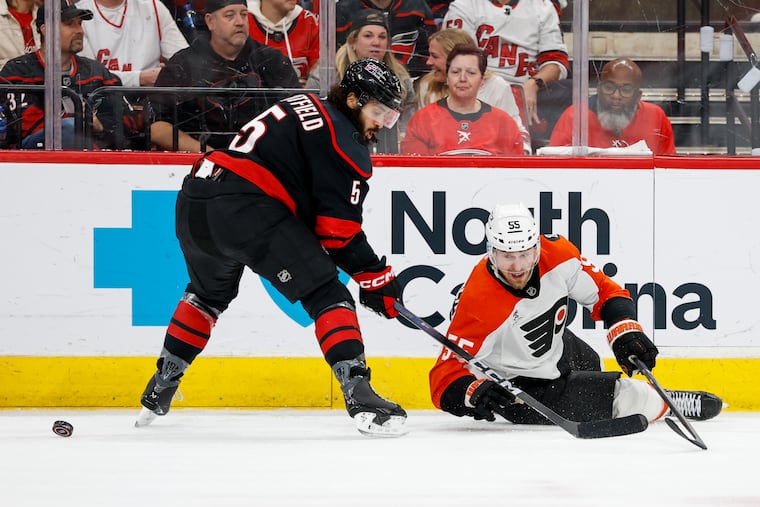
Some of the zone entries that worked came from veterans. Less than four minutes into the frame, Konecny got into the zone and made a stutter step around Jalen Chatfield before sneaking slightly past him for a shot that went wide. He also entered the zone around the 13-minute mark by pushing the Canes back before dropping it to center Christian Dvorak with Trevor Zegras, who was shifted to the wing, right there too.
Couturier, who once again played a smart game and had probably one of the Flyers’ best chances early in the third period, made a solid zone entry approximately halfway through. He made a buttonhook and fed Nick Seeler, who had his shot blocked.
» READ MORE: The Flyers weren’t just dominated in Game 1. Carolina wouldn’t fall for their baiting, and that’s a bad sign.
Defenseman Jamie Drysdale sent a long stretch pass to Denver Barkey, who was shifted to center — something Tocchet said he liked postgame — breaking the Carolina forecheck during four-on-four action, and later in the period, his partner Cam York powered through the blue line off a smart pass by Konecny.
While they need to be better puck possessors in the offensive zone and be stronger on the walls while driving more to the net, getting through the Carolina defense is the first big step. They certainly missed the speed and skill of Owen Tippett, who puts defenses on their heels with his ability to turn on the jets at a moment’s notice. But his status is day-to-day, and others will need to step up to show why they were one of the better rush teams after the Olympic break.
“We didn’t come out with our best game,” Konecny said. “The beauty of it is you’ve got plenty more. So just flush it, regroup, and we know what to expect now.”