Three things the Flyers need to do to give themselves a chance to stay alive in Game 4
Scoring on the power play is obvious, but these other two things are just as important to the Flyers' success against Carolina.

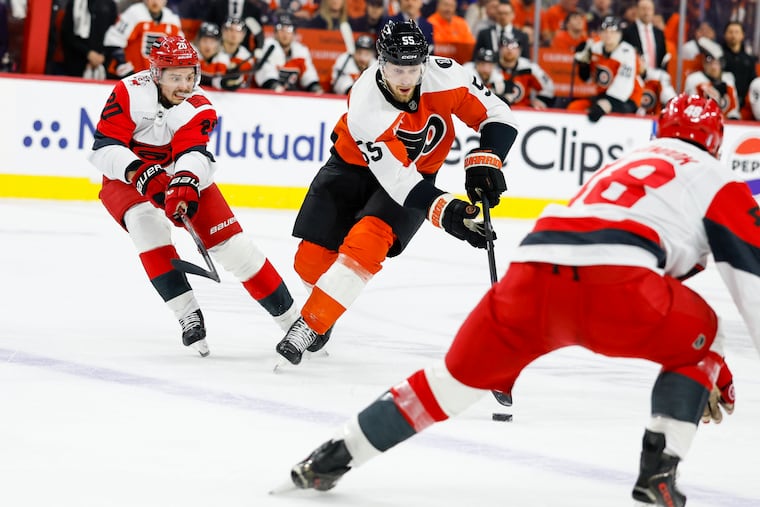
Entering the season, not many pundits would have pegged the Flyers as one of the final eight teams left standing come May.
It’s been a surprising run, but it feels like midnight is fast approaching with the Flyers now on the brink of elimination.
Here are three things the Flyers must do on Saturday at Xfinity Mobile Arena (6 p.m., TNT, truTV, HBO Max) to stay alive:
» READ MORE: Flyers’ playoff hopes on life support after 4-1 loss in penalty-filled Game 3
1. Play Porter Martone and Alex Bump more
After a rough start to the series against a speedier, more aggressive Carolina team, Porter Martone has upped his game of late, with Thursday night being his best performance so far.
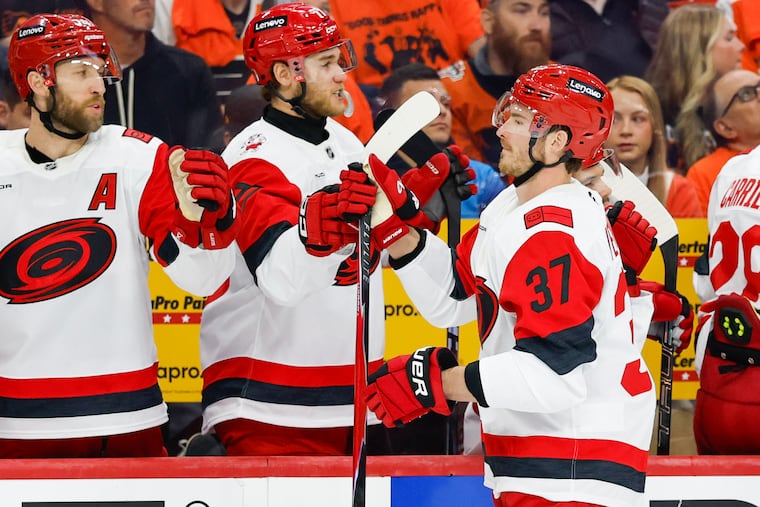
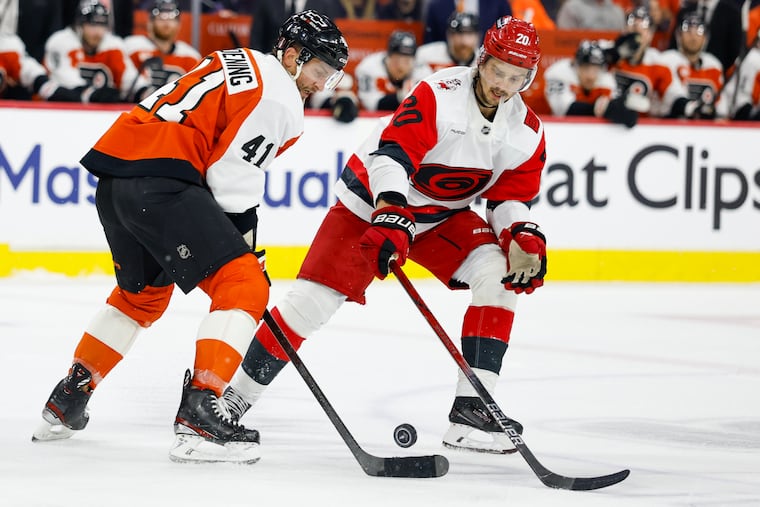
The 19-year-old slotted in on the right wing with 25-year-old center Trevor Zegras and 22-year-old Alex Bump on the left. The two rookie wingers inarguably were the Flyers’ best players in Game 3.
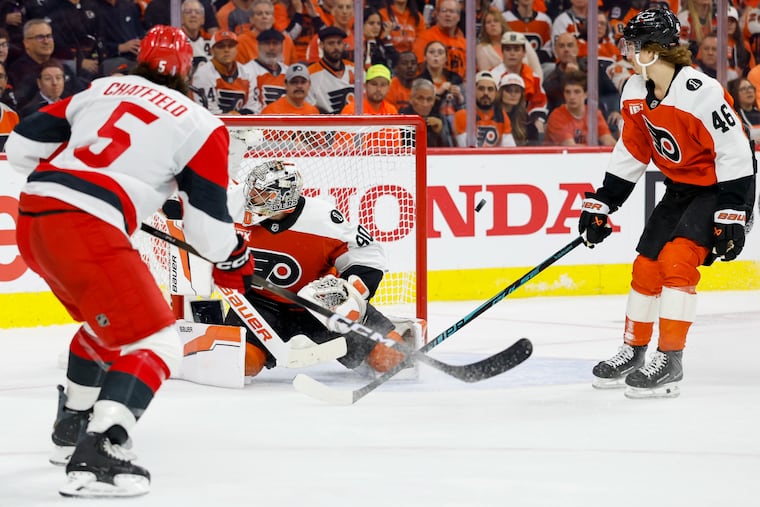
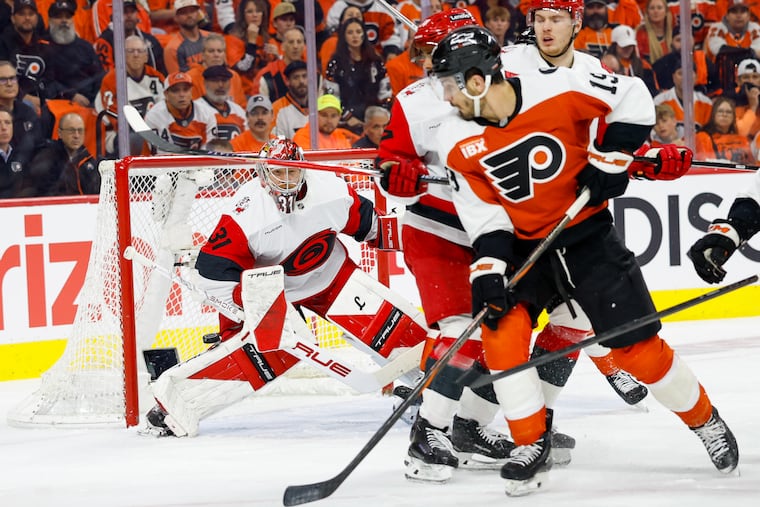
Martone and Bump combined for several of the Flyers’ top scoring chances and were on the ice for the lone goal by the Flyers in the 4-1 loss. On that goal, Martone — let’s stress here that he’s a teenager in his 18th NHL game — was masterful. After receiving a pass from Zegras inside the blue line on the right side, Martone paused to draw in Logan Stankoven before quickly cutting to the middle of the ice. As the play progressed during a delayed penalty, Martone got it back and put a shot on goal that hit Emil Andrae in front and bounced right to Zegras to score the tying goal from a tight angle.
“He’s a smart young player,” Sean Couturier said postgame “He’s going to be a big part of our team in the future, and he already is.”
But while that was an eye-opening play, it wasn’t the only one Martone had. He had the Flyers’ best chance in the first period when he received a pass from Zegras and streaked through the defense, ultimately hitting the post as he tried to pick his spot in the top corner past goalie Frederik Andersen’s glove. Later in the period, he toe-dragged around former Flyers defenseman Sean Walker and set up Bump with a cross-crease pass as they got behind the defense
And then in the second, Martone picked Nikolaj Ehlers’ pocket with a stick check just inside the blue line and fed Bump all alone, but the winger ended up hitting the side of the net.
Martone played more than 15 minutes and tied Travis Konecny and Bump for the team lead in shot attempts (four). The trio, and a few other players, led the team in shots on goal (two), and Martone tied Rasmus Ristolainen for the team lead in hits with five. Bump played just under 12 minutes, and each player got power-play time too.
But it was what they did at five-on-five — sometimes with Zegras, later with Christian Dvorak — that stood out against the Hurricanes’ hottest line of Stankoven, Taylor Hall, and Jackson Blake, ending their reign of terror for at least one night. They matched up closely in shot attempts and scoring chances, but the Flyers had the advantage in high-danger chances.
“I thought he played really well,” coach Rick Tocchet said of Martone. “His last two games have been really good, a very mature game, both games. This is huge for him, being in these situations, because next year, these games will be slower for him, in a sense, because it’s a high-paced game.”
2. Be disciplined
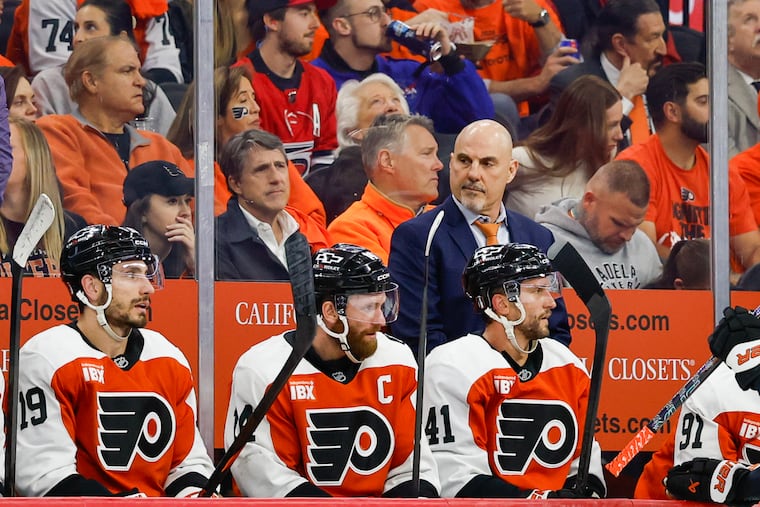
Asked about his points of emphasis on Friday as the team held an optional practice, Tocchet immediately said discipline.
“I get you’re holding your ground, and you want to defend teammates. I’m all about that,” the bench boss said. “There’s just times where you just got to take a punch in the mouth.”
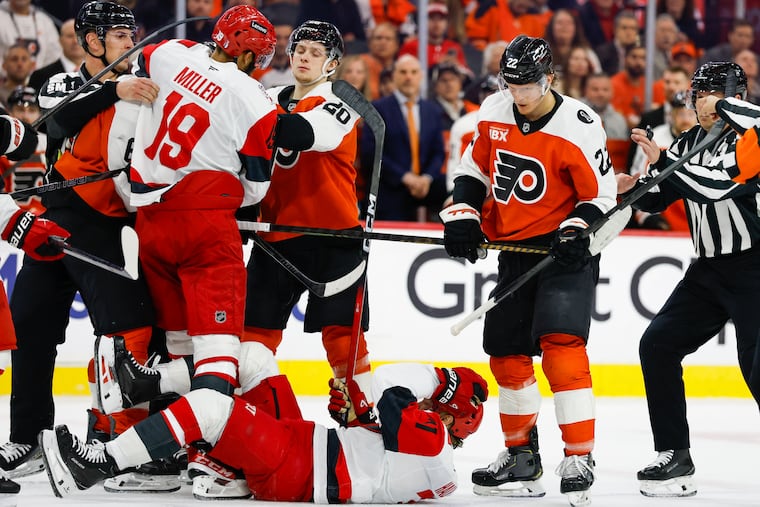
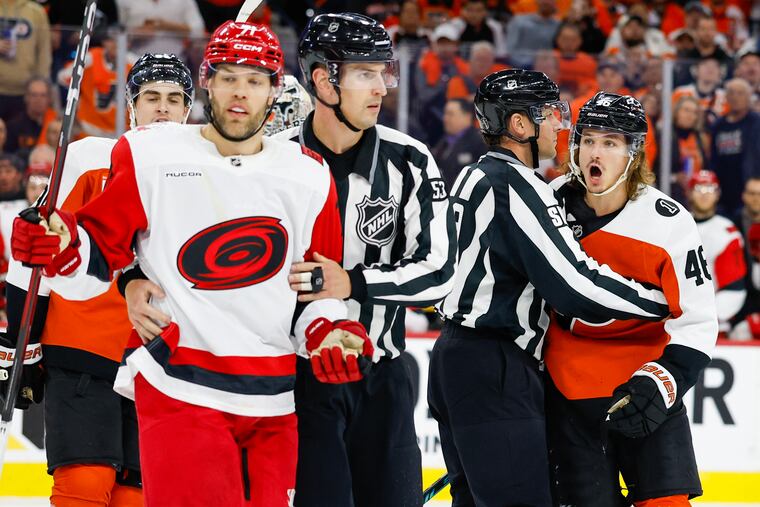
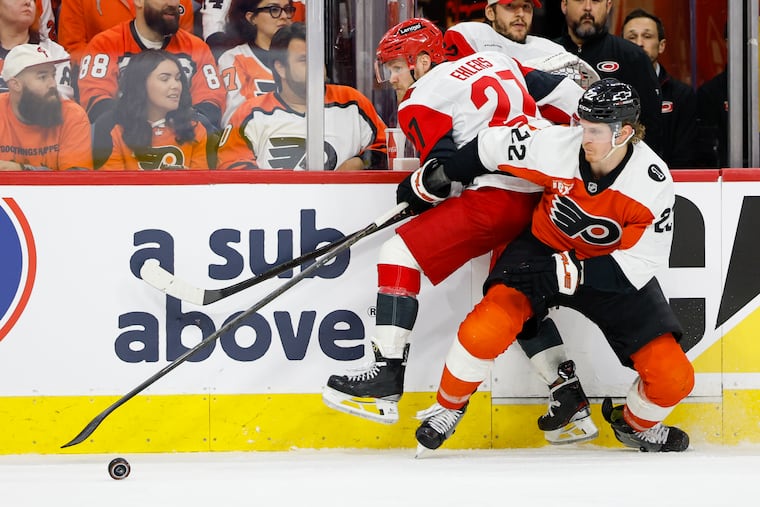
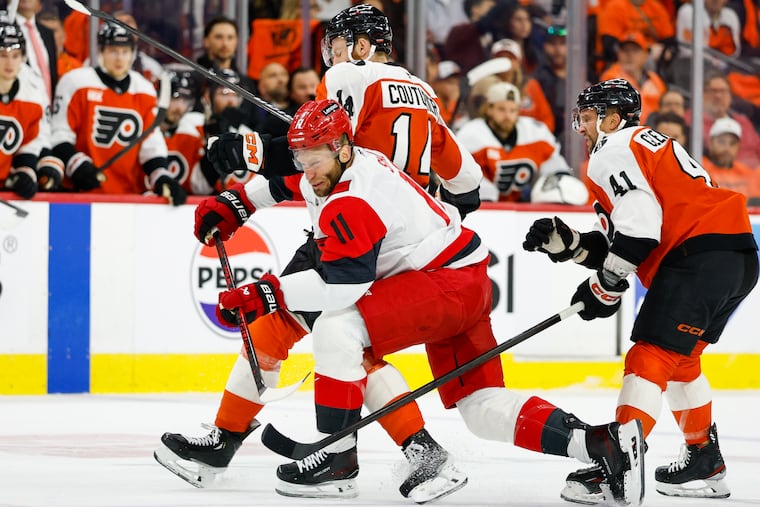
The Flyers have played the most playoff games out of anyone, with nine, and lead the NHL in penalty minutes (184) and minors (61). You’d think it’s because they’ve played nine games that they lead; you’d be wrong. They rank No. 2 in penalty minutes per game (20 minutes, 26 seconds), with only the Boston Bruins above them by four seconds, and both teams are well above No. 3, the Hurricanes (17:51).
Against Carolina, the Flyers have spent more than 31 minutes shorthanded, with the Hurricanes at more than 27. In Game 1, each team had four power-play chances. In Game 2, it was seven for the Flyers and six for Carolina. On Thursday, it went off the rails.
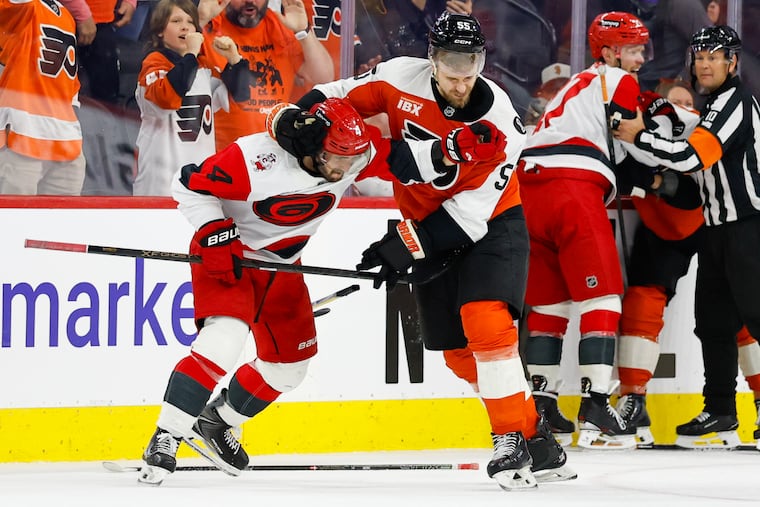
“We had a great first, and then it was all power play, penalty kills,” a frustrated Tocchet said postgame. “We took nine penalties. Five-on-five, we were good; I thought we were the better team, and then the power plays, the penalties, that’s two games in a row, a penalty fest. We’re not equipped for that.”
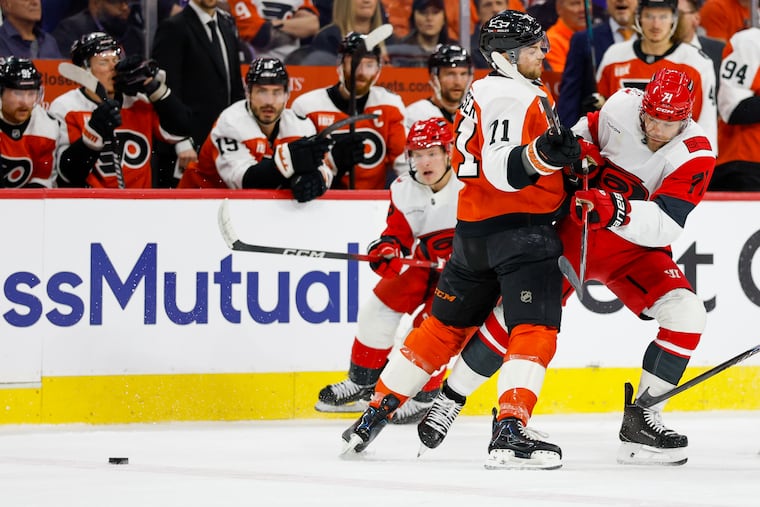
Carolina is becoming a more disciplined squad as they keep their hands down and just smile as the Flyers take penalties. And as the game wore on, with emotions running high and the Flyers’ frustration mounting, the number of penalties escalated — with Carolina getting a pair, too — impeding the flow of the game.
» READ MORE: Flyers lose their heads and Game 3 in one swoop: ‘We’ve got to be more disciplined’
The Flyers feel that, outside of Game 1, they have evenly matched with the Hurricanes at five-on-five. According to Natural Stat Trick, beginning with Game 2, the Hurricanes do have more shot attempts (95-63), as expected, but the Flyers are right there with them in high-danger chances (19-18, Hurricanes) and goals (3-1, Hurricanes).
“We just got to play our game, and that’s more disciplined and, obviously, convert,” Tocchet said in Voorhees. “We’re not getting a ton of chances, but we’ve got a lot of Grade A’s, three or four or five breakaways in this series, two-on-ones, and we’ve just got to convert.”
3. Capitalize on the power play
It probably won’t be fixed by Saturday, but it is kind of ridiculous that the Flyers’ power-play woes have continued across three coaching staffs. It stunk with Alain Vigneault. It reeked under John Tortorella. And now, after another regular season at the bottom, it is sinking their postseason with Tocchet.
They are now 1-for-16 on the man-advantage against Carolina (6.3%) and 3-for-33 (9.1%) in the postseason, which is the worst among the remaining teams.
Mistakes happen, like Jamie Drysdale losing the puck that led to Jalen Chatfield’s shorthanded goal. But there are fundamental issues with zone entries, with the Hurricanes often stacking the blue line. The Flyers have also been missing reads, which leads to a lack of interior play, not to mention the team’s struggles against pressure and inability to move the puck quickly enough.
» READ MORE: The Flyers’ abysmal power play cost them dearly in these playoffs. It has to improve next season.
“They have a great PK, but there’s plays to be made … there’s plays to be made that we’re just not making. You’ve got to move the puck a little bit quicker and have the courage to take the puck to the net. I think if we do those two, three things tomorrow, I think that might help us,” Tocchet said Friday.
The biggest question is personnel. Tocchet suggested postgame that he has players on the units who aren’t typical power-play players.
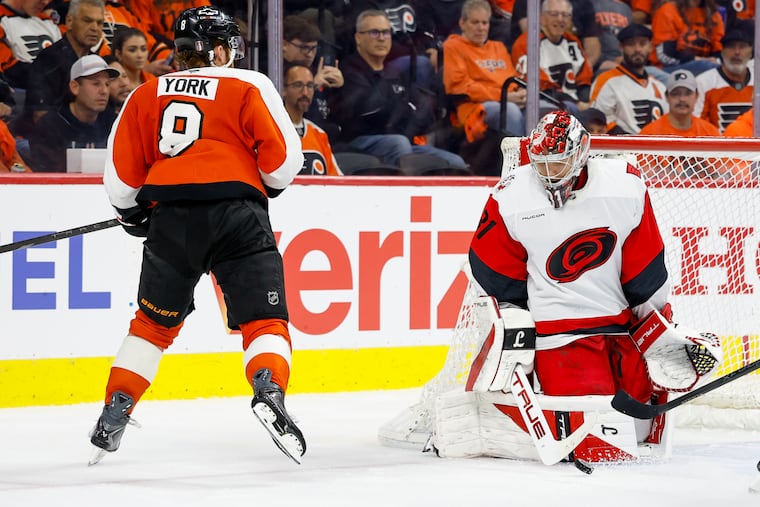
He did add Bump, who scored 10 of his 37 collegiate goals, or 27% of them, on the power play, to one of the units late in the game. Cam York, who has run high-powered power plays for the University of Michigan and the U.S. World Junior team, also finally saw some extended time at the point. But Tocchet does not think Emil Andrae, a noted puck mover who scored five of his 10 goals in the American Hockey League with the man-advantage, is the answer.
“I just don’t want us, the first power play, just to freeze. I think we’ve just got to relax a little bit,” Tocchet added. “I know we’ve been saying that all year, but we got a couple of goals a few games ago. We just need the power play to be good tomorrow. Like, I know the past is the past. We just need it to be good tomorrow.”